
Mapping the market for American elderberry
Two new economic surveys identify drivers and barriers in American elderberry markets
Long renowned for its health-promoting compounds and ecological value, the market for elderberry is growing on a global scale. With much of the U.S. supply imported from Europe, Mizzou Center for Agroforestry researchers are working to better understand market demand for American elderberry and to investigate how U.S. growers can increase their market share.
Over the past three decades, elderberry acreage in the U.S. has increased as productive cultivars and management recommendations have become available to growers. From 2017 to 2022, elderberry acreage more than doubled (from 790 to 1,682 acres; USDA NASS, 2022). Missouri leads the nation with 607 acres, more than one-third of total U.S. elderberry production. These significant developments led our researchers to seek more information about U.S. consumer preferences and purchasing behavior, as well as growers’ approaches to market participation and product development.
Unpacking elderberry demand
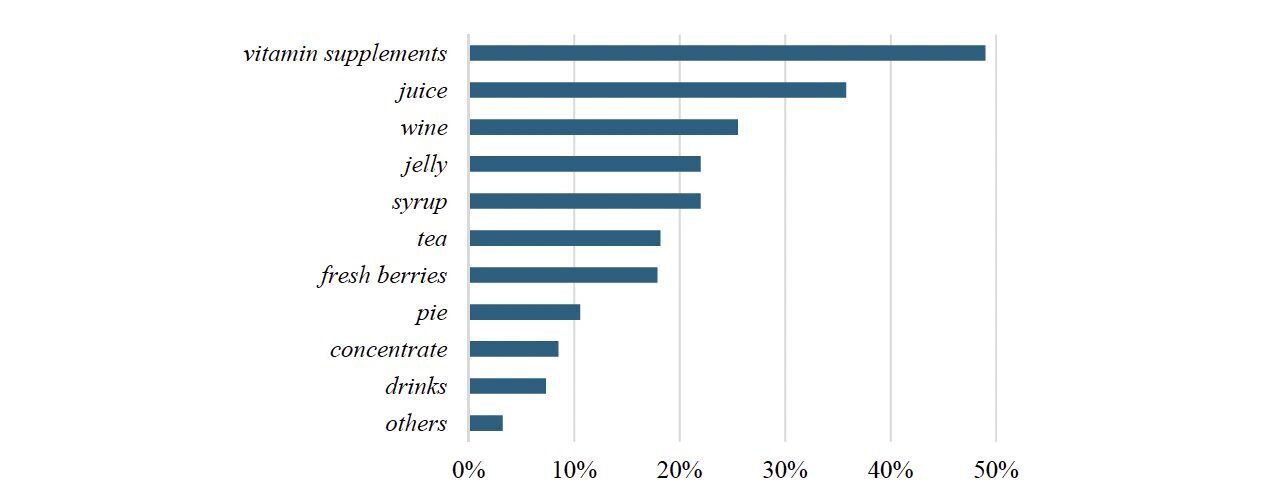
To gain insights into consumer behavior, Mizzou researchers analyzed survey data from approximately 600 U.S. consumers. More than half reported purchasing elderberry products, and approximately 40 percent of those purchasers use elderberry frequently (once a month or more). However, more than 60 percent of purchasers reported only occasional elderberry use (three to ten times per year or less), signifying that even among buyers there may be room for enhanced market penetration. Across the eleven product categories identified, supplements and juice were the most frequently consumed elderberry products (see Figure 1).
The survey analyzed the likelihood of purchasing decisions across several respondent demographics and found that education, age, household composition, and consumer attitudes were primary drivers:
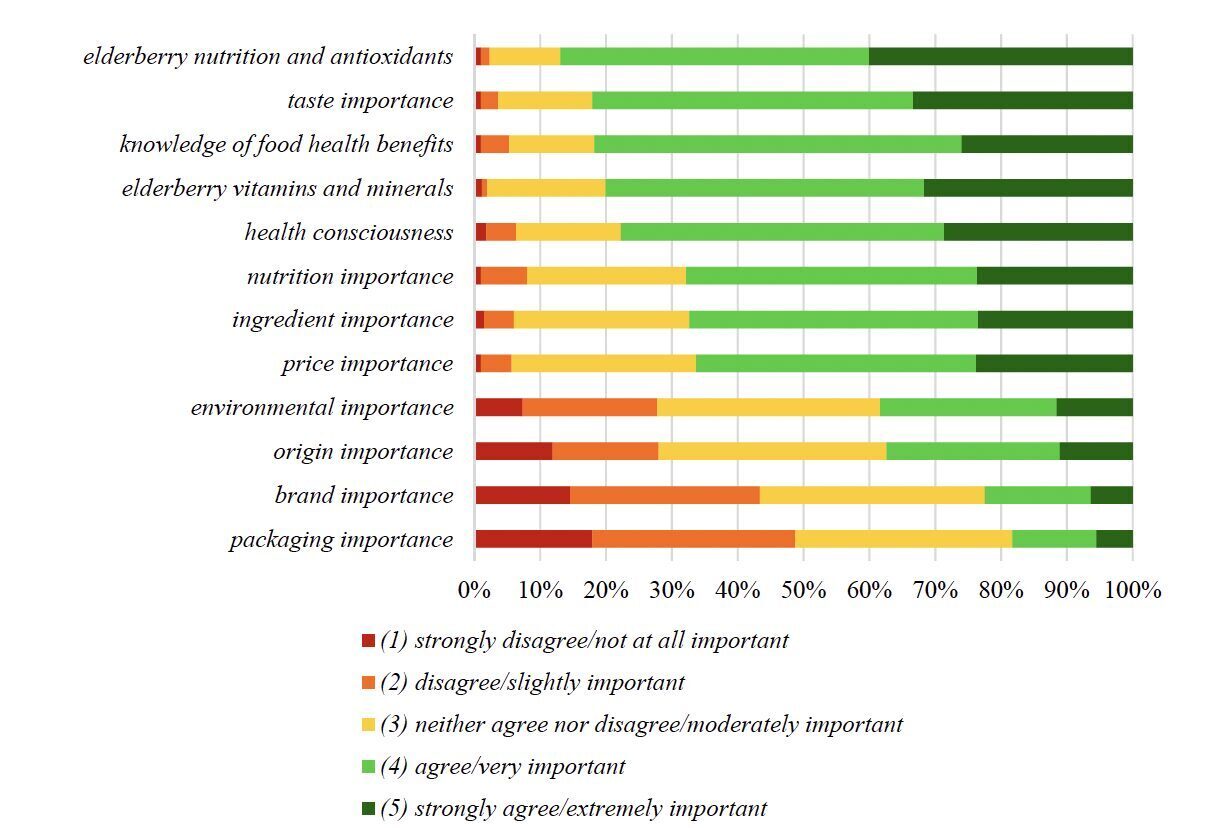
Respondents were also asked to rate the importance of various elderberry attributes on a five-point scale. Elderberry’s nutrition and antioxidants were considered “very” or “extremely important”. Taste was the second-most valued attribute. See Figure 2 for more detailed rankings.
By identifying who enjoys elderberry products and at what frequency, growers can begin to develop a clearer picture of their potential customer and tailor their products for success.
Participation and product diversity: Grower perspectives
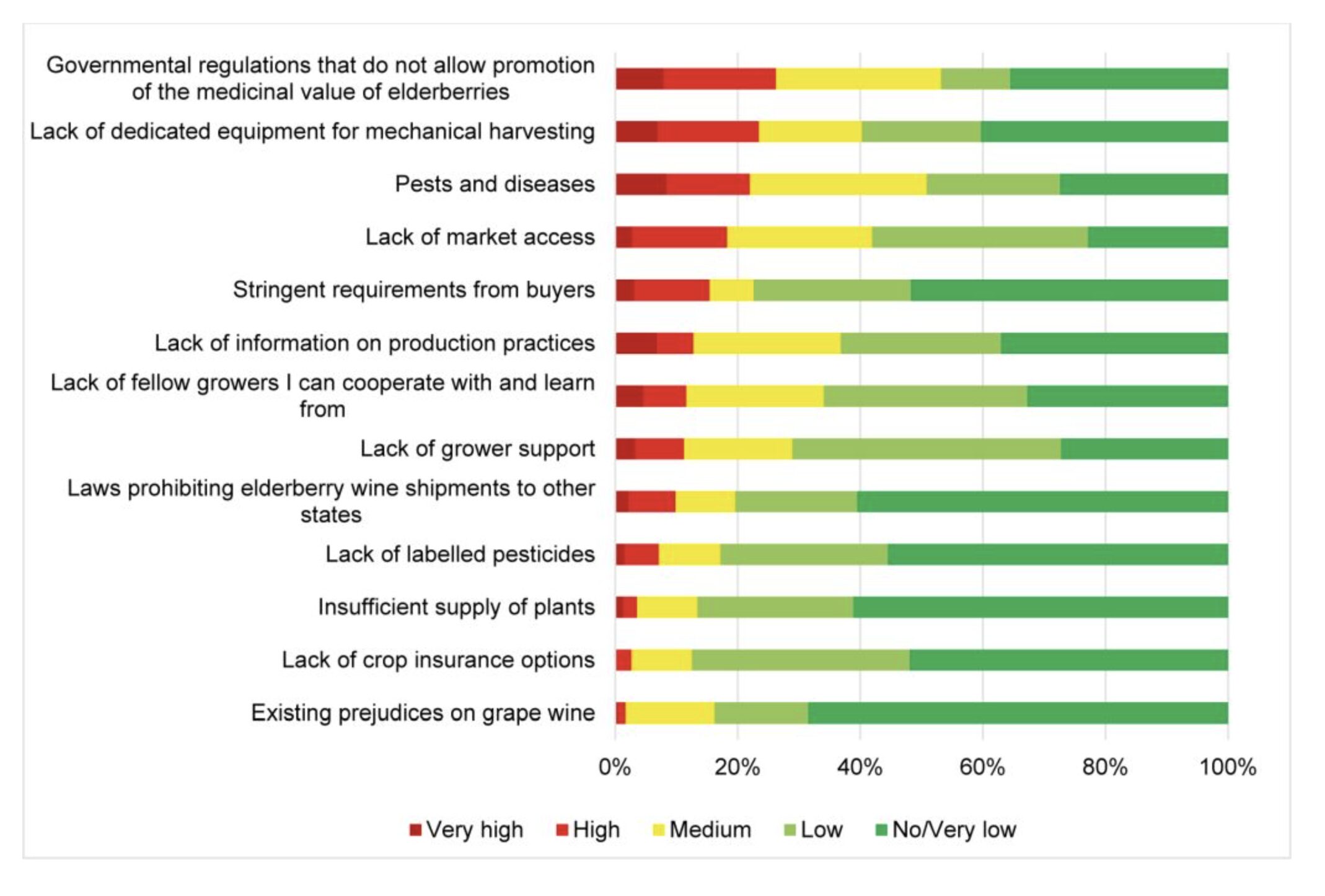
In another recently published paper, researchers from Mizzou surveyed 83 U.S. elderberry growers to better understand market drivers and barriers. The greatest obstacle noted by growers was government regulations that inhibit the promotion of elderberry’s medicinal value. This is a particularly important finding to inform future outreach and education efforts involving U.S. elderberry growers.
While consumer data illustrates the high appeal of elderberry’s health-promoting qualities, growers, especially those at small-scales, are often unable to fully access health-conscious consumer segments due to regulatory confusion or restrictions. More clarity around allowable marketing and labeling language, as well as scientific evidence to back up claims about elderberry’s healing properties, could have major positive impacts on the American elderberry industry and enhance small growers’ market access.
Respondents’ additional top challenges included lack of equipment for mechanical harvest, pests and diseases, lack of market access, and stringent requirements from buyers. Figure 3 shows the full list of challenges ranked by respondents.
The survey findings showed that the highest proportion of reported elderberry sales were made on-farm. Larger, more experienced farms and those located in the Southeast and Northwest were more likely to engage with markets. Growers with higher income, more experience, and those who sold at farmer’s markets engaged in more diversified product lines. Previous research has shown that product diversification is a particularly important strategy in specialty crop markets to help mitigate risks, reach consumers, and boost revenue streams.
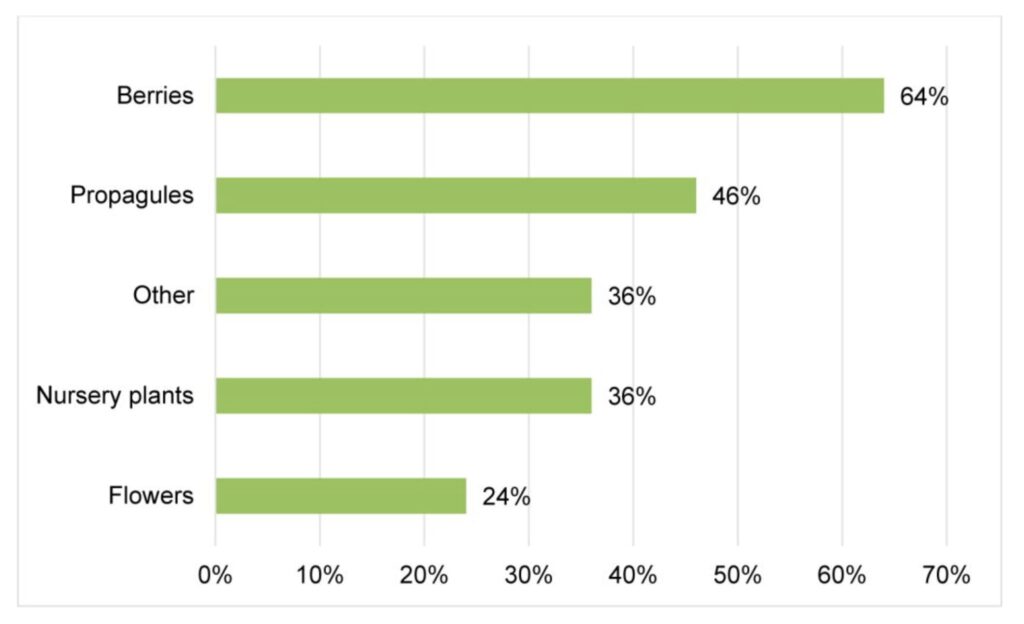
Figure 4. Marketing outlets for elderberry used by sampled farmers, 50 respondents, USA, 2023. Farmers could choose multiple marketing outlets, reflecting diverse strategies. The “Other” category includes online sales (Facebook marketplace/mail orders/Facebook groups/other websites), words of friends and family, retail stores, brewery, fiber festivals, special community events, local processors, herbal tea, Rowley’s red barn, and Craig’s list. Source: Khatiwada, Skevas, & Thomas, 2026. 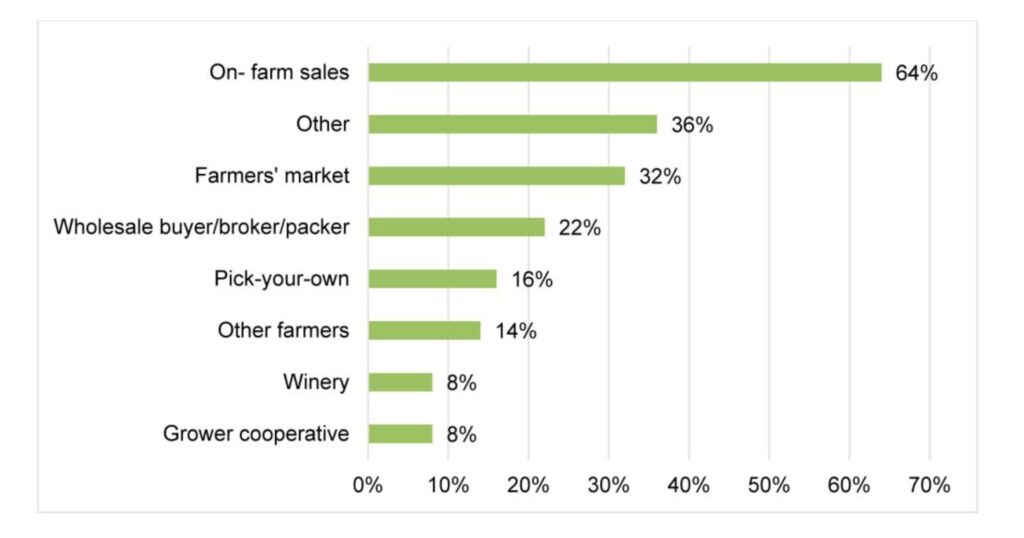
Figure 5. Elderberry products marketed by sampled farmers, 50 respondents, USA, 2023. Farmers could choose multiple products. The “Other” category includes juice, syrup/syrup kits, wine, jam, jelly, smoothies, mead, berry dyed wool, and pulp. Source: Khatiwada, Skevas, & Thomas, 2026.
Researchers at the Mizzou Center for Agroforestry and collaborators across the country are working to advance the American elderberry industry through a USDA NIFA Specialty Crop Research Initiative (project 2021-51181-35860, Moving American Elderberry into Mainstream Production and Processing). By bridging the gap between consumer preferences and growers’ marketing practices, we can build on national momentum to help elderberry become a perennial pantry staple with widespread economic and ecological benefits.
Article Citations
More information on methodology, results, and limitations can be found in the full papers linked below.
Borrero, H., Skevas, T., Thomas, A., & Stubblefield, K. (2025). Unpacking elderberry demand: how consumer segments and socioeconomic factors shape purchasing behavior in the United States. British Food Journal, 1-18. https://doi.org/10.1108/BFJ-07-2025-0885
Khatiwada, Dikshya; Theodoros Skevas; and Andrew L. Thomas. (2026). Market Engagement among US Elderberry Growers: Unpacking Influences on Market Participation and Product Diversification. International Food and Agribusiness Management Review. https://doi.org/10.22434/ifamr.1152.
Related Resources
This work was supported by the USDA/ARS, USDA/ARS Dale Bumpers Small Farm Research Center, and University of Missouri Center for Agroforestry under agreement No. 58-6020-0-007 and 59-6020-5-001.