
Developing American elderberry cultivars for farmer success
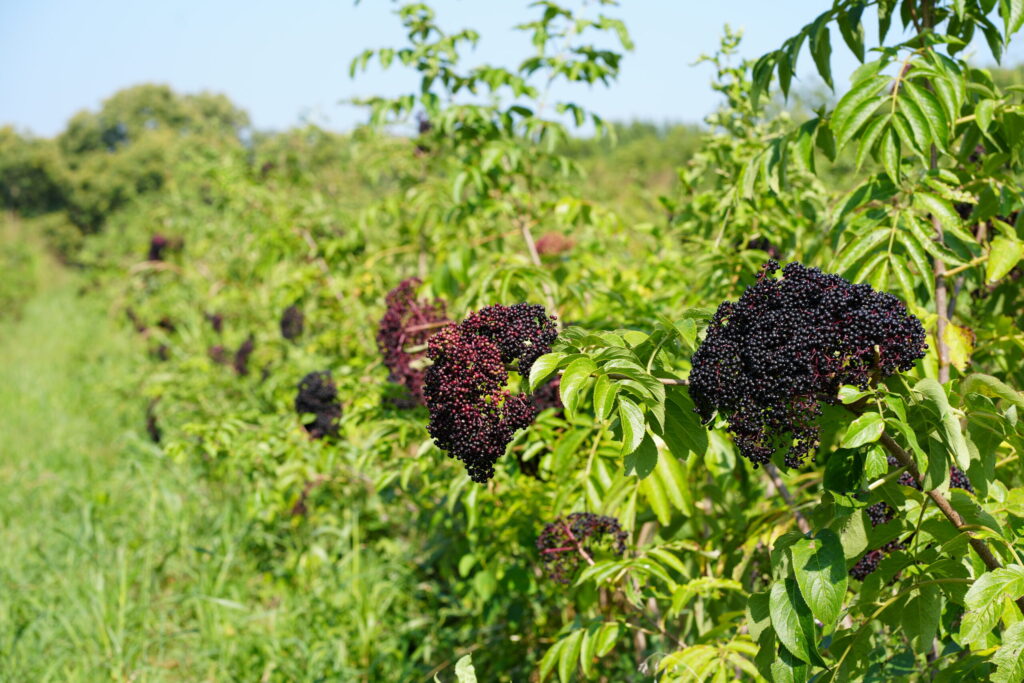 American elderberry breeding progeny at the MU Horticulture and Agroforestry Research Farm in New Franklin.
 An advanced selection of American elderberry at the MU Horticulture and Agroforestry Research Farm in New Franklin.
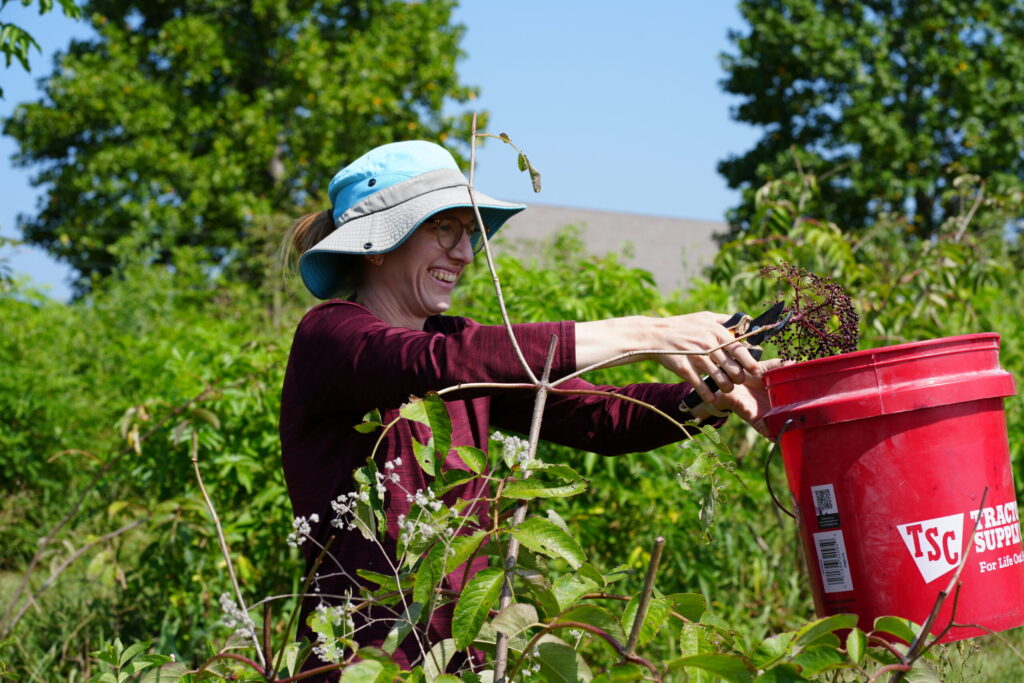 Elderberry geneticist and breeder Liz Prenger evaluates fruit quality in advanced selections.
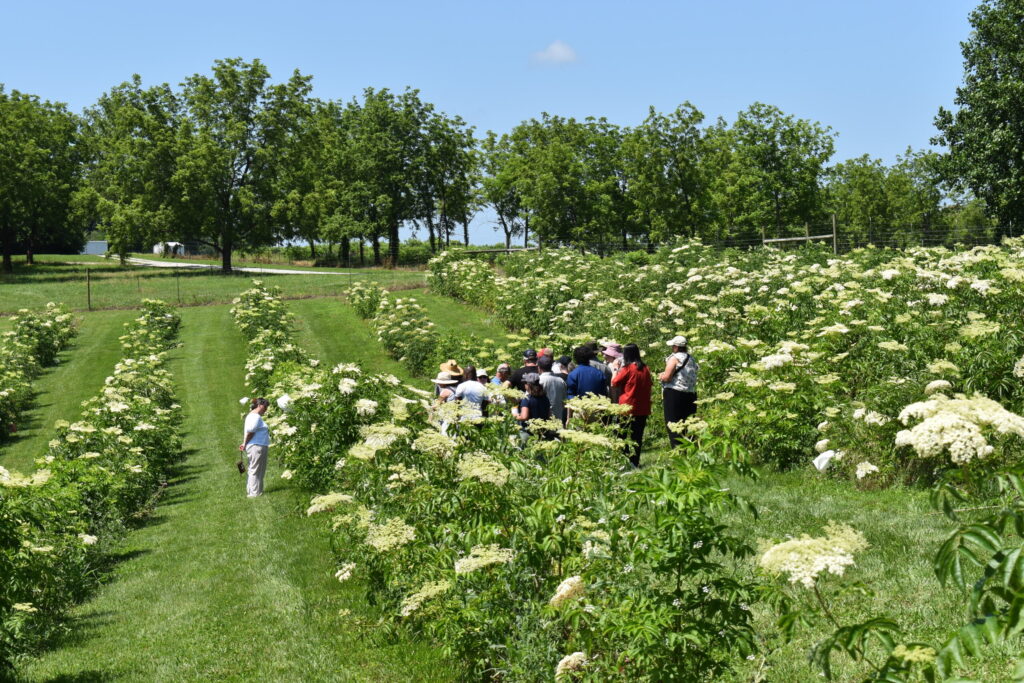 American elderberry selections in bloom at the MU Horticulture and Agroforestry Research Farm in New Franklin, MO.
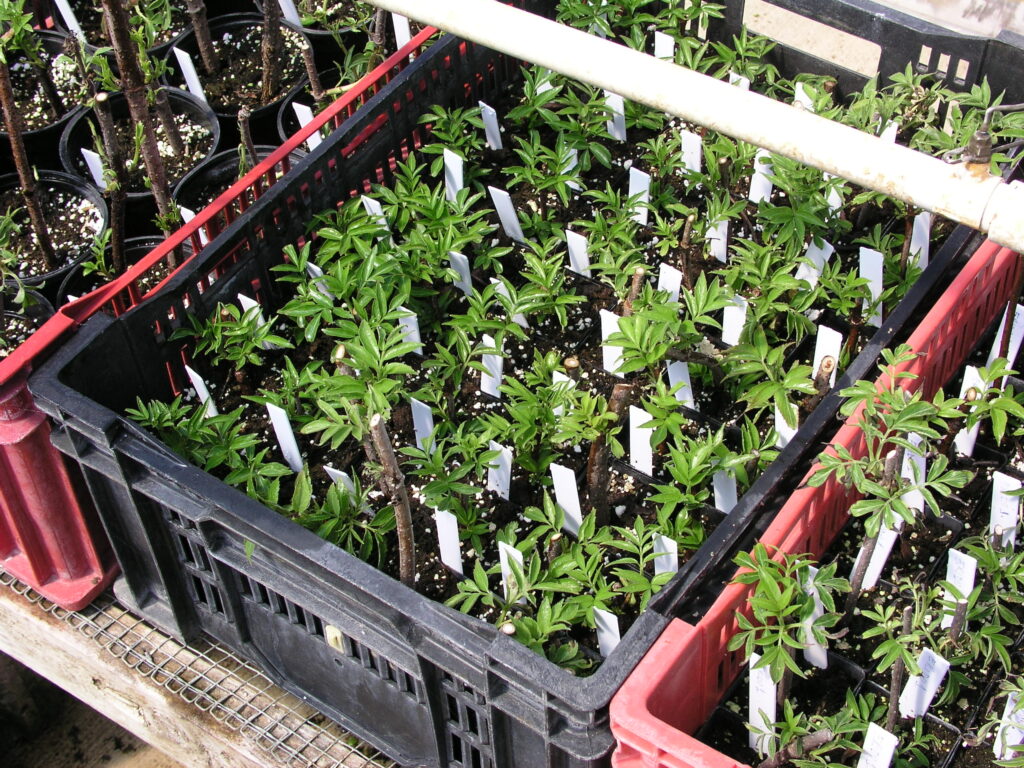 Sprouted American elderberry cuttings.
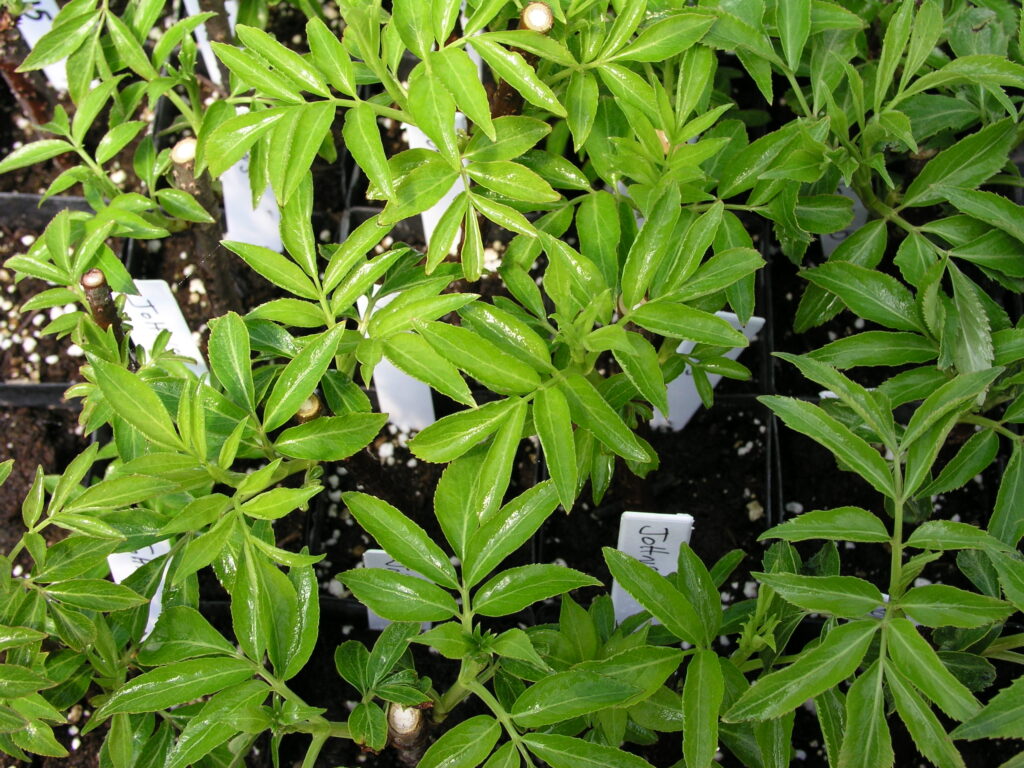 American elderberry leaf
As fall winds down and winter moves in, cold and flu season kicks into gear. When we’re sick, we look for solutions that could help us recover faster or reduce our symptoms. One of the tools many people use is elderberry. Demand for elderberry products has increased in recent years because of its potential health benefits, but medicinal use is not a new trend. Around the world, elderberry has been integrated into cultural and medicinal practices for millennia. Elderberry fruit and flowers can be made into juice, supplements, powder, jam, pie, wine, and liqueur. These products are rapidly gaining popularity as healthier diets with functional food ingredients become more appealing.
Many people don’t realize elderberry grows wild right here in the Midwest as a native fruit shrub. Yet current demand for elderberry products in the United States is met by importing elderberries from Europe. Great potential exists for expanding commercial American elderberry production in the United States. In fact, elderberry growers, researchers, and food businesses in the US have been working collaboratively for three decades to build mainstream markets for American elderberries through cultivar development, regional cooperatives, and product innovations. Adding elderberry to Midwest farm enterprises can diversifying crop income streams, address conservation concerns, and provide high-value farm gate revenues.
A key way to catalyze local production of American elderberry is by developing new cultivated varieties, or “cultivars” through a classic plant breeding approach. Current cultivars were developed in the northeastern US and Canada over 60 years ago or were selected from the wild in the Midwest, leaving plenty of opportunity for improvement. Researchers at the Mizzou Center for Agroforestry are building on several decades of American elderberry research to develop new cultivars that will reliably produce good quality fruit in Midwestern environments.
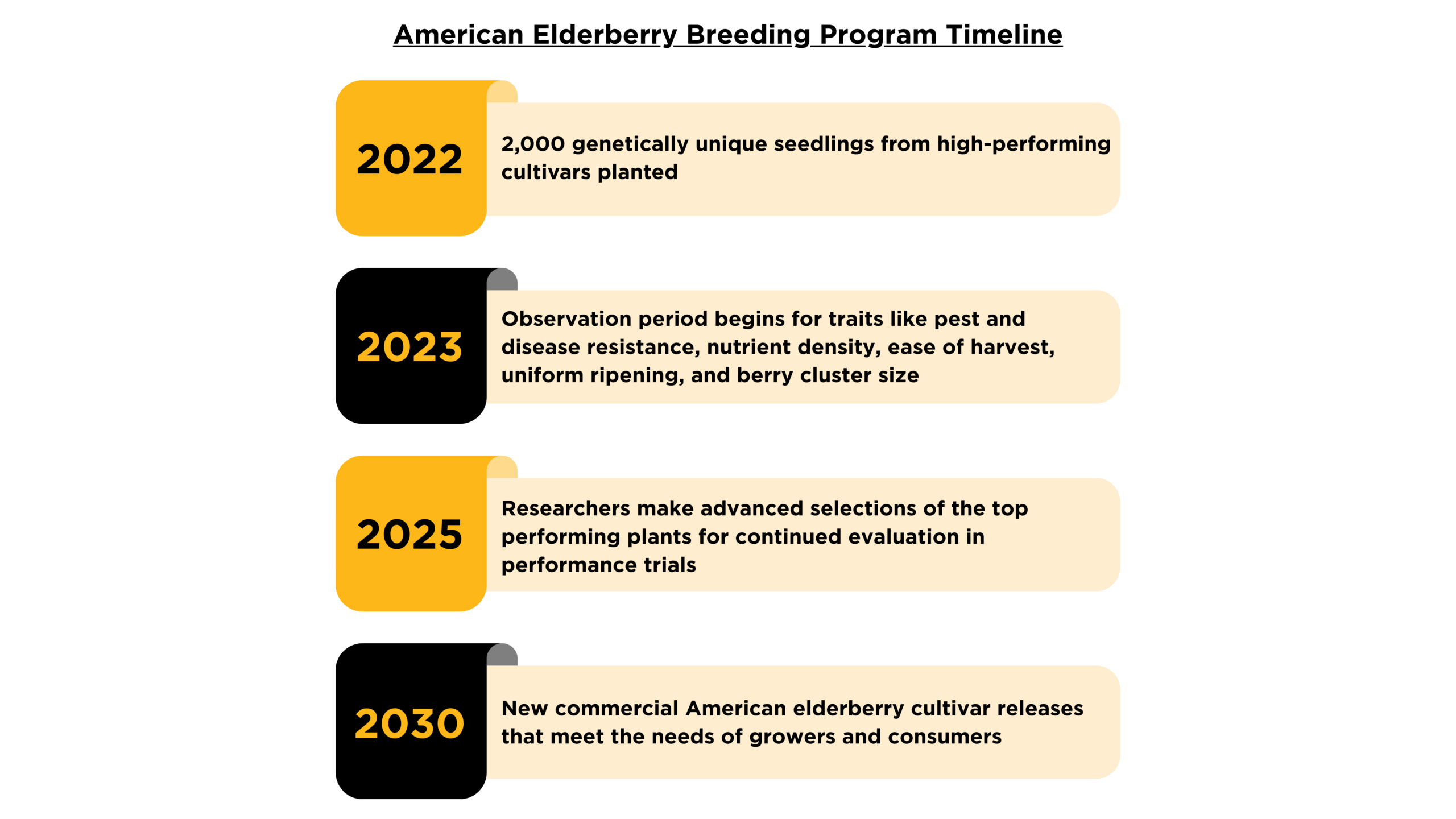
The Center’s elderberry breeding program started with fruit harvest from commercially available high-performing cultivars and other plants that showed promise for orchard production. The seeds from these fruits were stratified, and just over 2,000 genetically unique seedlings were planted in the fields at the MU Horticulture and Agroforestry Research Farm and Southwest Research Center in 2022. Elderberry plants bear fruit relatively young, so researchers were able to evaluate the plants for their ability to produce fruit starting in 2023. After several years of observation, the most promising plants became advanced selections, which were put into performance trials in the summer of 2025. Performance of the plants in these trials will help researchers determine which plants might produce well in growers’ fields, eventually leading to cultivar release. These new cultivars should meet growers’ and consumers’ needs for cultivars that increase production, harvest efficiency, and fruit quality.
Additional research investigates flower development and ripening patterns for popular cultivars to help make informed decisions about orchard design (Which cultivars have complementary flowering and pollen shed?)and new cultivar development (Where are opportunities to fill gaps in flowering? Which cultivars have the most uniform ripening patterns?). Genetic and genomic resources are also being developed to support continued breeding and research.
Exciting things are coming down the pipeline in American elderberry research and breeding for growers and elderberry enthusiasts in the US. New cultivars could be available to growers within the next five years that will support expanded domestic production of this native, adapted crop with great potential for positive impacts on human health and small farmer livelihoods.
This work is supported by USDA NIFA SCRI project 2021-51181-35860, Moving American Elderberry into Mainstream Production and Processing.
Selected Elderberry Research Publications
Cai, Z., Stubblefield, K., Thomas, A. L., & Aguilar, F. X. (2024). From Niche to Mainstream: US Consumer Trends and Preferences for Elderberry Products. HortScience, 59(12), 1723–1729. https://doi.org/10.21273/HORTSCI18180-24
Dwikarina, A., Bayati, M., Efrat, N., Roy, A., Lei, Z., Ho, K. V., Sumner, L., Greenlief, M., Thomas, A. L., Applequist, W., Townesmith, A., & Lin, C. H. (2024). Exploring American Elderberry Compounds for Antioxidant, Antiviral, and Antibacterial Properties Through High-Throughput Screening Assays Combined with Untargeted Metabolomics. bioRxiv : the preprint server for biology, 2024.09.13.611920. https://doi.org/10.1101/2024.09.13.611920
Huchteman, M. W., Moore, S. D., Garcia, J. C., Smeda, R. J., Skevas, T., Khatiwada, D., Camacho, H. B., Thomas, D., Krishnaswamy, K., Ravichandran, K., O’Neal, C. S., & Thomas, A. L. (2025). American Elderberry Performance, Yield, and Potential Profitability Are Influenced by Weed Management Method. HortScience, 60(12), 2209–2217. https://doi.org/10.21273/HORTSCI18880-25
Musich, M., Curtis, A. F., Ferguson, B. J., Drysdale, D., Thomas, A. L., Greenlief, C. M., Shenker, J. I., & Beversdorf, D. Q. (2025). Preliminary Effects of American Elderberry Juice on Cognitive Functioning in Mild Cognitive Impairment Patients: A Secondary Analysis of Cognitive Composite Scores in a Randomized Clinical Trial. Antioxidants, 14(2), 131. https://doi.org/10.3390/antiox14020131
Thomas, A. L., Byers, P. L., Gu, S., Avery, J. D., Jr, Kaps, M., Datta, A., Fernando, L., Grossi, P., & Rottinghaus, G. E. (2015). Occurrence of Polyphenols, Organic Acids, and Sugars among Diverse Elderberry Genotypes Grown in Three Missouri (USA) Locations. Acta horticulturae, 1061, 147–154. https://doi.org/10.17660/ActaHortic.2015.1061.14