Research Brief: Black Walnut Breeding Meets Consumer Preferences
Taste testers help inform Mizzou Agroforestry’s future breeding efforts.
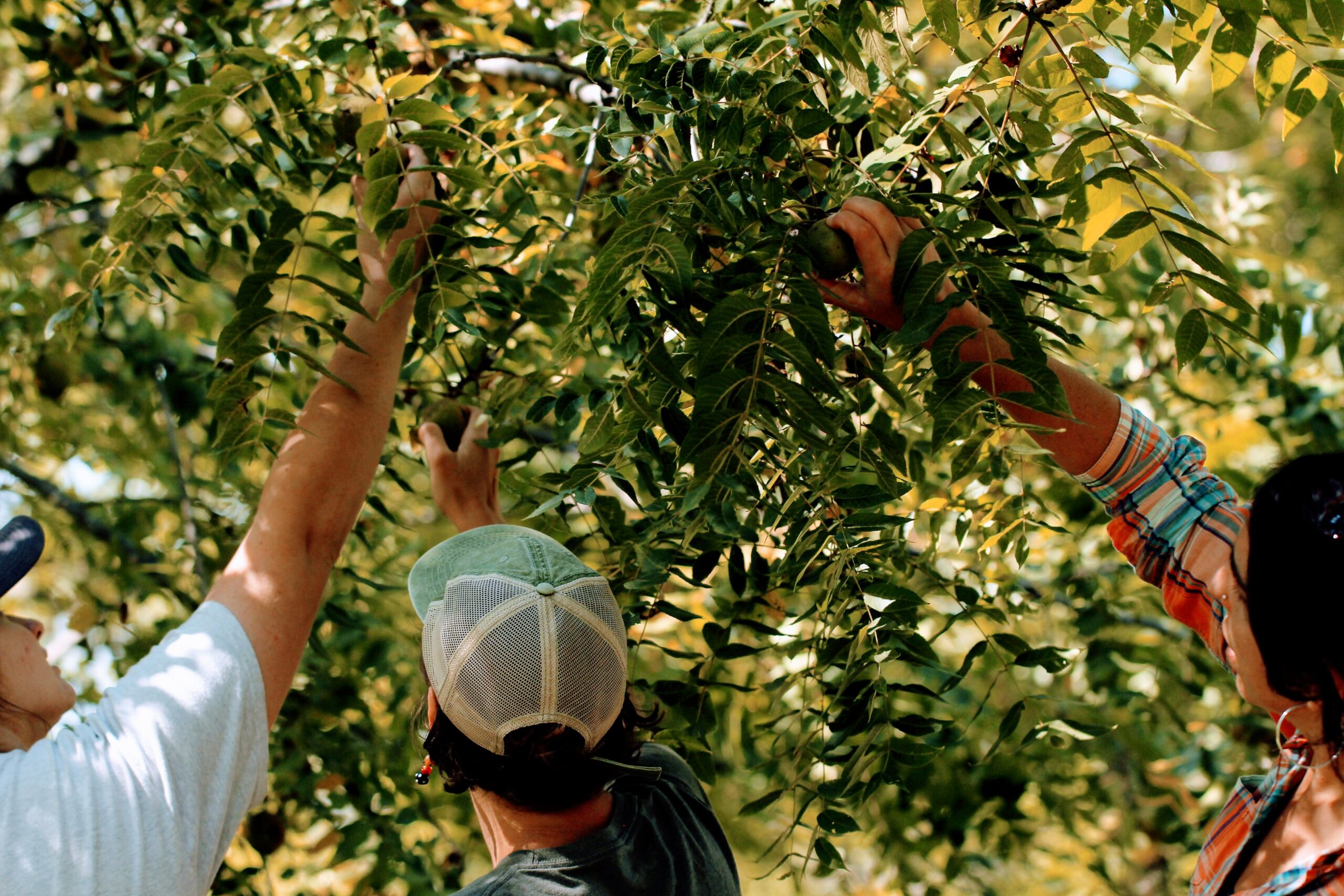
Black walnut is one of the most common native trees across the eastern United States. In Missouri, it grows in forests, along roadsides and in backyards. While many people see black walnut as little more than a nuisance tree that drops messy nuts and stains sidewalks, researchers at Mizzou Agroforestry see it as an opportunity to grow a valuable, healthy and locally produced food crop.
Black walnut contains more protein than any other commonly eaten tree nut. Research has also shown it contains compounds linked to health benefits, including supporting heart health, protecting the liver and slowing the growth of some cancer cells.
Today, most walnuts sold in the United States are English walnuts grown in California or imported from other countries. Expanding black walnut production could give consumers another nutritious option while creating new opportunities for farmers in the Midwest and Eastern U.S. Black walnut trees require less irrigation than many orchard crops, shorten supply chains for delivering nutrient-dense staple calories to communities, and provide added income for family farms.
Breeding Better Black Walnuts
For more than 25 years, Mizzou Agroforestry has operated the nation’s only black walnut breeding program. The goal is to develop cultivars that produce high-quality nuts and perform well in commercial orchards.
The program released its first cultivar, UMCA Hickman, in 2025, with additional near-term releases planned. These improved cultivars were selected for high yields, thin shells, and large kernels. Together, these traits help growers produce more marketable nuts.
For black walnut, the table is set for market expansion. Hammons Products Co., the country’s primary commercial black walnut processor, operates more than 160 hulling stations across 11 states. Although the company currently relies on wild-harvested walnuts, it estimates the market could support up to 5,000 acres of cultivated improved black walnut.
Researchers estimate improved black walnut orchards can generate farm-gate values of $1,000 to $2,400 per acre as trees mature between years 5 and 9. By comparison, Missouri corn averages about $800 per acre, soybeans about $600, and wheat about $450.
What Do Consumers Think?
To better understand consumer preferences, Mizzou Agroforestry teamed up with the University of Minnesota to conduct a taste test with 100 participants. The panel evaluated eight walnut samples:
Participants rated each sample for aroma, flavor, texture and overall liking.
Black walnut has a stronger, more distinctive flavor than English walnut, which many consumers describe as milder. Even so, 40 participants preferred at least one black walnut sample over the English walnut. Three advanced breeding selections received the highest ratings because they had less bitterness and a milder aftertaste.
The study also found clear differences among black walnut cultivars. Some performed nearly as well as English walnut, while others were rated much lower. These results will help breeders identify the flavor traits consumers prefer while continuing to improve yield, nut quality and orchard performance.
In a separate study, researchers found that consumers were more willing to pay premium prices for black walnuts after learning about their nutritional value and unique flavor. This highlights the importance of both breeding and consumer education in building new markets.
What’s next?
Mizzou Agroforestry will continue developing improved black walnut cultivars that combine strong orchard performance with the flavor consumers prefer. Future breeding efforts will focus on high yields, thin shells, large kernels, nutritional quality and consumer acceptance.
Growers interested in cultivating black walnut can access free production guides from Mizzou Agroforestry covering orchard establishment and management. Researchers will also share the latest findings during the upcoming Black Walnut Workshop at the MU Horticulture and Agroforestry Research Farm in New Franklin, Missouri on Friday, October 9.
Learn more about the Black Walnut Workshop!Black walnut breeding program
Meet Dr. Nick Meier, black walnut faculty lead!
Dr. Meier leads our black walnut and pecan breeding activities. You can read more about his work in his faculty Q&A.
Interested in growing black walnut or already have an established orchard? Contact Dr. Meier at namvf@missouri.edu.