Meet the Center’s new faculty member Nick Meier, PhD
Nick Meier, PhD, has joined the Center for Agroforestry’s faculty team to develop our pecan and black walnut breeding programs. Learn more about his background and expertise in this Q&A!
What is your educational and professional background? How did you end up at Mizzou and the Center for Agroforestry?
I first joined Mizzou as an undergraduate student in Plant Sciences, graduating in 2015. After that, I pursued a PhD in Crop Science at Virginia Tech (2019) with a focus on small grains breeding and genetics for soft red winter wheat and malting barley.
In 2020, I returned back to Mizzou, first as a postdoc in Dr. Felix Fritschi’s Crop Physiology Lab and later as a Senior Research Specialist for the Center’s tree nut breeding labs, leading field establishment and helping to build out our five breeding programs (pecan, black walnut, chestnut, hazelnut, and elderberry).
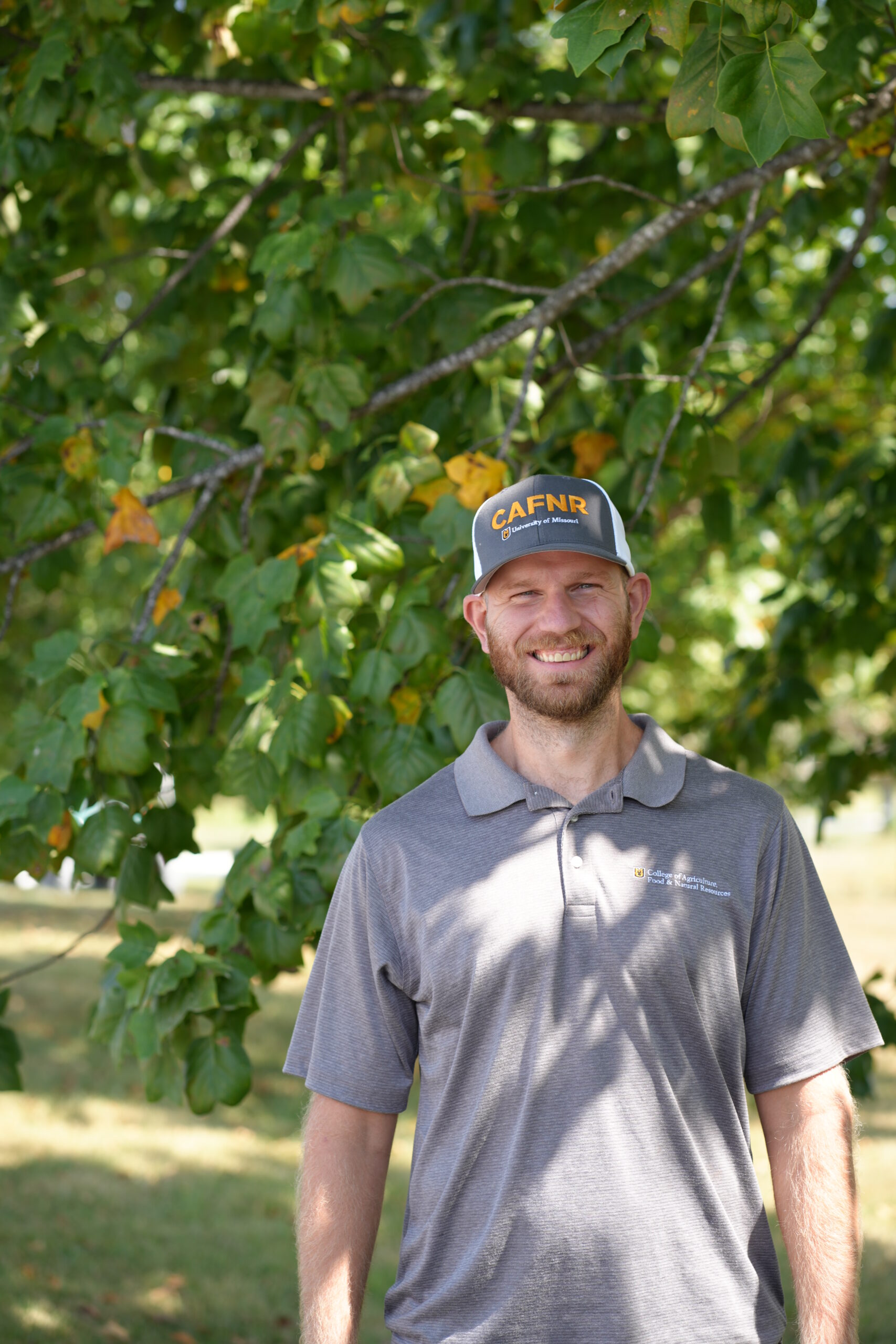
I’ve pretty much always wanted to breed specialty crops, but those jobs are few and far between (outside of California). I didn’t think that it was a realistic opportunity, especially in Missouri, which is where my family wants to be. I was very glad to be proven wrong. After grad school, I moved back to Missouri without much of a plan other than wanting to start a specialty crop farm and maybe do some backyard breeding. While doing so I developed a very strong interest in tree crops and was fascinated by the Center for Agroforestry and its newest lab led by Dr. Ron Revord – a tree nut breeding program, in Missouri!
I now know that the Center for Agroforestry’s decades-long commitment to tree nuts, to Dr. Coggeshall’s legendary black walnut program, and to agroforestry research is nothing short of a specialty crop miracle in a state with a limited specialty crop industry, which leaves us lots of room for growth and development.
What is your favorite aspect about the work you do?
I really enjoy plant breeding, tree nuts especially, getting to know the plant materials and seeing the variation in traits, then thinking about how to put it all together and develop new genetic variation that we can evaluate. Plant breeding is a very creative profession that is built on scientific principles and ultimately product development, so it’s a nice balance of art, horticulture science, and business.
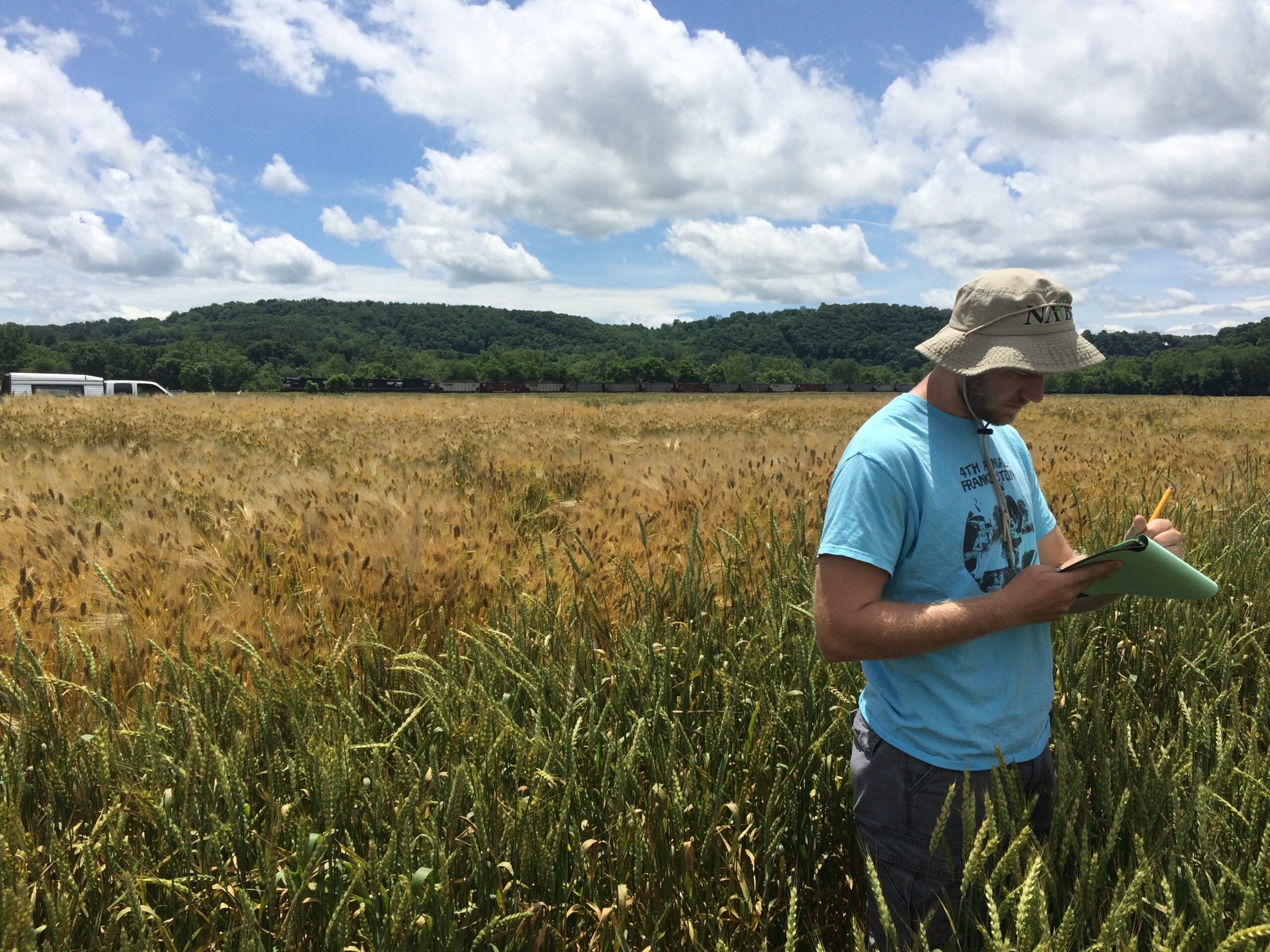
The black walnut and pecan material that I work with is very wild, only one or two generations removed from the forest, so we see huge gains in genetic improvement with relatively modest effort. Developing new and improved cultivars for Missouri orchardists is very rewarding, the idea that my effort can benefit Missouri’s nut producers and ag economy is very motivating. Tree nuts in general are a very healthy food, so I can feel good that my work is contributing to a food crop that is a healthful and delicious choice.
What projects will your lab focus on in the immediate future? What big picture programs are you working to build out?
My lab, Mizzou Pecan and Walnut Breeding, is very focused on breeding pecans for the northern growing region (Missouri, eastern Kansas, eastern Oklahoma, northern Arkansas, and southern Illinois). A major effort will be to select for frost avoidance and early ripening to expand the growing region further north. Our other major focus is to breed for quantitative durable pecan scab resistance and home in on kernel/shelling quality, especially oil composition. We are working very closely with the Center’s Horticulture Best Management lab to create novel interspecific rootstock breeding populations to enhance abiotic stress tolerance (flooding especially) and reduce the size and stature of the trees for higher density plantings.
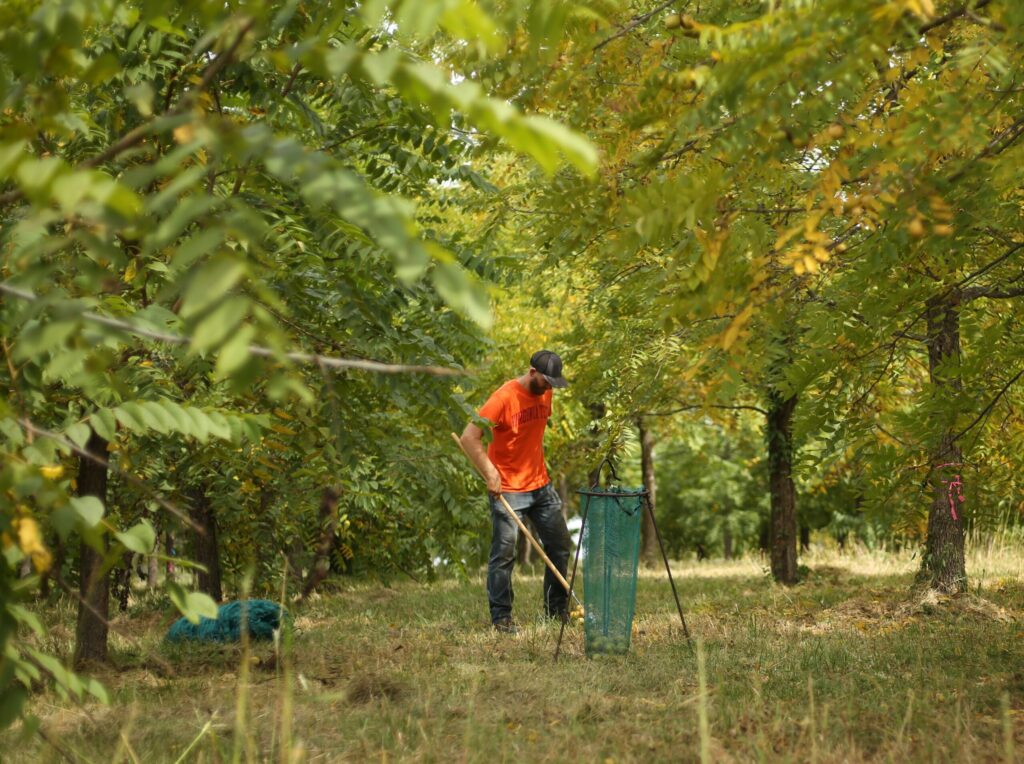 Meier collects black walnuts at the research farm.
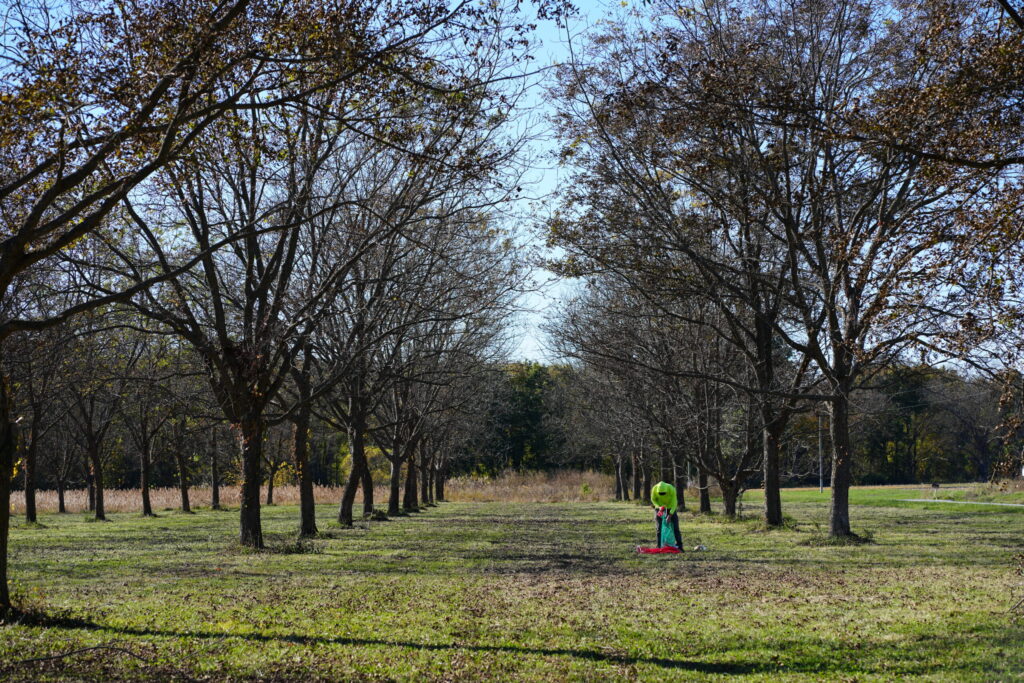 Meier collects pecans for evaluation at the MU Horticulture and Agroforestry Research Farm in New Franklin, Missouri.
For black walnuts, our core objective is to build on Dr. Coggeshall’s legendary program, which set out to domesticate the species for large kernels, thin shells, spur bearing habit and orchard production. New to the program are efforts explore timber production within orchards. We have also brought in a lot more J. regia (common walnut) germplasm to explore hybrids/backcrossing and possibly pure cold hardy J. regia adapted to Missouri.
Follow Dr. Meier’s lab activities on Instagram: @Mizzou_Pecan_Walnut
What do you envision for the future of agroforestry in Missouri and the Midwest?
Trees thoughtfully deployed within agricultural settings is a very good thing, and I envision more opportunities for tree nut production in Missouri. Our climate, water availability, soils, and varied agricultural landscapes are perfect for orchards and specialty crops. With growing demand for nuts globally, Missouri has a real opportunity to capitalize on this growing trend. I hope to contribute positively to the region’s orchard businesses.
What’s a fun fact that most colleagues don’t know about you?
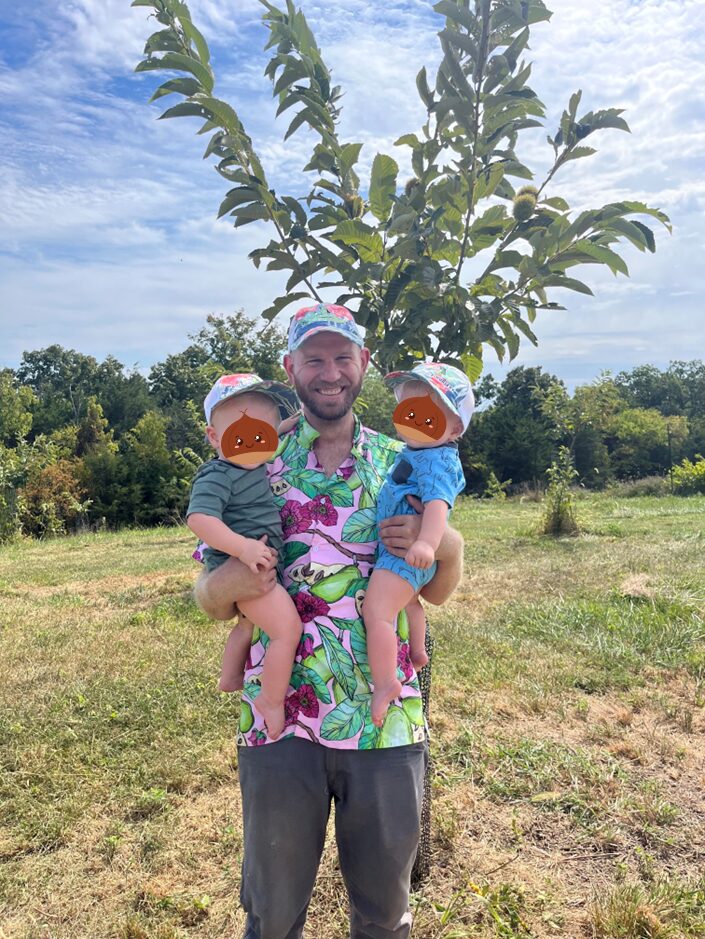
I am actually very boring! My free time consists of spending time with my 20-month-old twin boys, Vinny and Leon, and working at my personal agroforestry farm, where I like to employ many of the concepts that I learn at the MU Horticulture and Agroforestry Farm. I have a mild obsession with growing figs and kiwis.
Learn more on Dr. Meier's faculty page.