
Taking on mining waste in Michigan’s Upper Peninsula with fast-growing trees
In the early 1900s, over 6 billion pounds of copper ore processing waste, known as “stamp sands”, were discarded into the Keweenaw Bay of Lake Superior, near the L’Anse Indian Reservation of the Keweenaw Bay Indian Community (KBIC), a Lake Superior Band of Chippewa Indians. Over several decades, wave action and currents mobilized the stamp sands and deposited them along the shoreline of Sand Point. This process continues today. The Sand Point site is of cultural significance to KBIC as a place where food and medicinal plants grow, and serves as a gathering place for the community’s Pow Wow and other events. In addition, there is a healing clinic, campground, marina, and other opportunities for education and recreation.
Shifting stamp sands are a concern because they contain heavy metals whose toxicity poses threats to human well-being and the health of the Sand Point ecosystem. Through Indigenous ways of knowing and implementing nature-based solutions, KBIC has led efforts to restore and recover Sand Point from this legacy of pollution left by the mining industry. Among these efforts, 34 acres of stamp sands along 2.5 miles of shoreline at Sand Point have been capped with soil and planted with native plant species. The once barren and now vegetated landscape offers beneficial insect and wildlife-friendly habitat, and walking trails have been established along the lake and wetlands for the community and its visitors to experience a healing landscape.
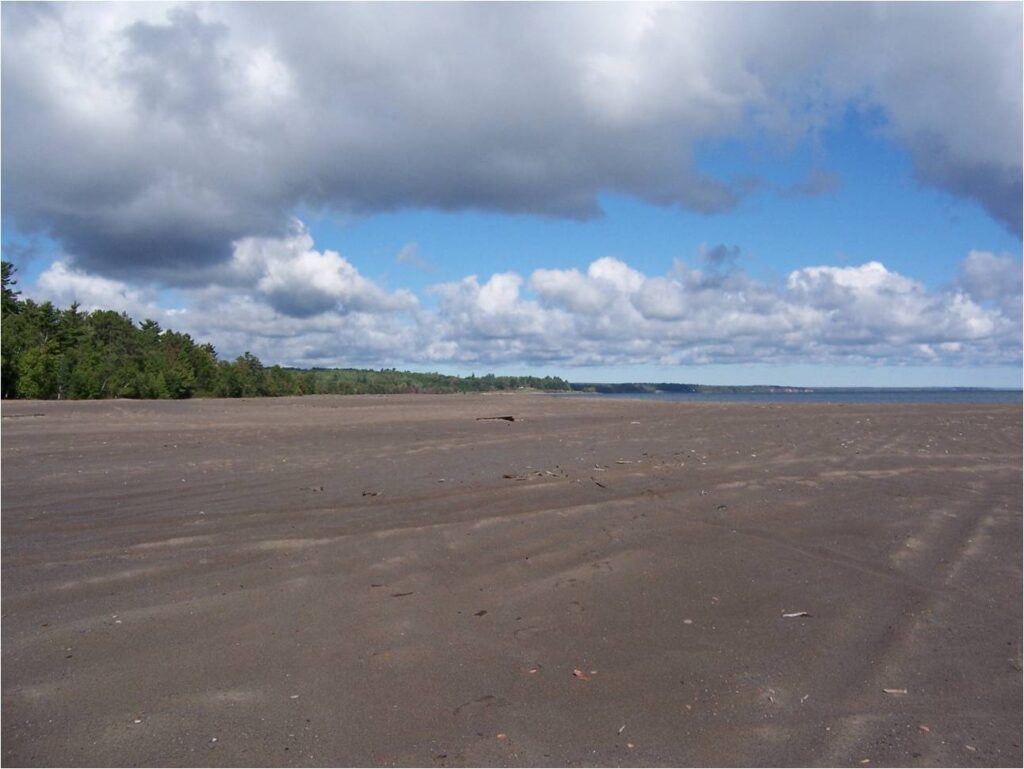
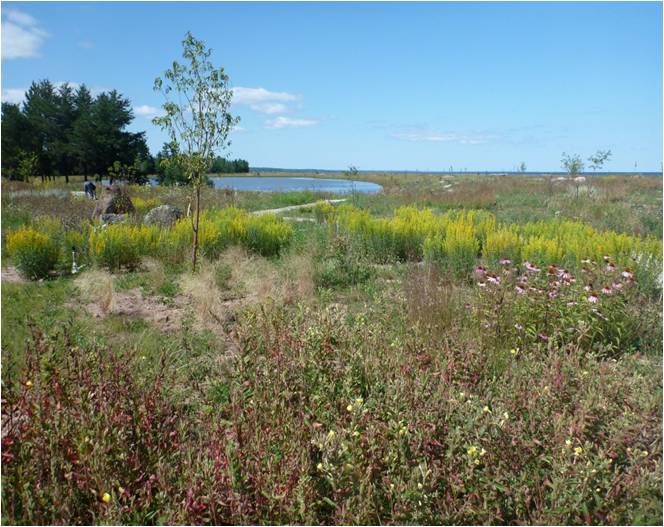
This portion of the shoreline along Sand Point was once a barren landscape devoid of plant life due to stamp sands left behind by copper ore processing activities (left). Today, this shoreline contains an abundance of native plants as a result of extensive restoration efforts of the KBIC (right). Photos courtesy of KBIC Natural Resources Department.
Karena Schmidt, ecologist with the KBIC Natural Resources Department, acknowledges the deep significance of the project. “We are asking much of the plants,” said Schmidt. “To grow in dark toxic sands devoid of organic matter, be subject to the full array of intense sunlight, be exposed to the temperature extremes of summer and winter, and still they offer their gifts of floral beauty and medicine.”
Most recently, Center for Agroforestry researchers have partnered with the USDA Forest Service Northern Research Station, the KBIC, and Michigan Technological University to implement a phytostabilization and phytoremediation project at Sand Point. Funded by the U.S. Forest Service under the Bipartisan Infrastructure Law (BIL) Ecosystem Restoration Provision, this project uses specialized fast-growing trees and biochar to stabilize and remediate the stamp sands at the site.
This phyto project is the result of years of research by Dr. Ron Zalesny, U.S. Forest Service supervisory research plant geneticist and current Center for Agroforestry Adjunct Professor, Elizabeth Rogers, U.S. Forest Service pathways intern and current Center for Agroforestry doctoral candidate, and Ryan Vinhal, U.S. Forest Service forester and former Center for Agroforestry graduate student. Initially developed in 2003, the team refined their method called phyto-recurrent selection to identify poplar and willow varieties that are uniquely suited to address restoration goals of degraded sites. In March 2023, their method of phyto-recurrent selection was adopted as a best practice within the United Nations’ Decade on Ecosystem Restoration’s “Framework for Ecosystem Restoration Monitoring” registry. The team used this method to select the most promising poplar and willow varieties to plant in the phyto systems at Sand Point.


In June 2024, nearly 3,000 willows and poplars were planted at Sand Point. In honor of the decades of restoration efforts preceding the buffer, project scientists worked with the KBIC to disturb as little vegetation from the site as possible.
“So, all of the native plants that exist at the site after nearly two decades of restoration work by the KBIC remain and surround the trees,” said Elizabeth Rogers. “This was intentional, as we wanted to have the least disturbance as we could on the Sand Point ecosystem.”
The team conducts monthly health and survival inventories of the trees, and, in September, will measure their growth since planting in June. At the start of the project, they collected soil samples at the site that will be analyzed by Dr. Chung-Ho Lin’s lab at the Center for Agroforestry. The samples will be used to assess the existing microbial community present in hopes of identifying microbes that are able to detoxify heavy metals.
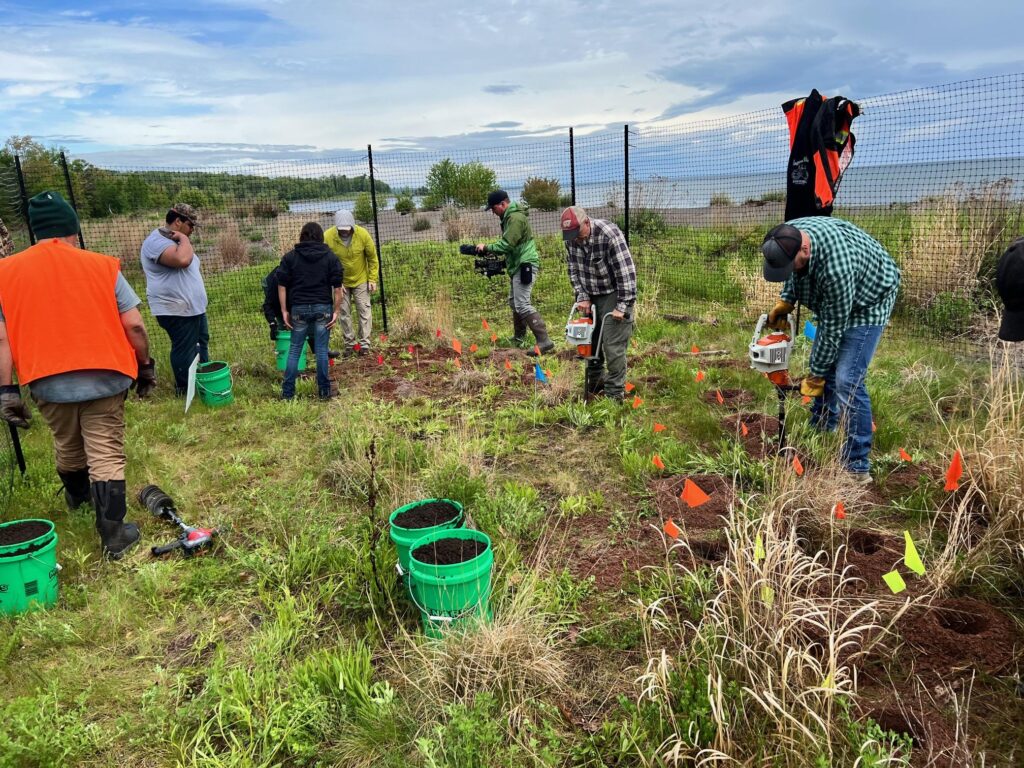 The Sand Point phyto project planting team used power augers to drill holes into which tree cuttings were inserted, and filled the holes with compost and biochar soil amendments (in green buckets).
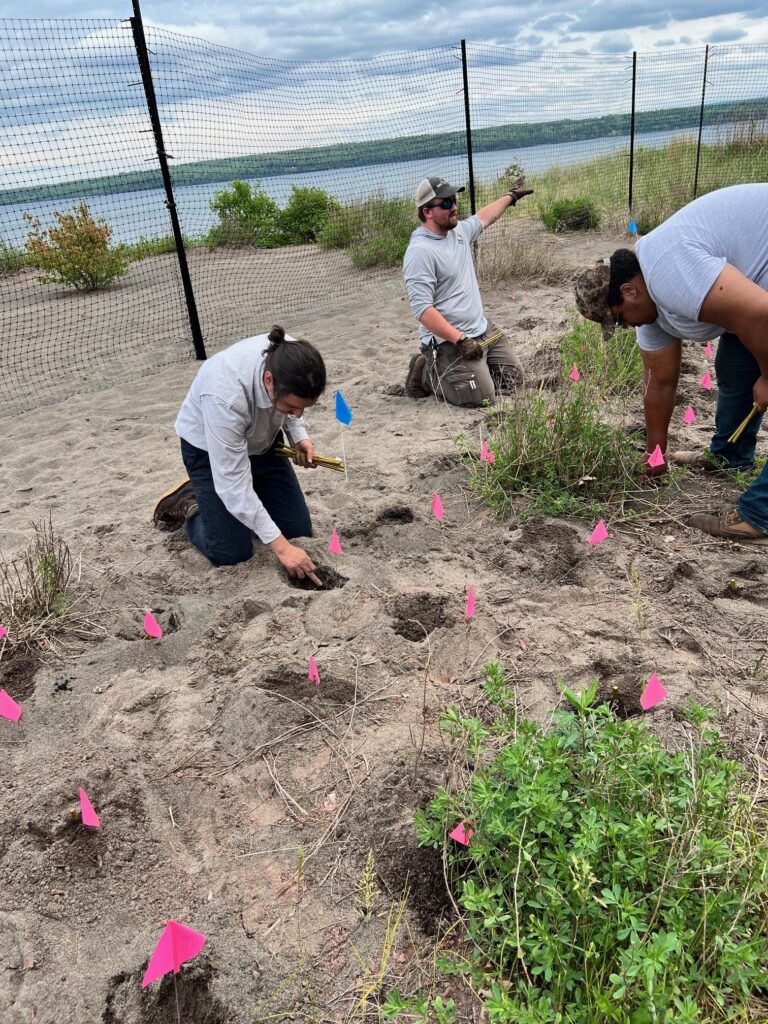 In June 2024, nearly 3,000 poplars and willows were planted at Sand Point.
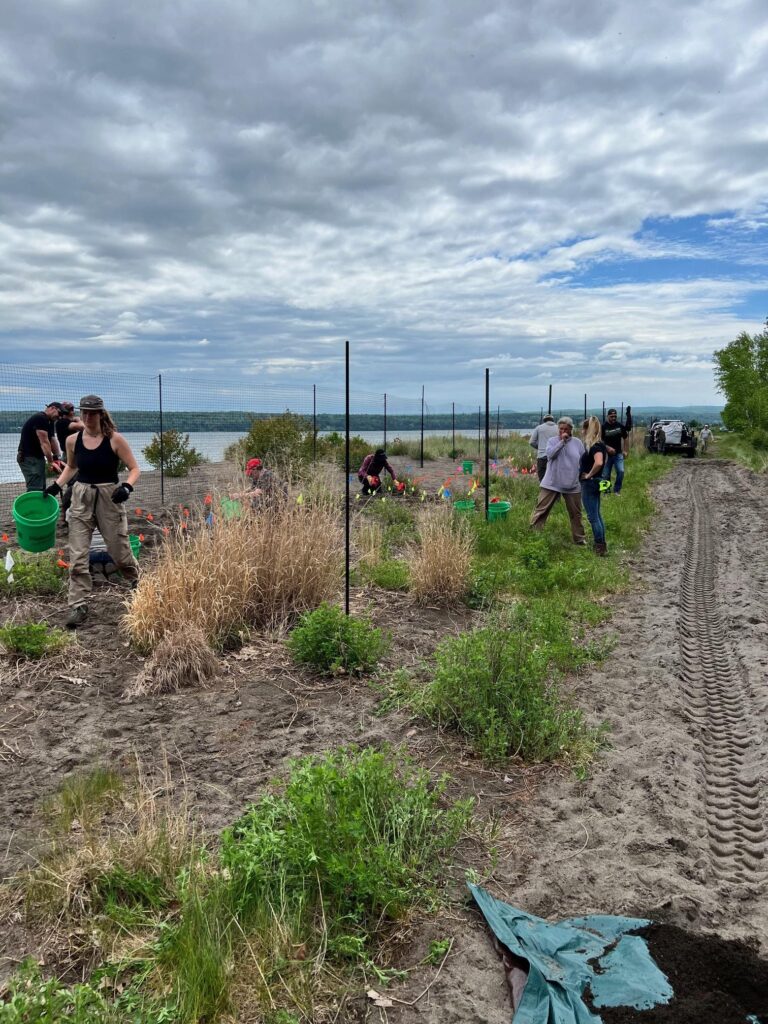 Staff of the KBIC, USDA Forest Service, MU Center for Agroforestry, and Michigan Technological University worked together to establish three phytotechnology buffers at Sand Point: a phytostabilization plot, a phytoremediation plot, and a willow demonstration garden.
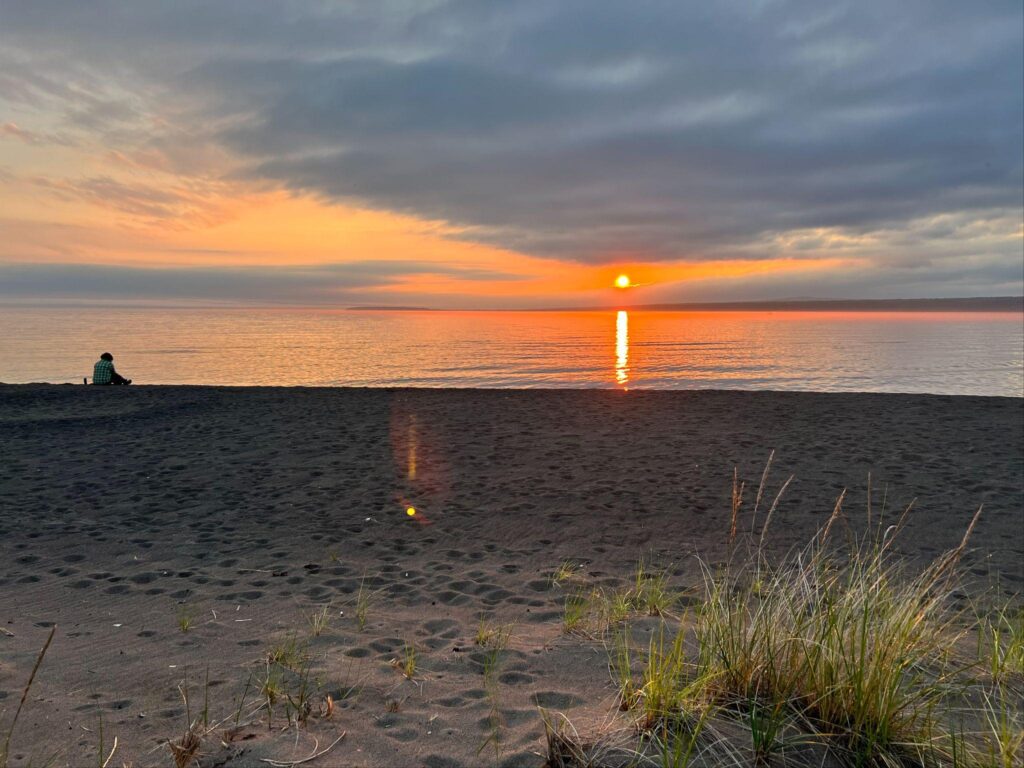 Sand Point is located on the south shore of Lake Superior near Baraga in Michigan’s Upper Peninsula.
“These toxic heavy metals cannot be degraded by microorganisms, but they can be transformed into less toxic forms by them,” said Lin. “Planting trees at the contaminated site would stimulate microbial detoxification processes and help establish a cost-effective, environmentally friendly, and self-sustaining symbiotic remediation system.”
Over time, the team will do more soil sampling to better understand the composition of the microbial community at the site, and to monitor any changes that occur. The team will also take measurements on the trees in the phytotechnology systems to assess the performance of the different poplar and willow varieties at the site.
“Next field season, we will start doing intensive physiological measurements on the trees,” said Ron Zalesny. “One of our ultimate goals is to use the information that we generate from this project to develop best management practices for the sustainable management of similar sites that are affected by stamp sands in the region.”
The Sand Point phyto project seeks to address the ecological restoration goals identified by the KBIC as well as enhance the beneficial uses of Sand Point to open up more pathways for recreation, cultural use, and wildlife habitat. In the years to come, the well-cared-for trees are expected to stabilize the stamp sands and lessen the toxicity of heavy metals within them, resulting in a healthier and more resilient lakeshore ecosystem for future generations to enjoy and depend upon.
Additional Resources:
Funding Acknowledgement
Zalesny, R.S. Jr., Johnston, E., Lin, C-H., Rogers, E.R., Vinhal, R.A., Ballinger, J., Cai, Z., DuPlissis, J., Elder, T., Hallett, R.A., Heckman, K., Kane, E., Page-Dumroese, D., Paqueo, L., Piana, M., Schmidt, K., Sonti, N., and Yan, J. 2023-2028. Using specialized trees and biochar to remediate and stabilize mining waste for the Keweenaw Bay Indian Community. USDA FS Washington Office, BIL Ecosystem Restoration Provision 40804(b)(8). ($895,000).
Photos courtesy of Elizabeth Rogers, USDA Forest Service, and Chung-Ho Lin, MU Center for Agroforestry.