
Graduate Student Spotlight: Liz Rogers
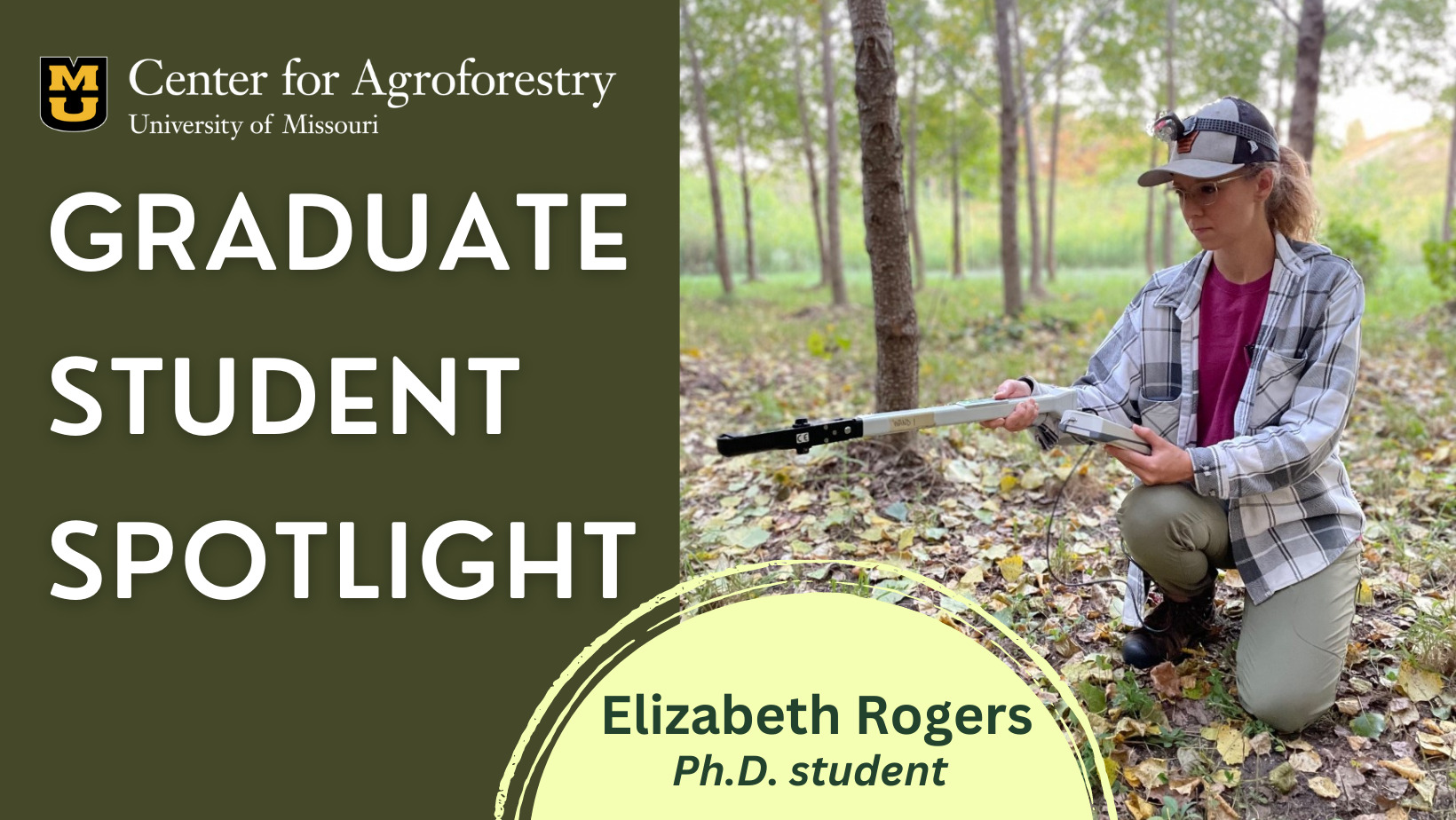
Pictured above: UMCA graduate student Liz Rogers collects leaf area index data of hybrid poplar trees at a phytoremediation buffer system in Wisconsin. Photo by Ryan Vinhal, USDA Forest Service.
When UMCA doctoral student Liz Rogers isn’t in the classroom, you can find her collecting data in various poplar groves throughout Wisconsin and Michigan’s Upper Peninsula. She’s studying tree-based systems for pollution remediation, known as phytoremediation systems. Specifically, her work focuses on pollutants in landfill phytoremediation systems, their fate, and how effective different poplar varieties are at remediating contamination. Her ultimate goal is to figure out how to make phyto systems as effective as possible, whether through the prioritization of which pollutants to target or through the selection of the most robust poplar varieties.
Liz is currently in the fourth year of her Ph.D. program in Natural Resources with a Forestry emphasis at MU. Her doctoral research was born out of her work at the USDA Forest Service Northern Research Station (USDA FS NRS), where she has served in various capacities since 2016. She currently works as a Pathways Intern, and conducts her Ph.D. fieldwork at one of the landfill buffer systems established by her Forest Service team.
While most of her time is occupied by her research and her work with the Forest Service, Liz loves to try out new hiking trails, explore new cities, and continue her quest for the best barbecue around. She plays the trumpet in the Columbia Community Band, and tries to fit in a little music wherever she can.
“One of the biggest reasons I chose UMCA’s graduate program was that my research interests aligned with the research program of the scientist who would become my advisor at MU, Dr. Chung-Ho Lin,” said Liz. “After reading about the research that his lab has conducted, I was excited to see such a broad variety of research topics within natural resources. His research program ranges from the identification of bioactive compounds in natural products to pollution mitigation with agroforestry vegetative buffers.”
Dr. Lin’s lab applies modern bioanalytical chemistry approaches to investigate challenging environmental problems. It was his team’s multidisciplinary, dynamic approach to their research that drew Liz to UMCA. She has also appreciated the program’s flexibility, which has allowed her to continue working as a Pathways Intern throughout her studies.
“I have freedom to decide which courses to take and how to structure my academic program,” said Liz. “This has allowed me to dive into diverse courses that not only suit my interests, but will also benefit me in my career.”
She has taken courses ranging from coding to environmental policy, statistics to grant writing, bioanalytical chemistry to public engagement, and hydrological modeling to mass spectrometry. One of her favorite courses was Professor Robin Rotman’s Environmental Law, Policy, and Justice, where the class visited the Columbia courthouse to watch different court proceedings, attended a guest lecture from an MU law professor about crafting effective arguments, and conducted a mock trial on an environmental case.
“Overall, the course was a very hands-on way to engage with the legal aspects of natural resources and to understand how the current regulations and laws came to be,” said Liz. She highly recommends the course to any natural resources student.
No matter what she ends up doing after she obtains her doctorate, Liz hopes to combine her backgrounds in science and education. To her, this aspiration could fit into a variety of careers: a Forest Service scientist that engages in outreach with various communities, a professor at a university or community college, or an Extension specialist or education coordinator for a nonprofit organization. Wherever she lands, she’s invested in continuing to research short rotation woody crops for pollution mitigation, and would also like to expand into a new direction of research on fast-growing trees for agroforestry systems.
“The range of courses offered in this program has allowed me to broaden my horizons in ways that I never thought would be possible when I first decided to pursue graduate school,” said Liz. “My fieldwork, combined with the program’s coursework and the expertise of my advisors has prepared me to conduct impactful interdisciplinary research in my career.”
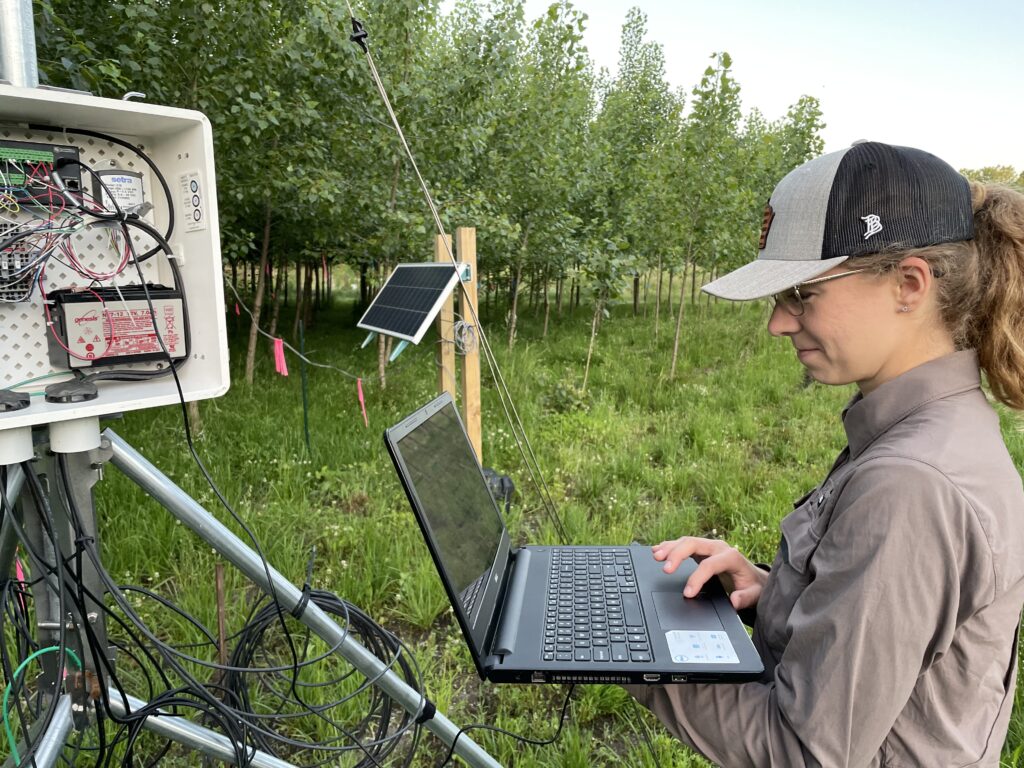 Liz conducts field work at one of her team’s phytoremediation sites she monitors in the Upper Midwest.
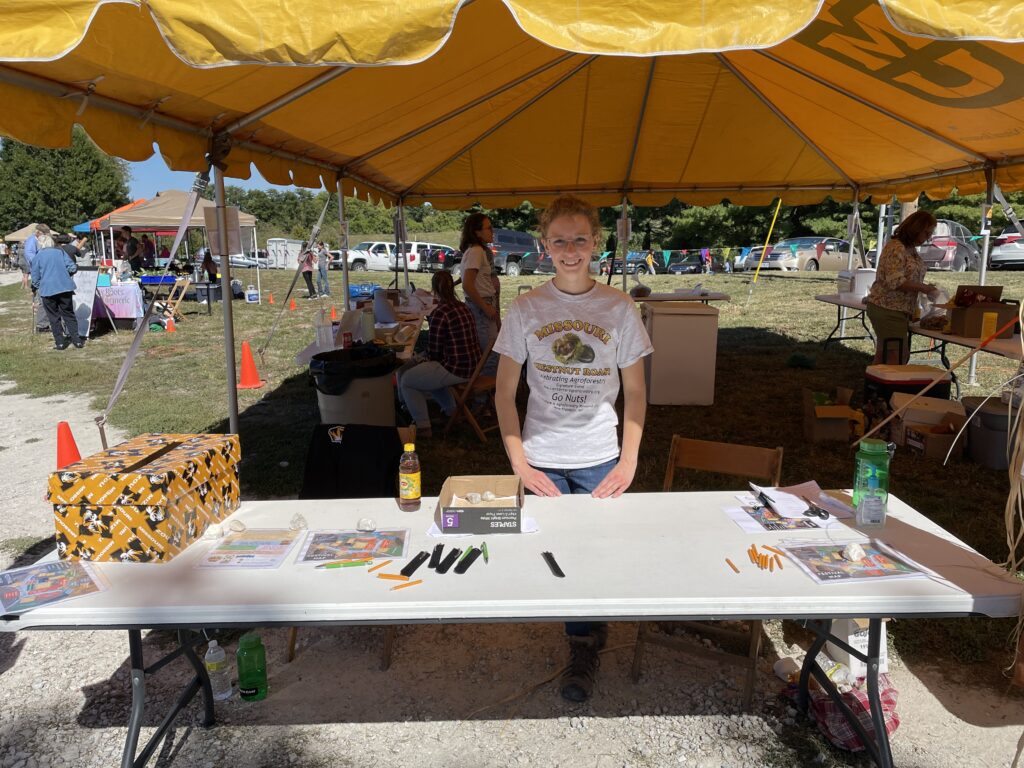 Liz volunteers at the welcome tent during UMCA’s annual Chestnut Roast Festival.
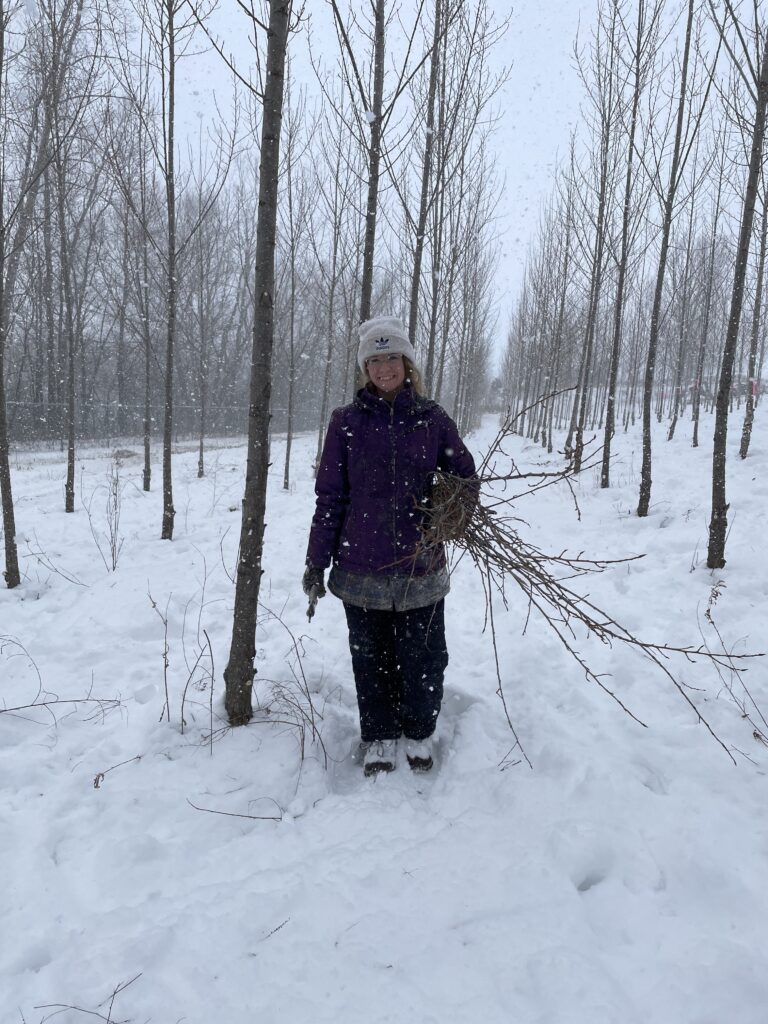 Winter fieldwork in one of Liz’s poplar groves!
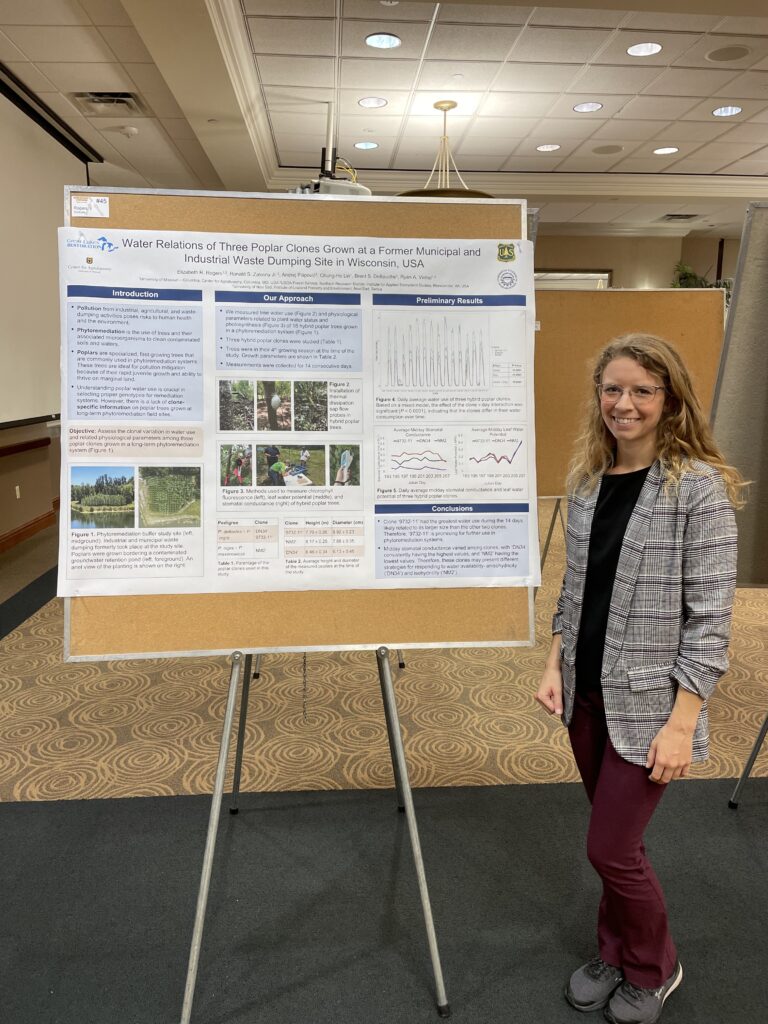 Liz presents her phyto systems research at the 2022 MU CAFNR Research Symposium.