Assistant Research Professor
330 ABNR Bldg
Office: 573-882-1363
slord@missouri.edu
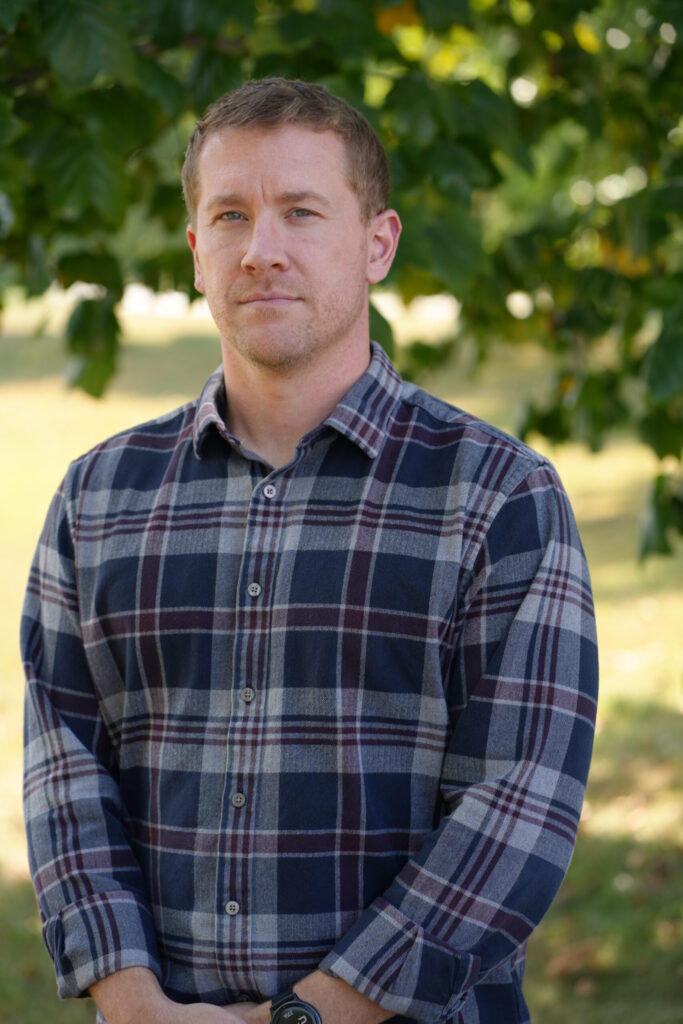
Samuel Lord is a soil ecologist and agroforestry researcher at the University of Missouri whose work investigates the living foundation beneath perennial agricultural systems, conventional crop production, and native systems. His work aims to elucidate how soil biological communities shape the long-term productivity, resilience, and ecological integrity of diversified production systems. His research uses multi-omics approaches including metagenomics, transcriptomics, and sequencing technologies to map the microbial networks that support nutrient cycling, stress tolerance, and perennial crop performance across a range of agroforestry and native systems. Sam also studies how rhizosphere microbial communities, signaling molecules, and metabolomic profiles govern the establishment and reproductive success of native perennial species, work that informs native seed production, restoration, and agroforestry understory diversification.
Soil is the foundational medium of all terrestrial ecosystems, yet much of its living fraction has remained a black box. Sam’s work pushes into that box by integrating the virome, plasmids, and other mobile genetic elements alongside bacterial and fungal community data to reveal the hidden architecture of soil biological networks. Viruses shape microbial population dynamics, plasmids carry and transfer functional genes across community members, and together these elements influence how soil ecosystems respond to stress, disturbance, and management. By bringing these often-overlooked components into the picture, his research moves toward a more complete understanding of what soil life actually is and how it drives the systems we depend on above ground.
A central theme across his research is that soil health is not simply a matter of chemistry but rather ecological structure and biological organization, and that vegetation and crop performance reflect the full history of belowground processes, land use, and succession. His work extends to integrated grazing systems as well, where managed grazing with intentional rest periods and reduced stocking pressure allows microbial communities to recover and improve water infiltration, organic matter retention, and floristic quality over time. Taken together, Sam’s research advances a unified vision for whole-farm agroforestry stewardship grounded in a deeper understanding of the soil holobiome.
Google Scholar