
More than Maple: Tree Syruping in Missouri
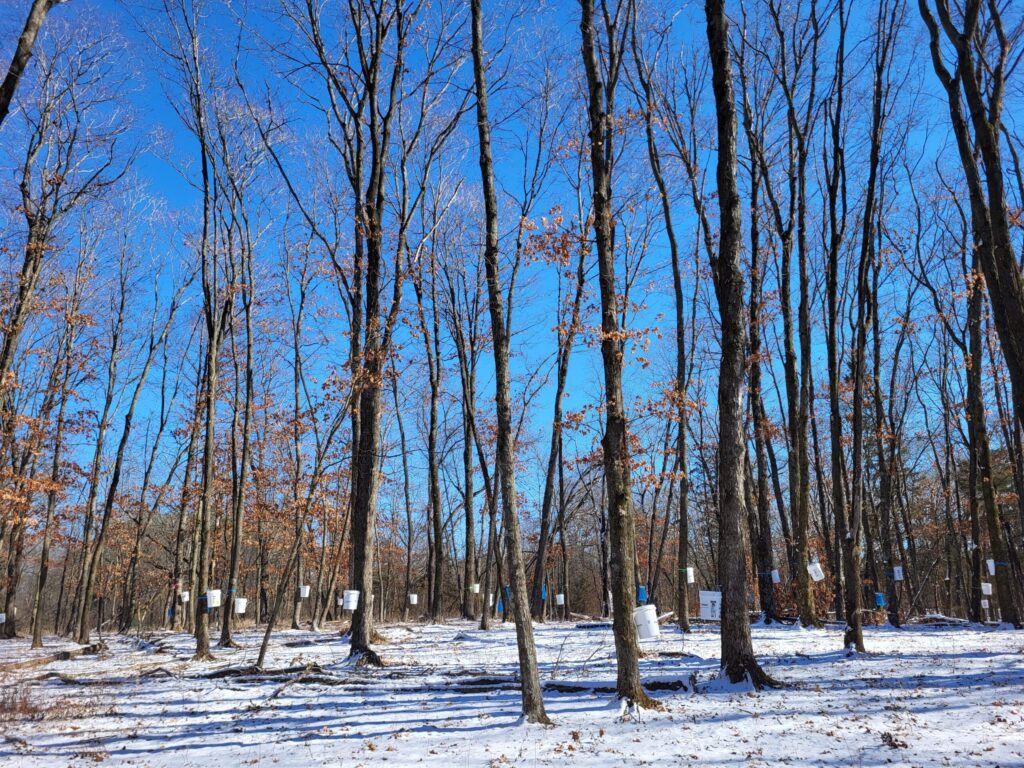 The study stand of sugar maple trees at Baskett Forest during sap season.
 Pure sugar maple syrup (left) and a blend of sugar maple and sycamore syrup (right) from sap collected at Baskett Forest.
 Graduate student Ren Klug tapping a sugar maple tree at Baskett Forest in Ashland, Missouri.
 A vacuum collection line for sugar maple trees, where multiple tree taps were connected to one tubing system and negative pressure draws sap into one collection point.
 A black walnut tree tapped with bucket collection.
 Graduate student Ren Klug collecting sugar maple sap that will be boiled down to syrup.
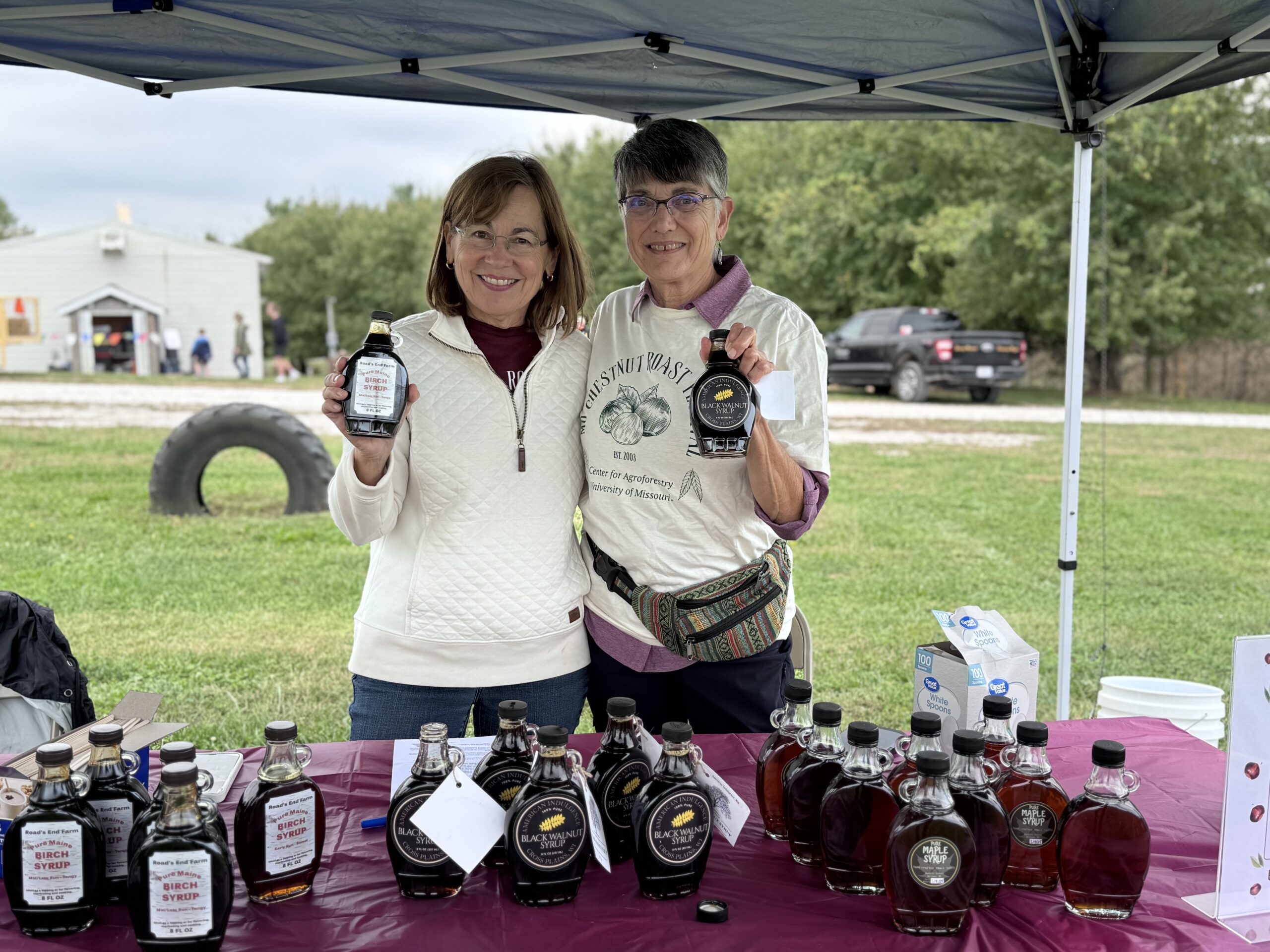
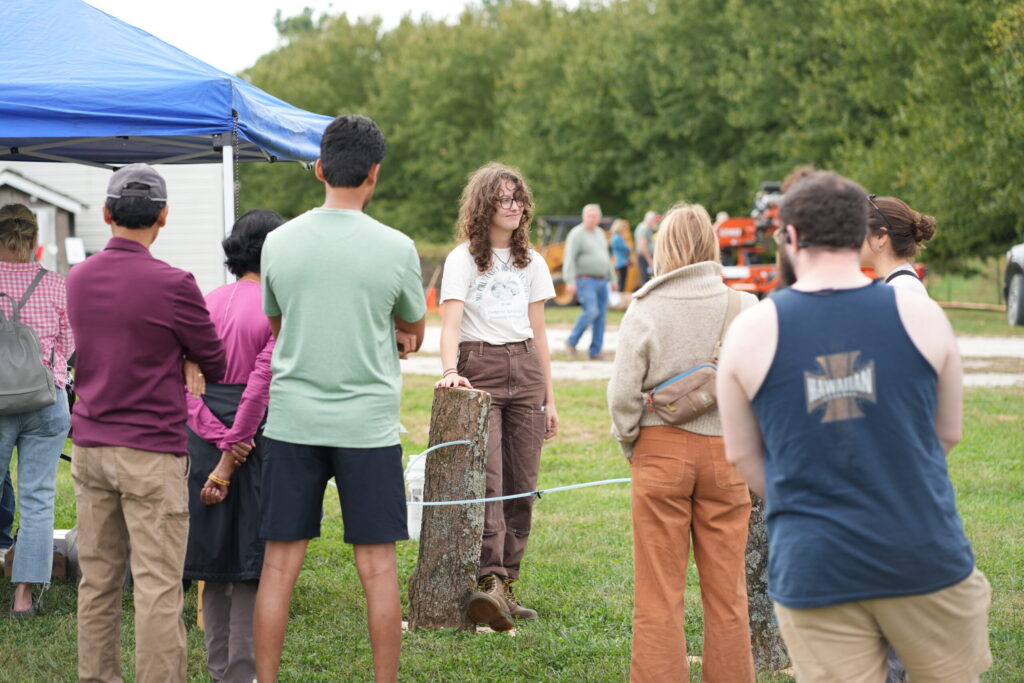 Klug demonstrates a tapping tubing at the Missouri Chestnut Roast Festival in October 2025.
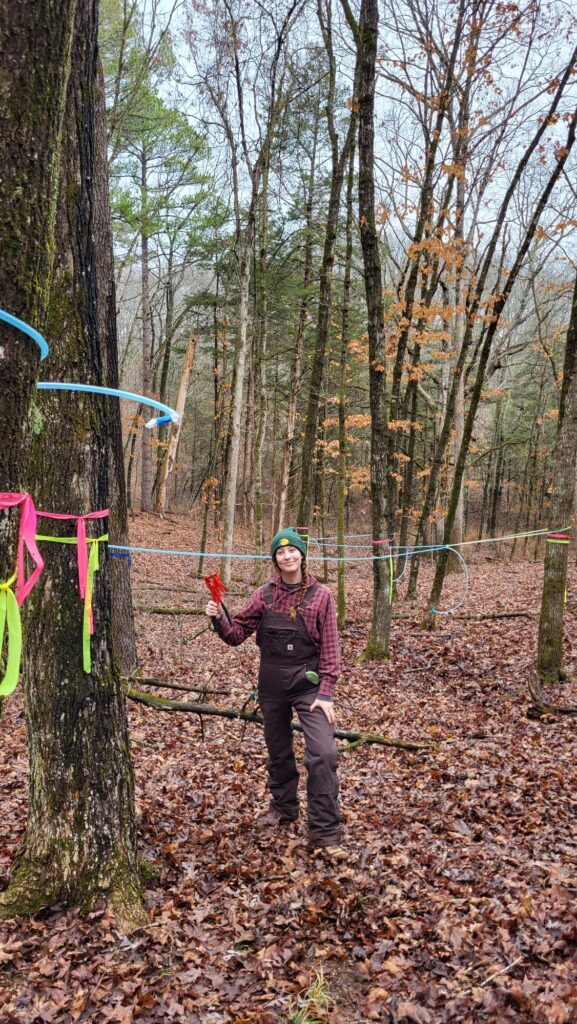 Klug sets up a sap collection tubing system before sap season. The red-tool in hand is a specialty tubing tool for connecting the lines.
In Missouri, sugaring season is nearly upon us! For more than a decade, Associate Professor Ben Knapp, PhD, has been leading tapping operations at MU Baskett Forest in Ashland to collect data on best practices and better understand the performance of sugar maple stands in Missouri’s environment.
The project started in 2012, with the acquisition of a wood-fired sap boiler by Rich Guyette, PhD, through funding support from the CAFNR Foundation. Each January, Knapp, his lab team, and groups of volunteers tap up to 200 sugar maple trees at the research forest.
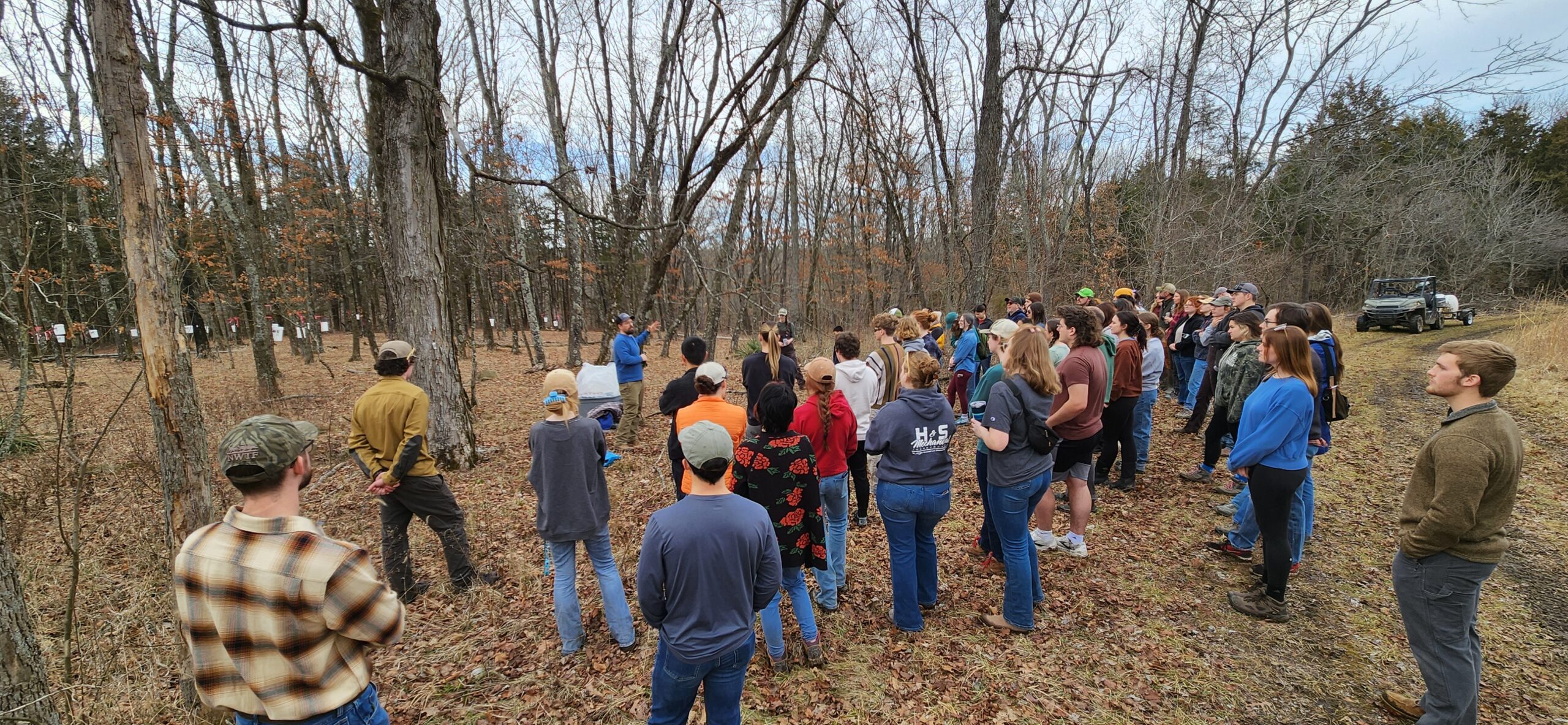
“The project was designed around producing syrup while providing hands-on educational opportunities for students,” said Knapp. “We often offer an undergraduate student an internship position with the maple syrup project, with responsibilities including assisting with general production, organizing events to showcase the project, and collecting data on sap production and sugar content from individual trees.”
This dataset provides useful information about variability in sap production among trees, both within a single season and across years. In January 2024, graduate student Ren Klug joined Knapp’s team to identify factors that help predict the sap production of individual trees, as well as yields from alternative tree species.
While Missouri has a rich history of maple syruping, especially at hobby scale, sugar maples large enough to tap are not widely available outside of the Missouri River Valley, thus limiting statewide production.
Exploring Alternative Trees for Syruping
Sugar maple isn’t the only tree with tapping potential in Missouri. Ren Klug is working with some of our state’s more ubiquitous species, eastern black walnut and American sycamore, to investigate their potential for supporting a Missouri syruping industry. Syrup from these trees can sell for eight times the market value of maple syrup.
“The high-value syrup from these common Missouri trees provides a valuable non-timber forest product opportunity in Missouri for woodland managers of many scales,” said Klug.
Last winter, Klug tapped black walnut, sycamore, and sugar maple trees from mid-January to early-March to compare sap production and evaluate collection methods across species. The two methods tested included bucket and vacuum collection. Bucket collection is the traditional method, for which each tapped tree has an individual bucket, and sap flows out of the tree via gravity. Vacuum collection systems connect many trees to one tubing network and create negative pressure in the line via a water pump. Vacuum collection can be more efficient than buckets, as there is only one collection tank for many trees and the negative pressure can increase sap yields.
Klug and her team then routinely measured the sap yield and sugar content for each tapped tree.
The use of vacuum did not influence sap sugar content but did influence sap yields.
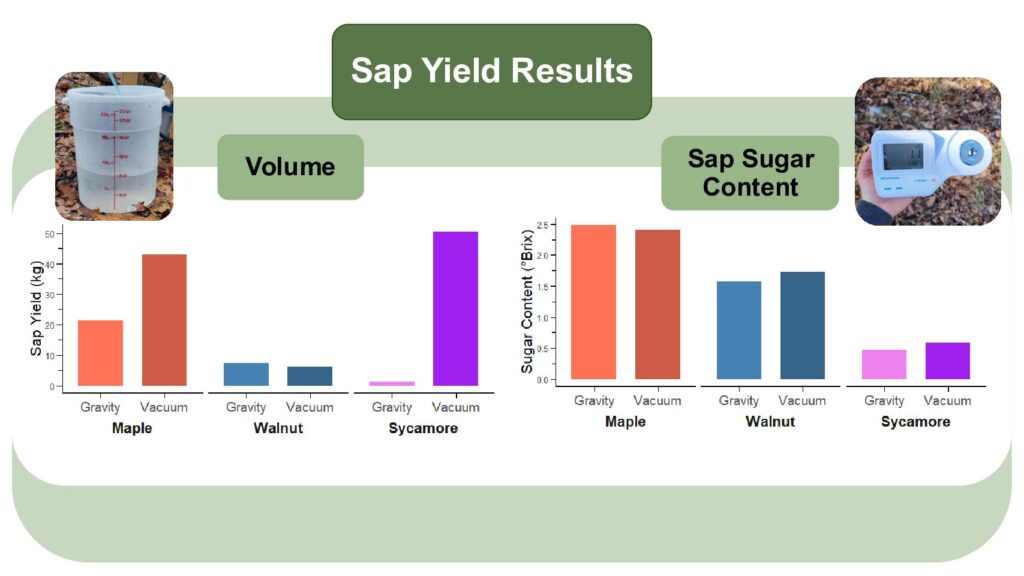
The researchers had to purchase a larger collection tank for the sycamore vacuum line because each tree was producing nearly a gallon of sap a day!
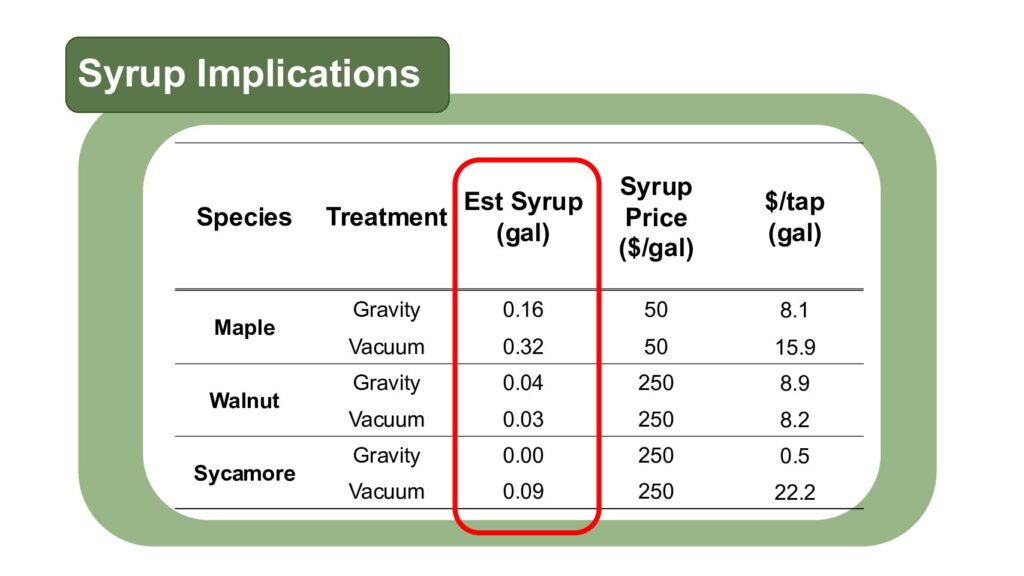
The team then calculated approximate syrup yields per tap based on the sap yield and sugar content data.
High-Value Alternative Syrups for Niche Markets
Landowners with non-veneer quality black walnuts or an abundance of sycamores can use this information to consider taking on a syrup operation. Sycamore and black walnut trees yield less syrup than sugar maples, but their syrup sells for higher prices, often over $300/gallon, compared to $60/gallon for sugar maple syrup. There is only one commercial sycamore syrup producer in the United States, and few commercial black walnut syrup producers, leaving the field open for Missouri to expand in this niche industry.
Looking towards the future, Klug is working on metabolomic analysis of sugar maple, black walnut, and sycamore sap with Research Professor Chung-Ho Lin, PhD, and his lab team. This work will help identify health-promoting compounds to help market specialty sap and syrup products. Klug is excited about the future of Missouri sap products, and sees great potential.
“Sycamore sap is low in sugar, so the syrup yields are very low,” said Klug. “I see more possibilities for sycamore sap to be used in the beverage industry. I’d like to see a Missouri sycamore seltzer on the shelves in the next five years!”
This project is supported by the USDA Agricultural Marketing Service, Acer Access and Development Program, grant number 21ACERMO10005-00 and the USDA/ARS Dale Bumpers Small Farm Research Center, Agreement number 58-6020-0-007 from the USDA Agricultural Research Service.