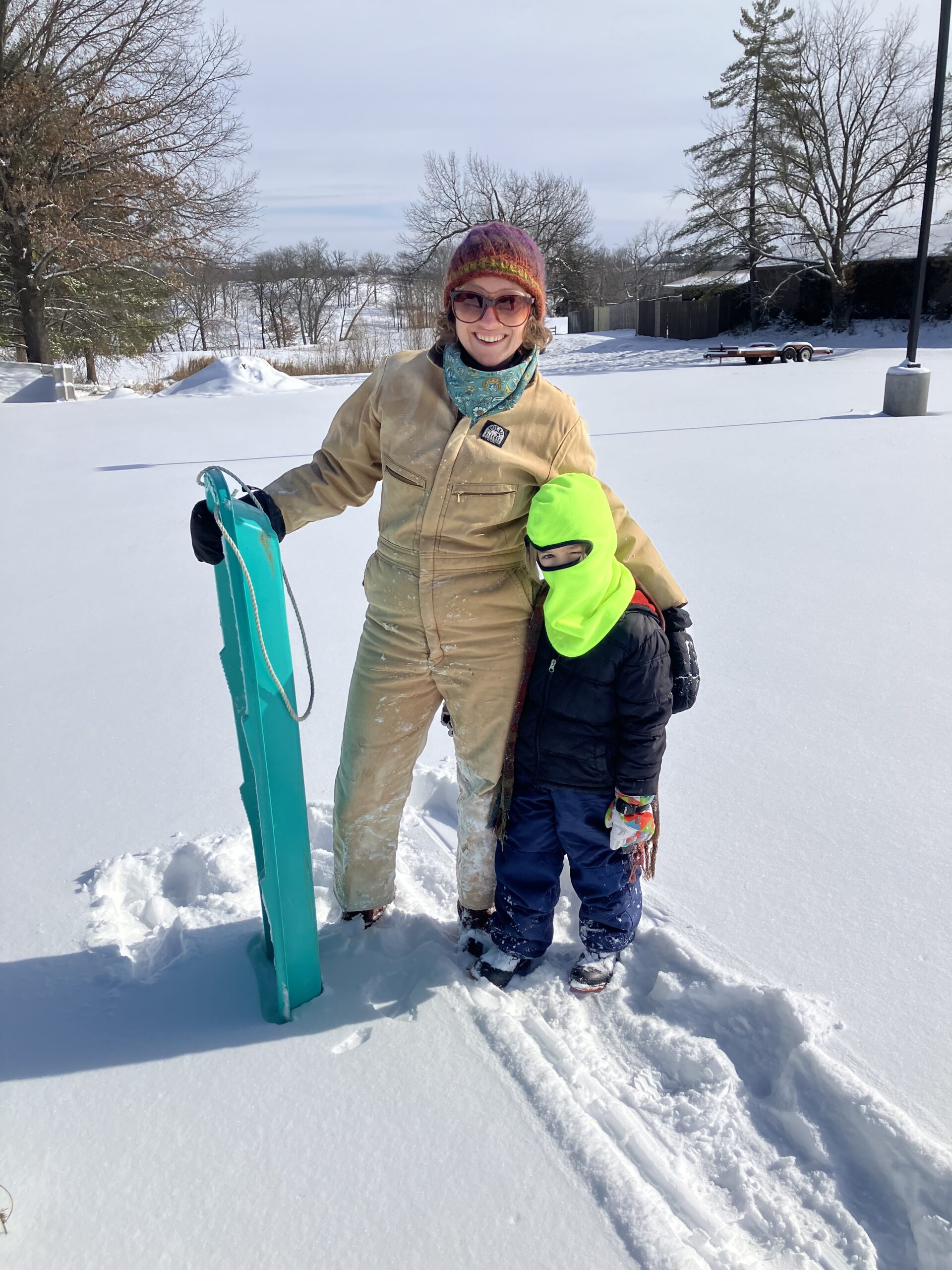
Meet the Center’s new faculty member Hannah Hemmelgarn, PhD
Hannah Hemmelgarn, PhD, has joined the Center for Agroforestry’s faculty team to develop research programs that focus on place-based relational accountability and participatory methods. Hemmelgarn also oversees the Center’s training programs, partnerships, and events. Learn more about her background and expertise in this Q&A!
What is your educational and professional background? How did you end up at Mizzou and the Center for Agroforestry?
My undergraduate degree is in anthropology and sociology, with minors in environmental science and French from Truman State University (2009). Over several years during and after college, I worked on diversified farms in Quebec, Missouri, and Oregon, among many odd jobs.
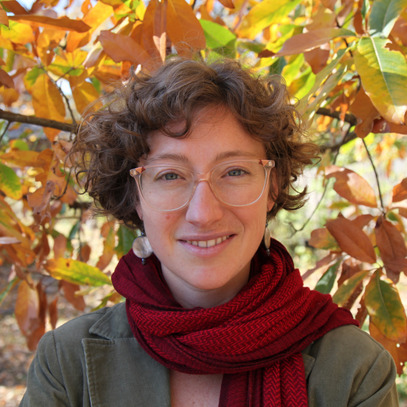
In that wayfinding time, I completed a Permaculture Design Certificate at The Possibility Alliance in LaPlata, Missouri, an on-farm Herbalism Apprenticeship at Herb Pharm in Williams, Oregon, and a Doula certification at the Utah College of Midwives in Salt Lake City, and applied those skills at the same time that I established a small forest folk school enrichment program called “Wild Folk” for youth in Columbia, Missouri. In 2014, I made my way to Northern Minnesota to pursue a Graduate Certificate in Environmental Education from the University of Minnesota, Duluth while working at Wolf Ridge Environmental Learning Center as a Naturalist Educator.
Following that graduate coursework, I came to Mizzou as a graduate research assistant with Dr. Mike Gold at the Center for Agroforestry. For my master’s thesis, I created an agroforestry curriculum for Missouri High School Agriculture Science teachers, trained those teachers to use the curriculum, and evaluated that program as part of a mixed methods case study of novel content implementation. That material is now a unit in Missouri’s HS Ag. Science statewide curriculum.
Soon after graduation, I was hired as the Center’s Education Program Coordinator and started working on my PhD here a couple years later, first under Dr. Sarah Lovell and later with Dr. Charlie Nilon. I completed my PhD in Human Dimensions of Natural Resources in 2025, on relational accountability in agroforestry research and planning, with Land of the Osages Research Farm as a focus for applied place-based narrative inquiry and story mapping.
While my background is varied, I’ve found that my work at the Center for Agroforestry brings it all together, now as Associate Director and Assistant Research Professor, integrating social sciences, cultural awareness, experiential education, program evaluation, agriculture and ecology.
What is your favorite aspect about the work you do?
In the time that I’ve worked at the Center for Agroforestry, I’ve been welcomed into the broader agroforestry community across the U.S. and internationally. These social networks are activated through the Association for Temperate Agroforestry’s biennial conference, the Agroforestry Coalition’s working groups, our annual Agroforestry Training Academy and graduate program, among many other regular gatherings.
These spaces serve as a kind of mycelial connective tissue for understanding how the agroforestry landscape -in knowledge and practice- is changing, what questions are relevant for us to address in this moment, and ultimately how our findings can be integrated back into efforts on the ground. I enjoy this kind of systems thinking at multiple scales; it’s a puzzle with meaningful real outcomes. The people I get to work with here at the Center, like the wider community of agroforestry scientists and farmers, care deeply about our work and its impacts, and in turn, we care about each other. This collaborative environment is generative, supportive, and genuinely enjoyable.
What projects will your lab focus on in the immediate future? What big picture programs are you working to build out?
My lab will focus on social and social-ecological sciences in agroforestry that can effectively inform responsive, place-based, participatory, and impact-driven research and education programs more broadly. For example, we can deepen our understanding of applied research and training outcomes through mixed methods program evaluation, regional producer narratives and case studies. One active effort in this area is taking shape with more than a decade of program evaluation data from our Agroforestry Training Academy and longitudinal surveys (forthcoming) of our agroforestry graduate degree alumni to better understand ripple effects of discrete education and training programs over time.
Spatial network analysis integrating sociocultural and biophysical data will aim to identify nodes and links connecting tree crop and practice suitability with availability of tailored technical assistance and resources. This type of inquiry can be applied to a number of unique objectives, from understanding the potential impacts of proximity to a demonstration farm, to value-chain development with network mapping of access to processing facilities and markets, or identifying target areas for addressing landscape scale resource concerns based on cultural and infrastructure readiness factors.
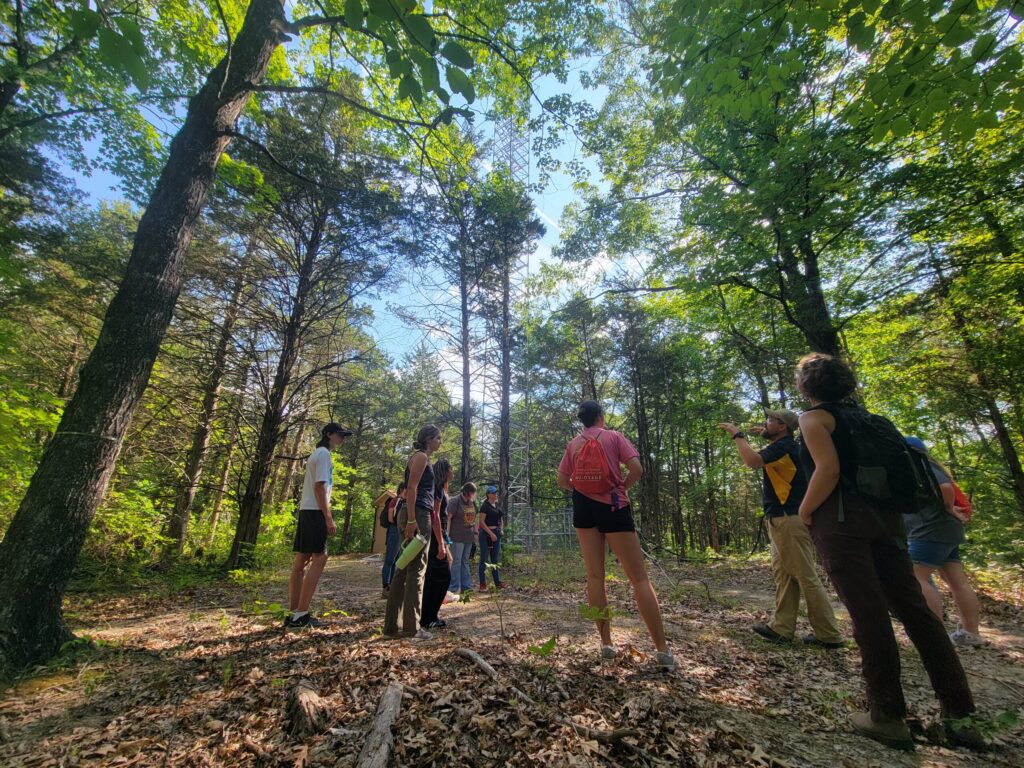 Hemmelgarn stands with high school students from Osage Nation at MU’s Baskett Forest during the MU-Osage Summer Experience Week in 2022.
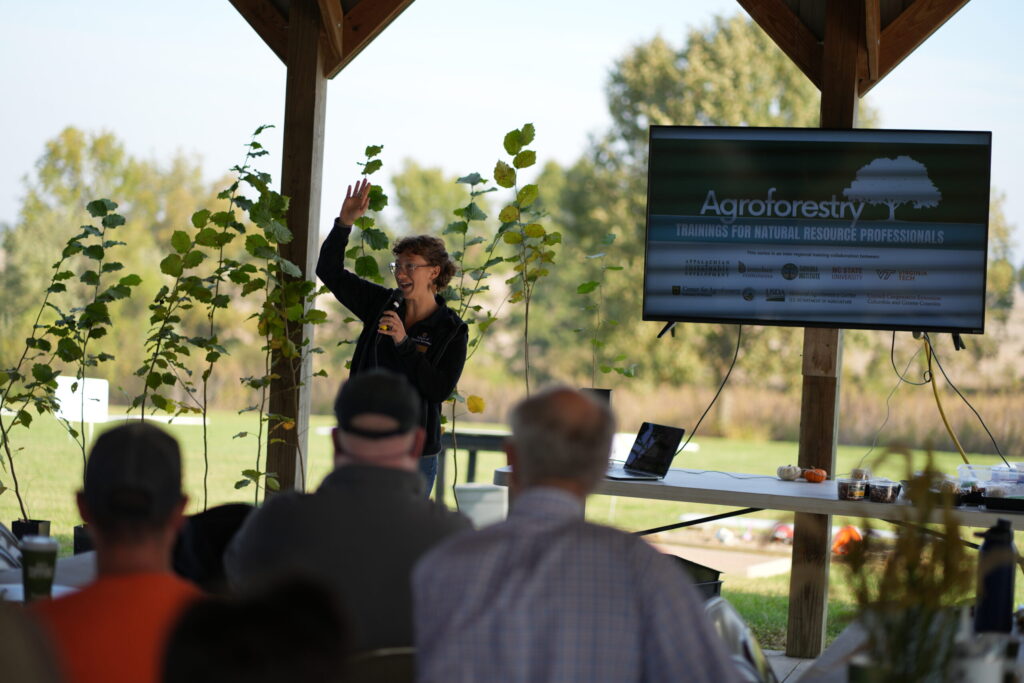 Hemmelgarn offers an overview of training programs available to growers at the Hazelnut Workshop at the MU Horticulture and Agroforestry Research Farm in 2025.
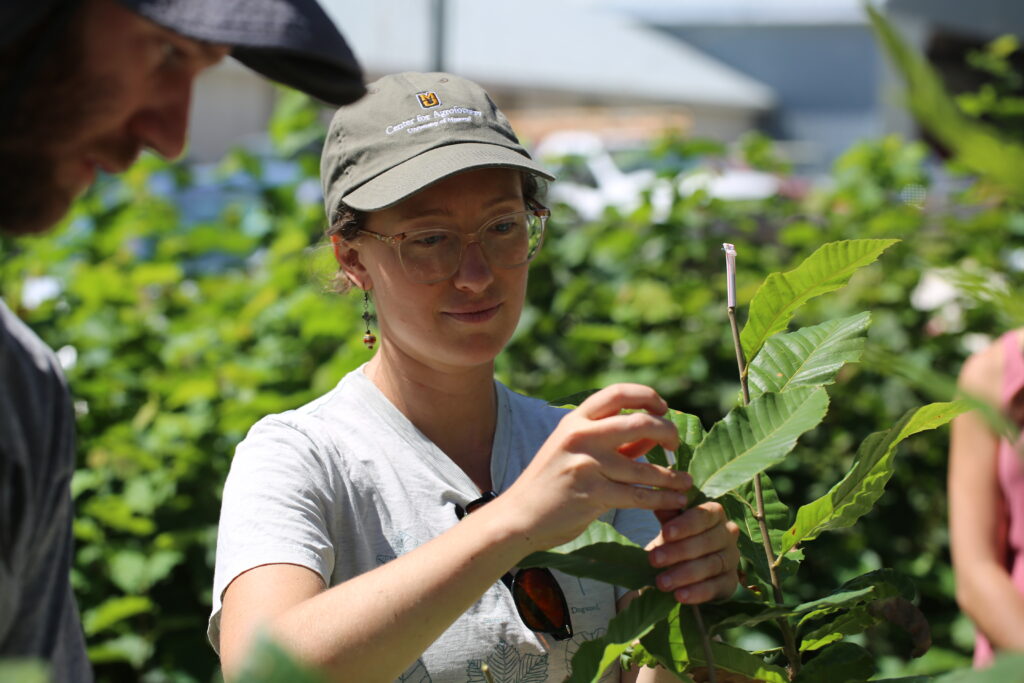 Hemmeglarn helps with greenhouse activities at the MU Horticulture and Agroforestry Research Farm.
What do you envision for the future of agroforestry in Missouri and the Midwest?
We are fortunate here to have adequate rainfall throughout the year, extensive research and demonstration farm activity for integrated tree crops, and farmers who’ve been engaged in our work for decades, all contributing to possibilities for a vibrant agroforestry future. These conditions are (and hopefully will continue) bearing fruit: Missouri is already the number one elderberry producing state; growers have access to regionally-adapted and improved tree crop cultivars, like our recently released UMCA® Hickman black walnut; and plans are emerging for public use nut processing facilities to facilitate perennial food production on diversified farms. Widespread interest in silvopasture supported by active incentive programs like Expanding Agroforestry Markets for Producers will result in more ecologically and economically resilient diversified perennial farms.
I am also delighted to see a growing number of Missouri forest land stewards involved in the Midwest Forest Farming Coalition, appreciating, conserving, and scaling production of at-risk botanicals such as goldenseal, ramps, and black cohosh. This is a future where the expression of agroforestry on the landscape is as varied as its place and people contexts, and where livelihoods from the land support long-lived legacies for the land and its inhabitants.
What’s a fun fact that most colleagues don’t know about you?
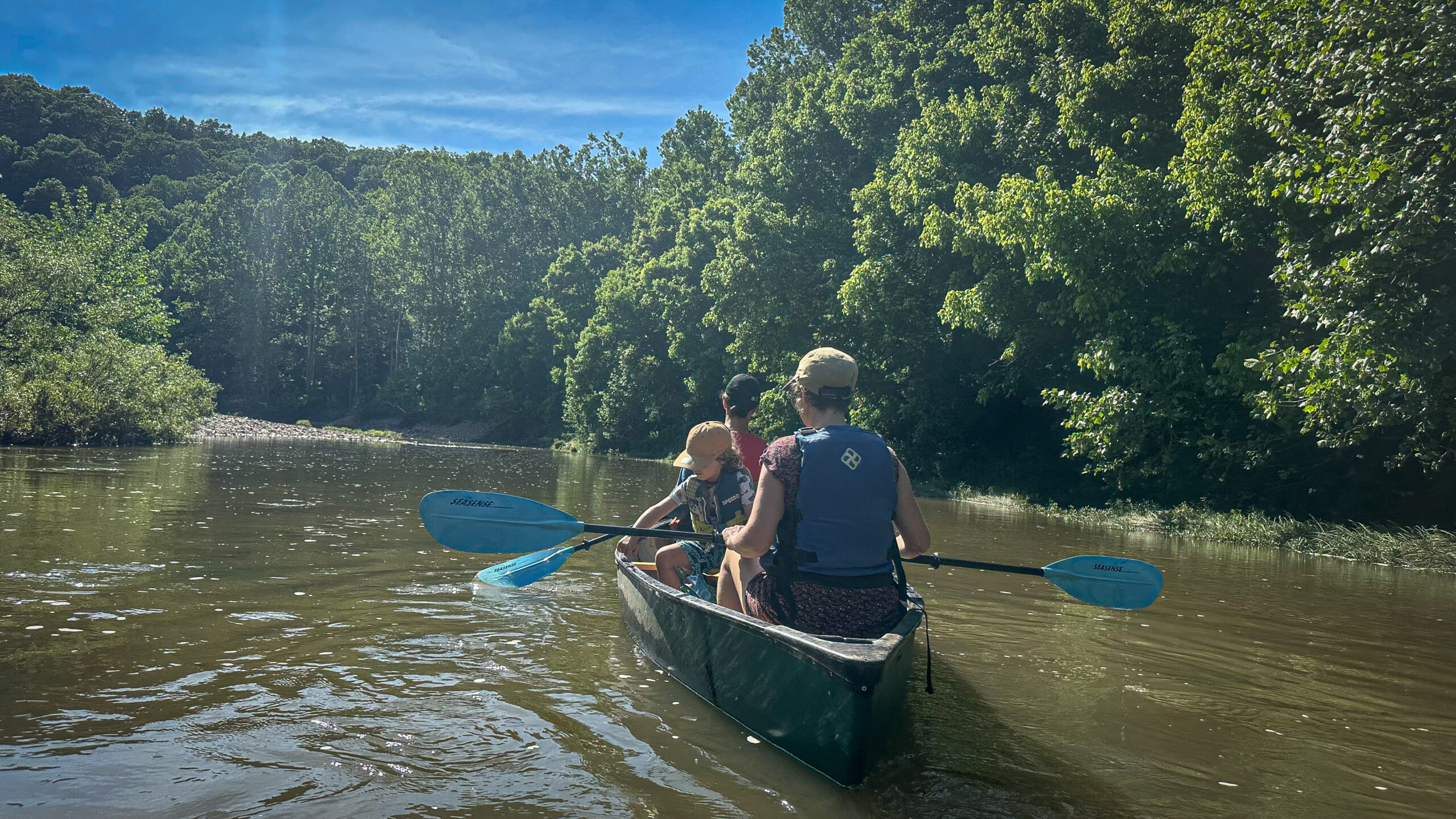
Colleagues who’ve spent much time with me know that I’m a 7 (enneagram enthusiast), and therefore varied in my extracurricular pursuits. I practice qigong daily, am an avid gardener and always-curious naturalist and forager, paddle as often as I can on big local creeks and little rivers, get around mostly by bicycle, and within all of this I love to spend time with my six year old, Rye, and our dear community of friends.
Learn more on Dr. Hemmelgarn's faculty page.