
Investigating delayed graft failure in a 15-year-old Missouri chestnut orchard
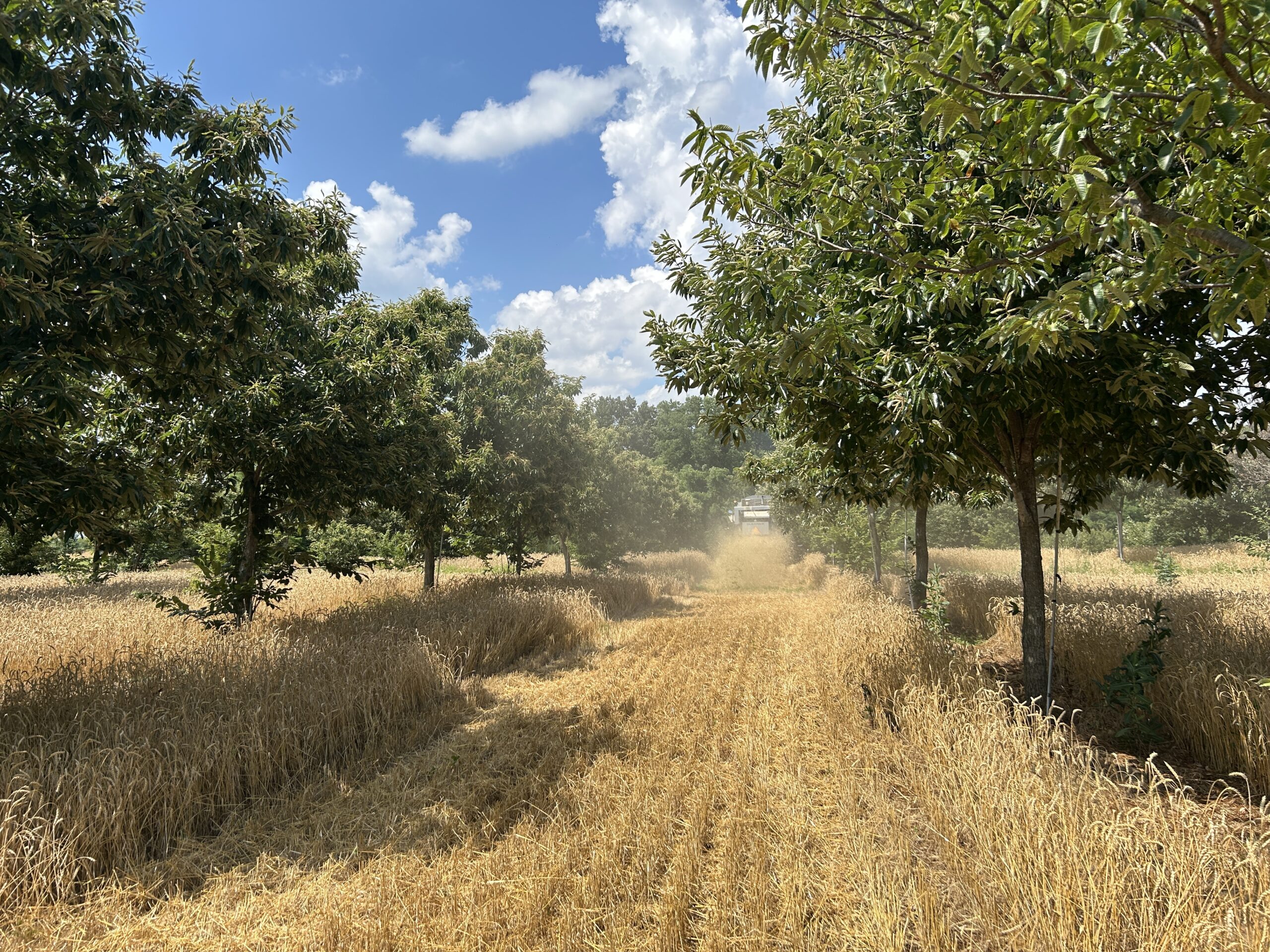
At the end of June, Bryan Webber, horticulture best management practices and mixed species systems lead, took a trip to Cedar Hill Farms located in Marshall, MO in Saline County to begin documenting grafting success in their mature trees and to see the wheat harvest from the alleys of their chestnut orchard.
The owners, Bill and Sue Ellen Stouffer, first planted chestnuts in 2009 and field grafted them in 2010. They plant new seedlings and graft cultivars onto year-old rootstock each year to continually expand their orchard, which is now 20 acres. The orchard is primarily made up of cultivars Qing, Peach, Kohr, and Sleeping Giant, but over 50 percent of the orchard is grafted in Qing. Delayed graft failure can be an issue in chestnuts, so on this trip, the Center for Agroforestry team began documenting the delayed graft failure incidence in the oldest part of the orchard grafted in 2010 (15 years old). Delayed graft failure occurs when the original graft is successful, but the grafted tree dies years after originally being established. In many cases, the rootstock will send up suckers (i.e. new shoots that grow from roots or lower stems below the graft), and these suckers can be regrafted.
Our preliminary analysis documented a total of 294 graft attempts in 2010. The cultivars grafted included Qing (50%), Peach (25%), and Kohr (25%). Only 51 out of 294 trees (17%) were either delayed failures or delayed failures that had been regrafted recently. Out of these failed and regrafted trees, 37 out of 51 (72%) were regrafted on a sucker in the last five years. This leaves 14 failed grafts out of the total 294 (5%).
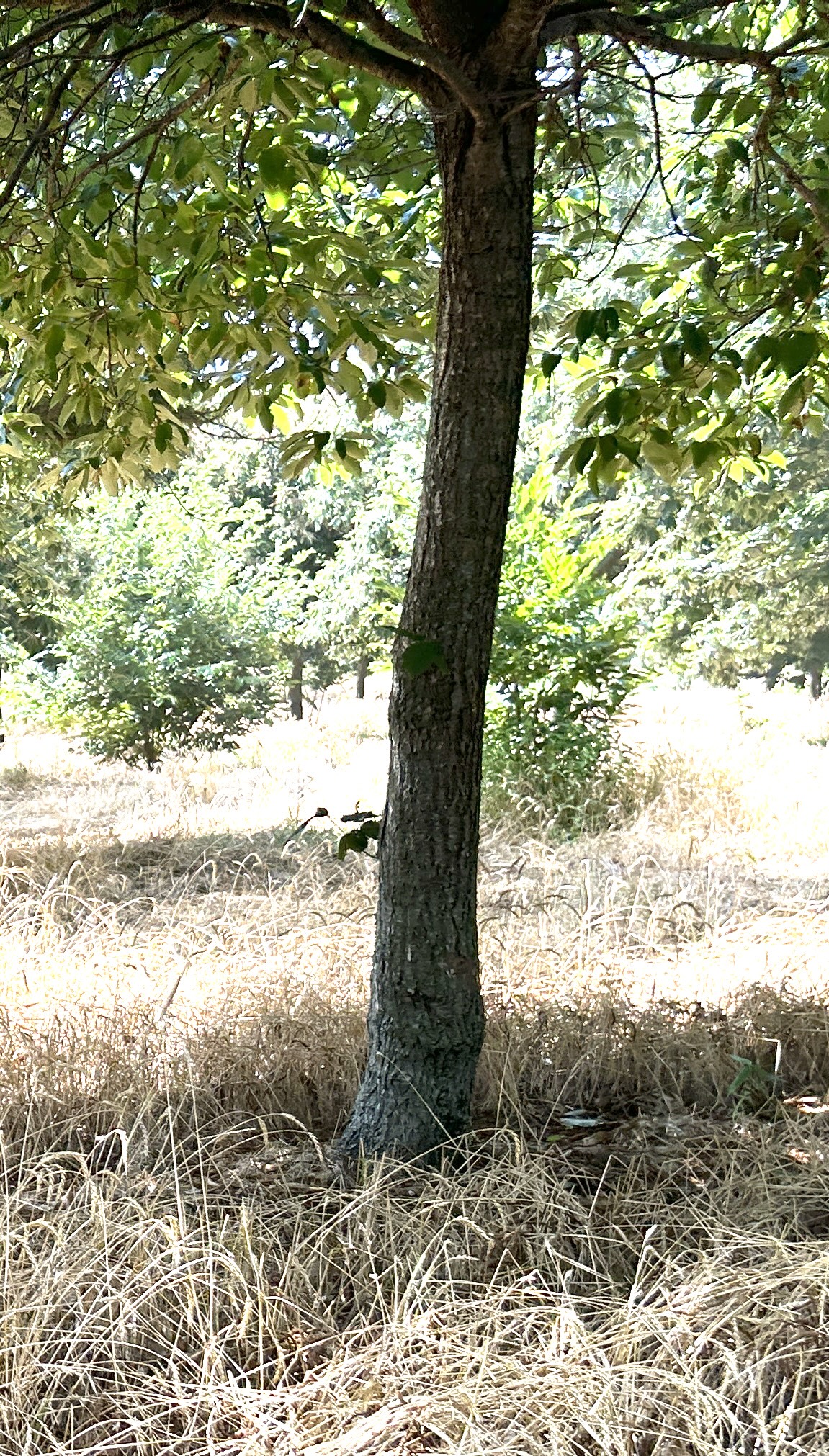
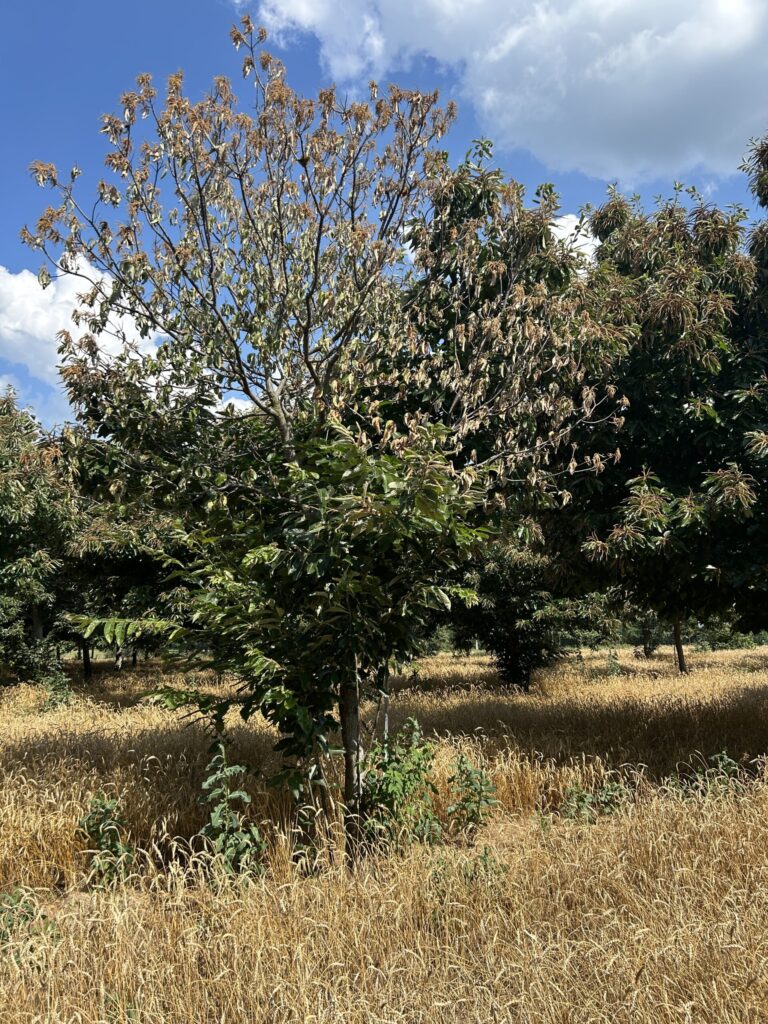
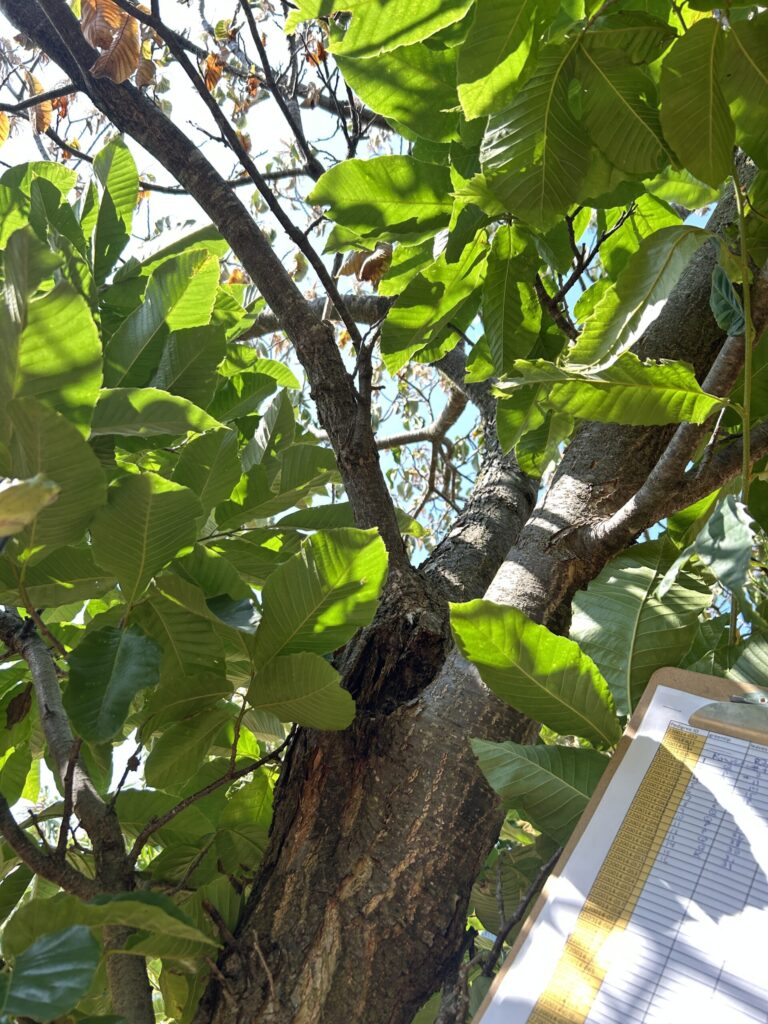
Qing and Peach showed roughly the same level of failed and regrafts (22% and 18%, respectively), whereas Kohr only showed 7% failed and regrafts. However, Kohr showed more signs of chestnut blight than the other two cultivars, which leads to a slow decline of the tree and renders it commercially unviable (see images below).
A 5% graft failure and ~12% regraft rate is not negligible in terms of the cost of materials, labor, and opportunity costs, especially at scale, but when factored into initial planning costs, such failures can be easily overcome by cultivar selection, orchard design, and management decisions. Especially when compared to seedling orchards, the costs of a grafted orchard quickly pay for themselves through early and consistent yields using highly precocious cultivars ,like Qing, grown in Missouri.
Further data collection is required to gain a full understanding of the grafting success at Cedar Hills Farm across all years and cultivars. However, this farm is a prime example of how grafted chestnuts can successfully be grown in Missouri and how benefits of grafted trees can outweigh the impacts of delayed graft failure.

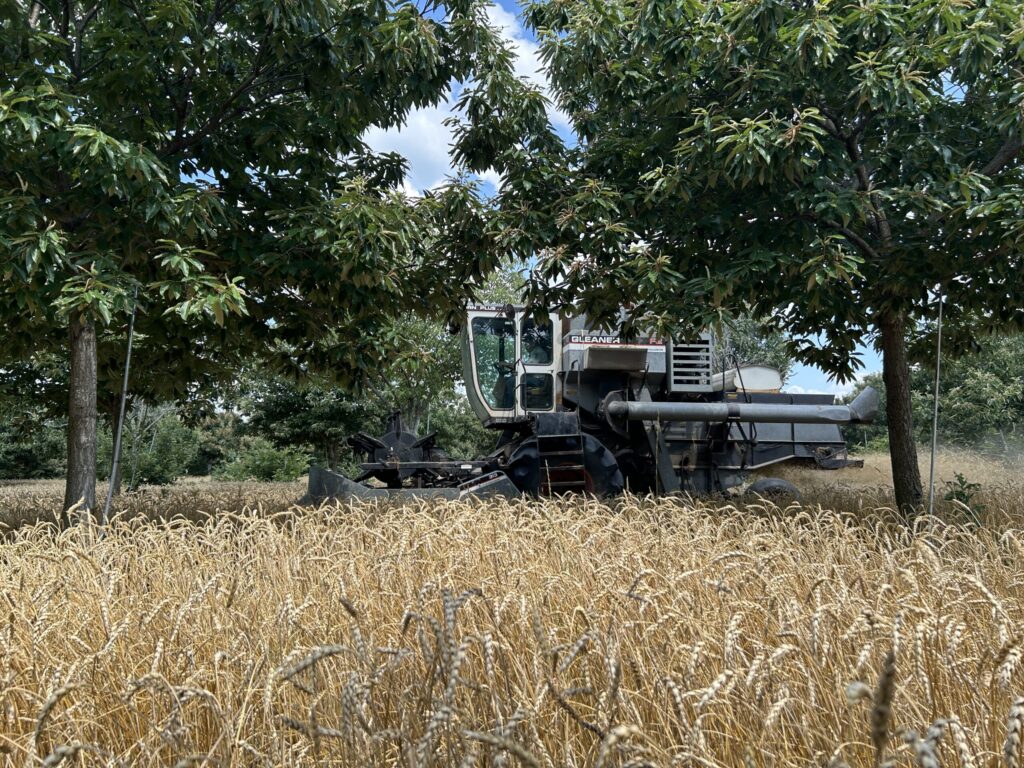

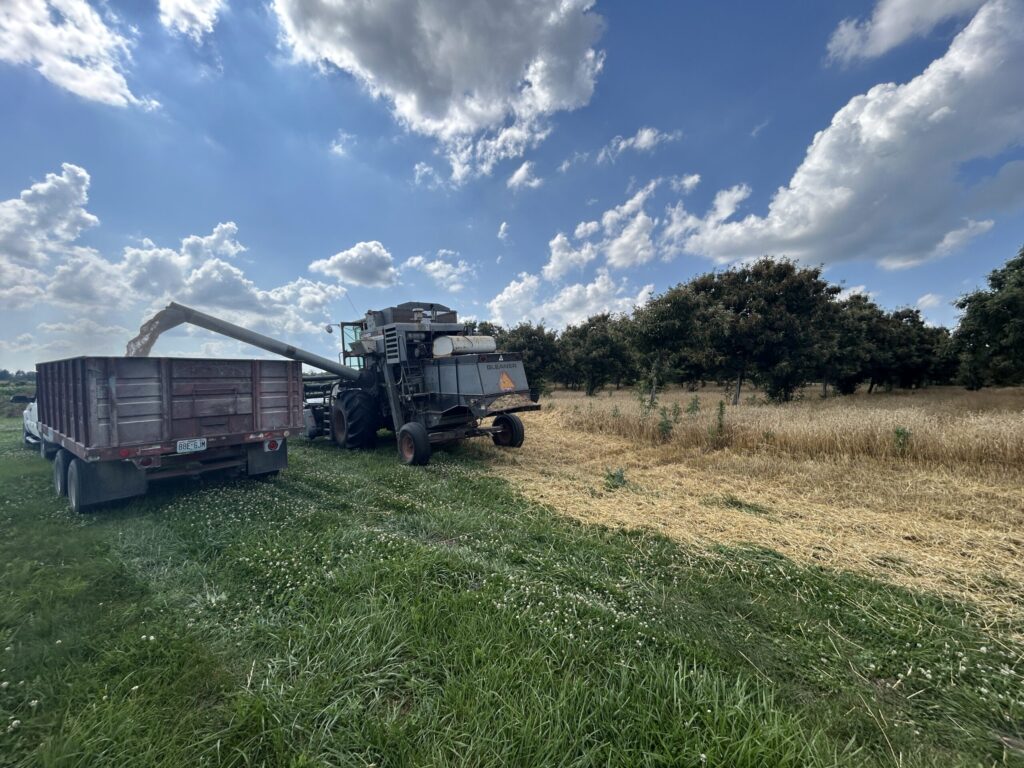
Wheat Harvest
Bill Stouffer experimented with several options for alley cropping between his rows to help manage his orchard floor. He found that growing soft winter wheat in his alleys could 1) reduce weed pressure within the orchard, 2) use excess moisture from the orchard floor when the trees do not need it, 3) create a straw bed ideal for hand harvesting chestnuts, and 4) generate enough income from the wheat to offset the growing inputs and the time spent cultivating it. However, the primary motivating factor for cultivating wheat in the orchard alleyways is that it benefits their chestnut production system which is their main source of farm income.
Among the rows of young trees, where there is not much competition for sunlight yet, Bill estimates yields of roughly 70 bushels of wheat per acre. Across the entire planting (~20 acres of alley cropping), Bill has harvested around 900 total bushels of wheat. Assuming a price of $5 per bushel, total wheat revenue is about $4,500. Input for the wheat crops, including the seed cost, herbicide, fertilizer, and of course time spent managing the crop, can be figured at around $2,000 for the entire planting. This leaves a profit of $2,500, or $125 per acre. This revenue is a secondary focus compared to the main chestnut crop (estimates of $4-$8 per pound for 10,000 – 20,000 pounds harvested across the whole planting). It is important to keep in mind that the benefits of managing the orchard floor and creating an ideal harvesting surface are the primary return on investment from this wheat alley crop. There are significant opportunities in this planting for further yield evaluations, management benefits, and economic analysis across the different orchard age groups.
This was a great visit to Cedar Hills Farm, and we are grateful to Bill and Sue Ellen Stouffer for sharing their knowledge and innovative practices with us. We look forward to continued collaborations to learn from their chestnut orchard and alley cropping operation as it reaches peak productivity in the years to come.
Access a free download of the alley cropping chapter in our Agroforestry Training Manual!