
Growing a suite of resources for Midwest forest farmers
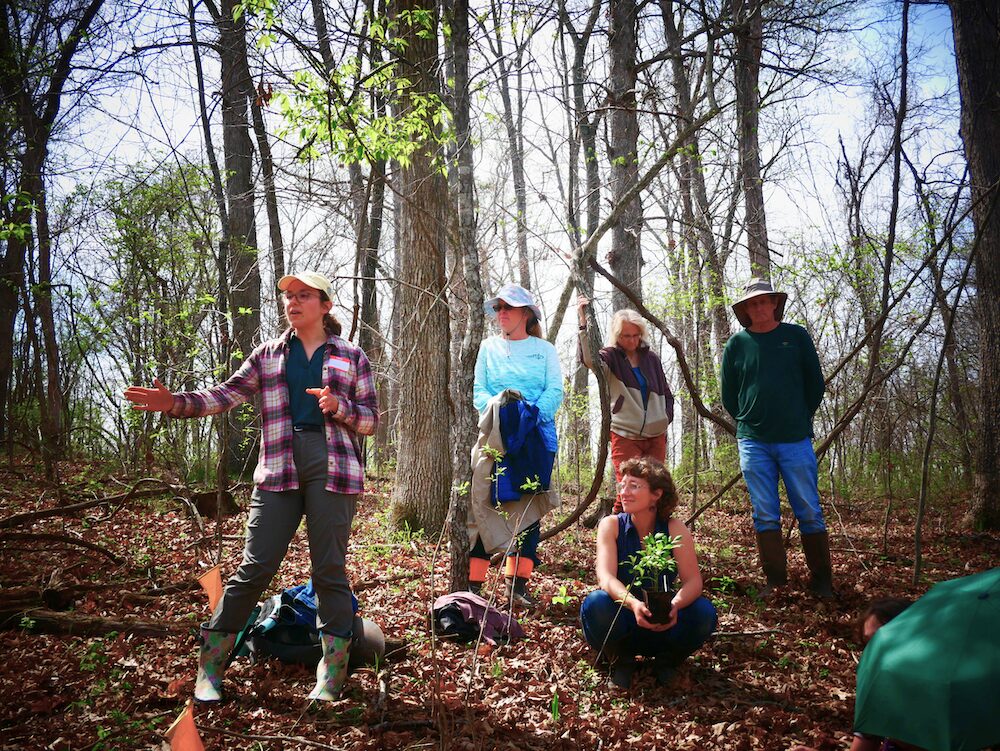
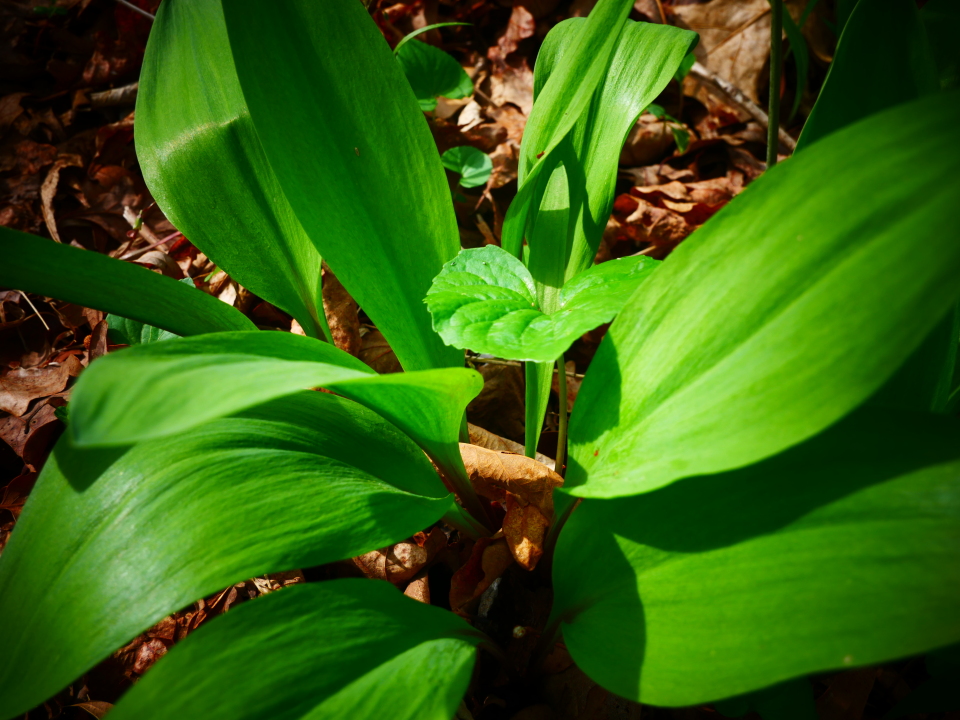
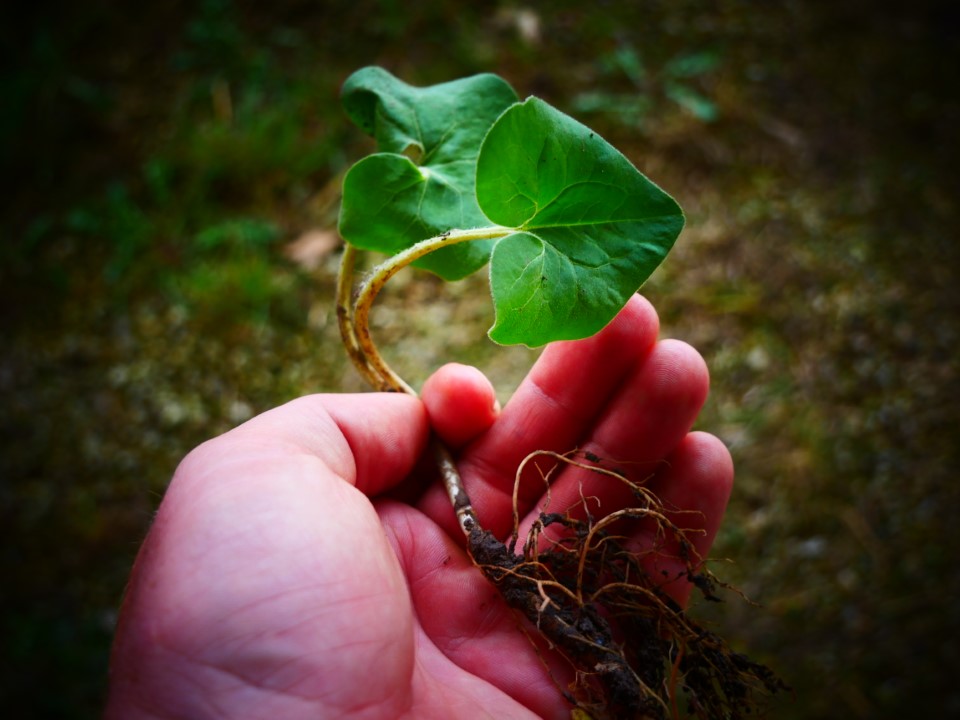
It’s mid-April in the Osage/Gasconade hills ecoregion. A couple-dozen farmers, forest stewards, botanists, herbalists, teachers and researchers are standing in the woods at MU Land of the Osages Research Farm near Gravois Mills and the Lake of the Ozarks. The forest is beginning to awaken after a winter of rest and dormancy— the oaks have not yet broken bud, but their tips are starting to swell with life. Luckily for everyone in attendance at the Forest Farming in the Ozarks workshop, the forecasted rains held off, the poison ivy is yet to leaf out, and down in the sweet duff of a moderately steep Ozark woodland, young green plumes of goldenseal and pungent, fleshy leaves of ramps are making their distinguished appearance as part of the educational programming.
“These plants can be a little mysterious,” observes Raelin Kronenberg, one of the workshop leaders and a doctoral student with the Mizzou Center for Agroforestry. As a researcher, Kronenberg is working to unlock some of the secrets of non-timber forest products (NTFPs) production. Forest ecology is complex— networks of fungi, microbes, insects, animals, mineral soils, climate and human management all play a role in the prevalence of certain useful plants, like American ginseng, goldenseal, black and blue cohosh, and wild ramps. Like all agroforestry practices, forest farming requires intentional engagement.
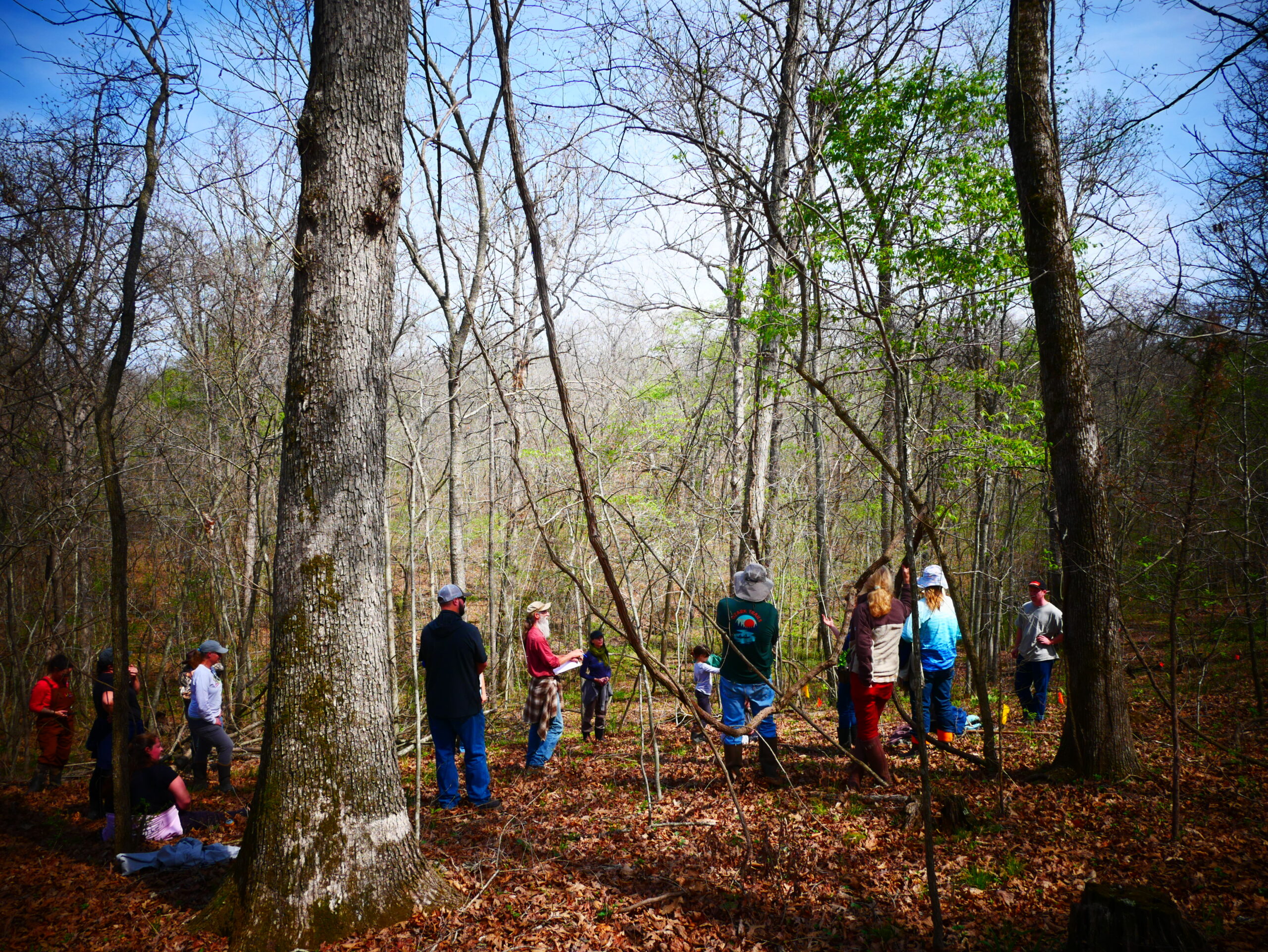
Forest farming as a practice can offer Missouri landowners income opportunities in their woods. While perhaps less straightforward than common commercial crops, NTFPs, from herbal supplements and ornamentals to tree syrups and culinary plants, can help to incentivize stewarding and engaging with forested landscapes. With careful management and cultivated knowledge, forest farming is creating new opportunities for both conservation and livelihoods in Missouri.
As the brown thrashers and Louisiana water thrushes call and cackle from dog-hair thickets of sycamores along the edge of the old Bond Cemetery, Ezra Houston explains what it means to engage with the landscape as a forest farmer. Houston coordinates the Midwest Forest Farming Coalition, a network of farmers, landowners, universities, and other organizations with a shared goal of promoting the establishment and growth of non-timber forest products and their producers in the Midwest. An experienced and enthusiastic researcher, particularly in regards to ramps, Houston describes the wide spectrum of approaches to forest farming, from management-intensive “woods-cultivated” forest farming, to lower intensity “wild-simulated” NTFP production, and “wild-stewarded” management, which involves only the sustainable harvest and propagation of NTFPs.
While woods-cultivated production can resemble more conventional agriculture by incorporating tillage, thinning timber, and applying inputs, such as fertilizers or herbicides, other approaches to forest farming well-suited to Missouri take a more nuanced approach. Beyond removing invasive species, the wild-simulated to wild-stewarded portion of the forest farming spectrum largely relies on the existing ecological integrity of the forest. A successful forest farmer utilizing these approaches is first and foremost a dedicated conservationist.
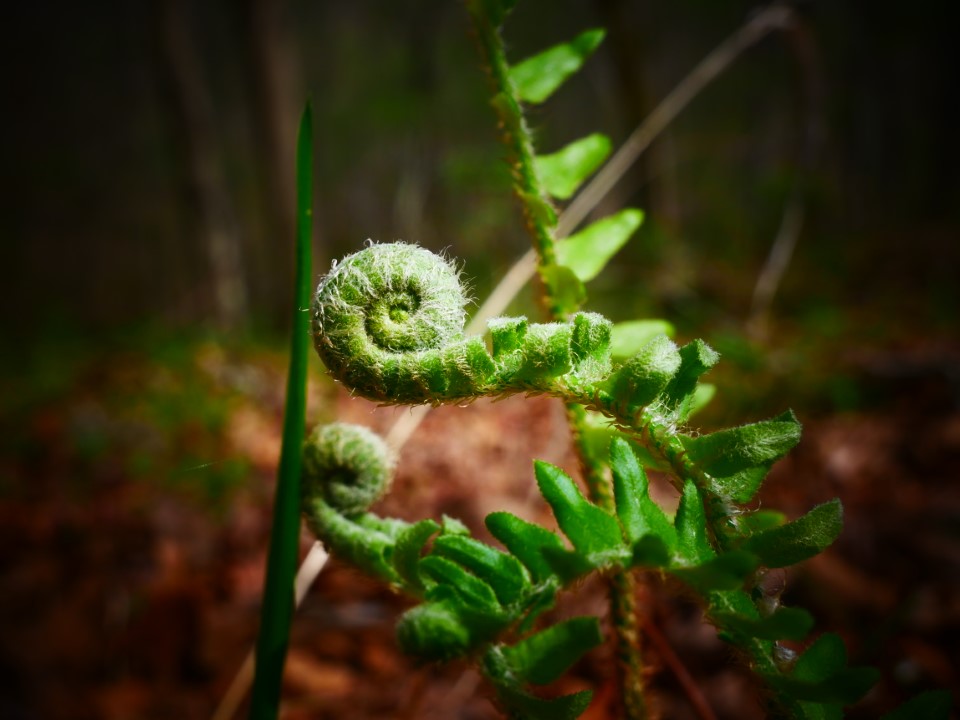
It becomes clear throughout the day just how complex the interactions between people, plants, soil, and history can be. Canopy density, existing plant communities, land-use history, soil moisture, and slope position can all be critical components in successfully propagating these high-value plants. Workshop students were introduced to the concept of “indicator species”: trees, shrubs and other plants which suggest the conditions may be appropriate for these sought-after crops. For example, rattlesnake fern, sometimes known as “‘seng fern” or “‘seng pointer” enjoys similar ground as ginseng (Burkhart, 2013). Ramps generally will happily grow beneath sugar maples. Carpets of bluebells and spring beauties might suggest the presence of goldenseal. It may be a matter of precise soil conditions, or a little-understood microbial exchange beneath the surface which creates these correlations— these plants are a little mysterious.

At its core, forest farming is a practice very much rooted in relationships, human/landscape engagement, and a living continuation of past stewardship and knowledge. Similarly, Land of the Osages Research Farm, the most recent addition to the University of Missouri’s Agricultural Experiment Station, seeks to thoughtfully meld traditional ecological knowledge and contemporary research into sustainable Ozarks agroforestry and conservation. Deep in the heart of the historic ancestral territory of the Osage Nation, work at Land of the Osages seeks to address the knowledge and stewardship needs of modern Ozark and Osage communities through research and events such as this workshop. Through a collaboration between the Osage Nation and the Center for Agroforestry, undergraduate researchers like presenter Shaley Boyd are able to investigate place-based research at the farm. Boyd presented on the importance of oral history, Osage agriculture, and food sovereignty. Attendees learned how traditional ecological knowledge maintained by the Osage Nation, from wild-stewarded foods to medicinal biodiversity, deeply informs today’s forest farming ethic.
After a cool morning spent in a late-19th-century timber-framed barn learning about everything from Osage foodways to harvesting ethics and site selection —plus an important discussion on the economics of forest farming between herbalist Amanda Jokerst and Missouri forest farmer Daniel Morgan— the sun finally breaks loose, and workshop attendants head for the woods to get a look at some of the Midwest’s most important forest botanicals. The Center for Agroforestry’s Associate Director and forest-plant steward Hannah Hemmelgarn, PhD, makes sure to reveal the subtle beauty of goldenseal in bloom. “Outside of our monetary economic value for these plants, there’s also a real inherent value in the service they perform for our communities— both for ecological communities and human communities. [NTFPs provide] resilience through diversity, including livelihood sources,” notes Hemmelgarn, while the collection of forest farming students and teachers crouch in the afternoon shade near one of the site’s plantings of goldenseal, ramps, black cohosh, and stone root.
While a walk in the woods, spent engaging with plants or simply observing the landscape, is often a way for human beings to relax and settle their minds, the prospect of serious forest farming can lead to an information overload, especially in areas like Missouri where region-specific recommendations can be hard to come by. Luckily for prospective forest farmers and curious landowners, the Midwest Forest Farming Coalition recently published a valuable guidebook on these practices practices with funding through a USDA Sustainable Agriculture and Education grant. The Missouri Forest Farming Handbook, written by Raelin Kronenberg, Ezra Houston and Sougata Bardhan, is a free resource that describes planning, site selection, establishment, management, funding and business operations in detail. While these plants are a bit enigmatic at times, resources like The Missouri Forest Farming Handbook, and workshops like this one are helping to build networks and connections between farmers, researchers, stewards and their surrounding landscapes to help decode some of the mysteries of forest farming and to support small, sustainable woodland enterprises for big regional impacts.
Additional Resources
Citations:
Burkhart, E. 2013. American ginseng (Panax quinquefolius L.) floristic associations in Pennsylvania: Guidance for identifying calcium-rich forest farming sites. Agroforestry Systems. 87. 10.1007/s10457-013-9627-8.