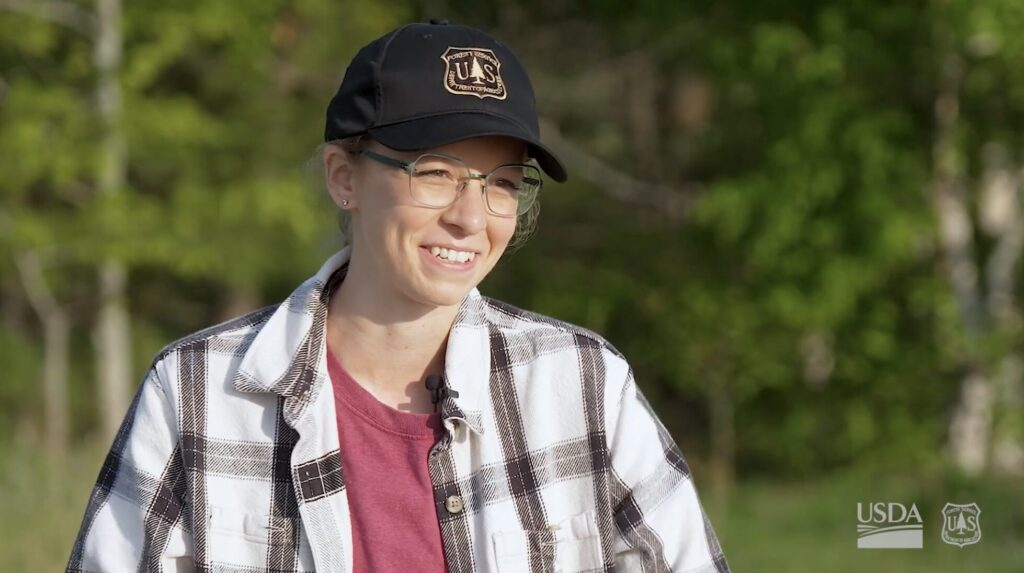
Liz Rogers Headshot

Research Specialist

330 ABNR Bldg
Office: 573-882-7242
errccd@missouri.edu

Dr. Rogers investigates the use of fast-growing trees for pollution remediation. She earned her PhD in Natural Resources from the University of Missouri for her dissertation work on 1) developing a comprehensive pollutant prioritization approach for phytoremediation applications, and 2) assessing the water relations of different Populus genotypes grown for phytoremediation. Her current work focuses on assessing the efficacy of tree-based systems for remediation of mining waste that contains heavy metals. She also is interested in the synergies between agroforestry and short-rotation woody crop systems and has been involved in multiple efforts to better understand their commonalities and room for further intersection. 
Research Foci

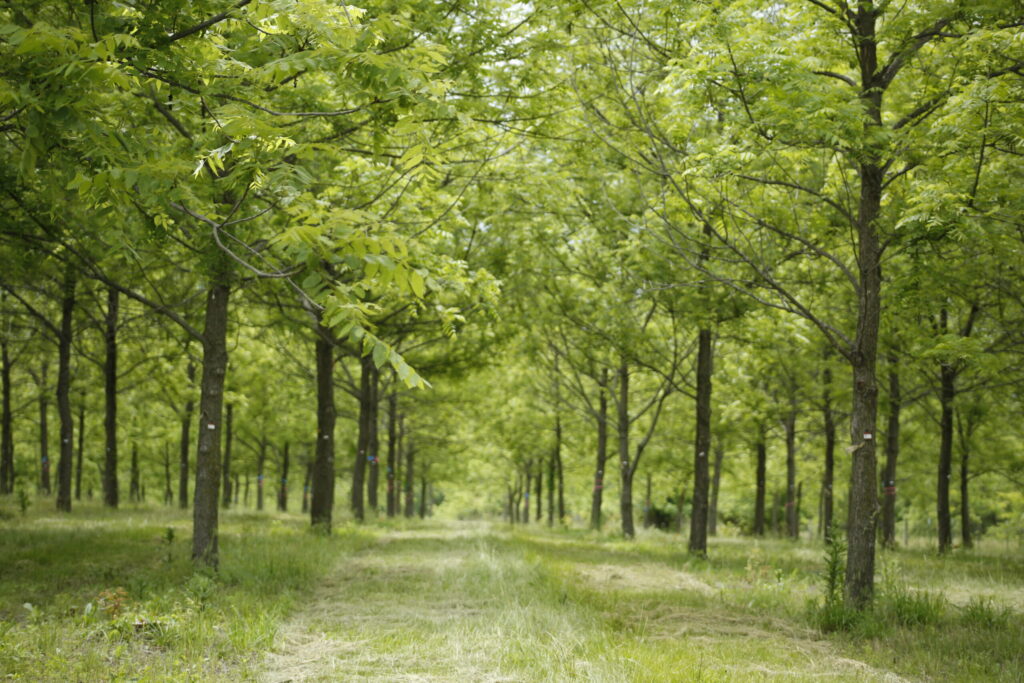
  • Phytoremediation of heavy metal-containing stamp sands in Michigan’s Upper Peninsula
  • Remediation of sulfate in Northern Minnesota mine pit lake water
  • Tree water relations of hybrid poplar genotypes in environmental remediation settings

Selected Publications

  • Zalesny, R.S. Jr., Barzagli, A., Caldwell, B., Minotta, G., Nervo, G., Paris, P., Rogers, E.R., Salbitano, F., eds. (2025). Innovative practices in the sustainable management of fast-growing trees – Lessons learned from poplars and willows and other experiences with fast-growing trees around the world. Rome: FAO. 192 p. https://doi.org/10.4060/cd4104en.
  • Rogers, E.R., Zalesny, R.S. Jr., Lin, C-H. (2021). A systematic approach for prioritizing landfill pollutants based on toxicity: Applications and opportunities. J. Environ. Manag. 284: 112031. https://doi.org/10.1016/j.jenvman.2021.112031.
  • Rogers, E.R., Zalesny, R.S. Jr., Lin, C-H., Vinhal, R.A. (2023). Intrinsic and extrinsic factors influencing Populus water use: A literature review. J. Environ. Manag. 348: 119180. https://doi.org/10.1016/j.jenvman.2023.119180.
  • Zalesny, R.S. Jr., Pilipović, A., Rogers, E.R., Burken, J.G., Hallett, R.A., Lin, C-H, McMahon, B.G., Nelson, N.D., Wiese, A.H., Bauer, E.O., Buechel, L., DeBauche, B.S., Peterson, M., Seegers, R., Vinhal, R.A. (2021). Establishment of regional phytoremediation buffer systems for ecological restoration in the Great Lakes Basin, USA. I. Genotype × environment interactions. Forests. 12(4): 430. https://doi.org/10.3390/f12040430.

Explore more resources from Dr. Rogers and the Center for Agroforestry team.

Read

How can fast-growing trees optimize agroforestry benefits? The role of the International Commission on Poplars and Other Fast-Growing Trees Sustaining People and the Environment

Watch

Healing the Land: In a partnership with the Keweenaw Bay Indian Community, scientists from the Northern Research Station use phytoremediation techniques as nature-based solutions to the stamp sands in Baraga, MI.

Listen

2024 SRWC Panel at UMCA. Panelists explore the possibilities of integrating short rotation woody crops (SRWCs) into agroforestry systems for environmental remediation and land restoration, as well as for the production of biomass for timber, fiber, bioenergy, biofuels and other bioproducts.

Secret Link