
Celebrating three decades of research on agroforestry’s ecosystem services
Research Professor Ranjith Udawatta has dedicated his career to studying the ecosystem services provided by agroforestry systems. He landed at the University of Missouri in 1990 as a PhD student, swiftly finished his dissertation, started a postdoc, and within just a few years, in 1998, joined the Center for Agroforestry team.
Nearly three decades later, Udawatta’s research collaborations have contributed a tome of decisive information on agroforestry’s positive impact on soil health, water quality, and biodiversity. Future generations of scientists and farmers alike will benefit from his work to quantify just how potent a solution agroforestry can be for some of agriculture’s most pressing issues: nutrient runoff, high input costs, water conservation, soil fertility, and adaptation to extreme weather events, to name a few.
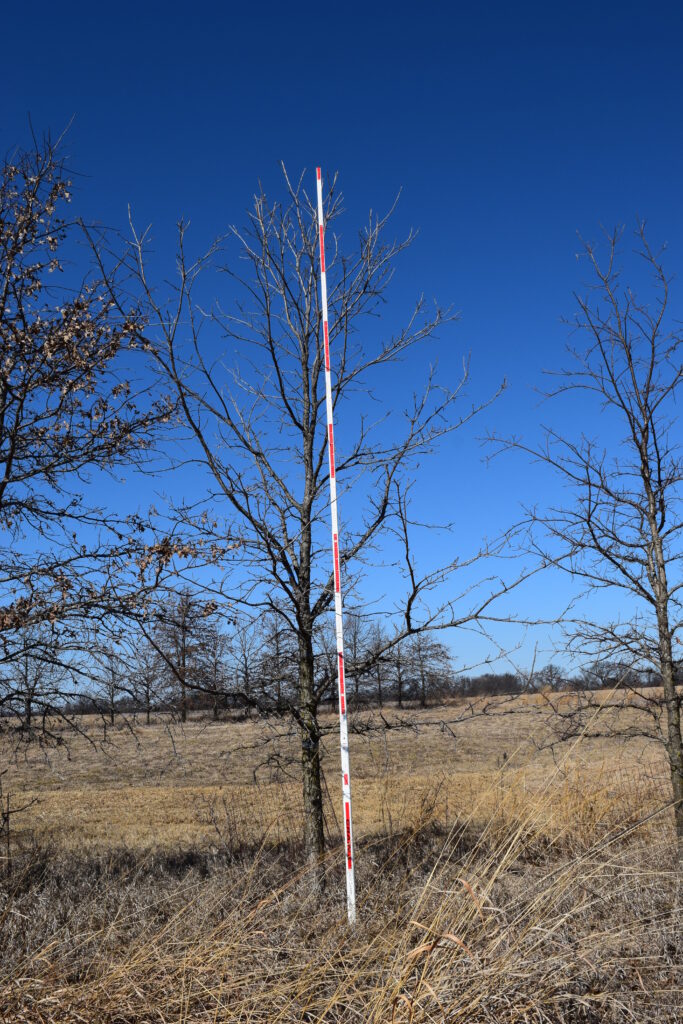
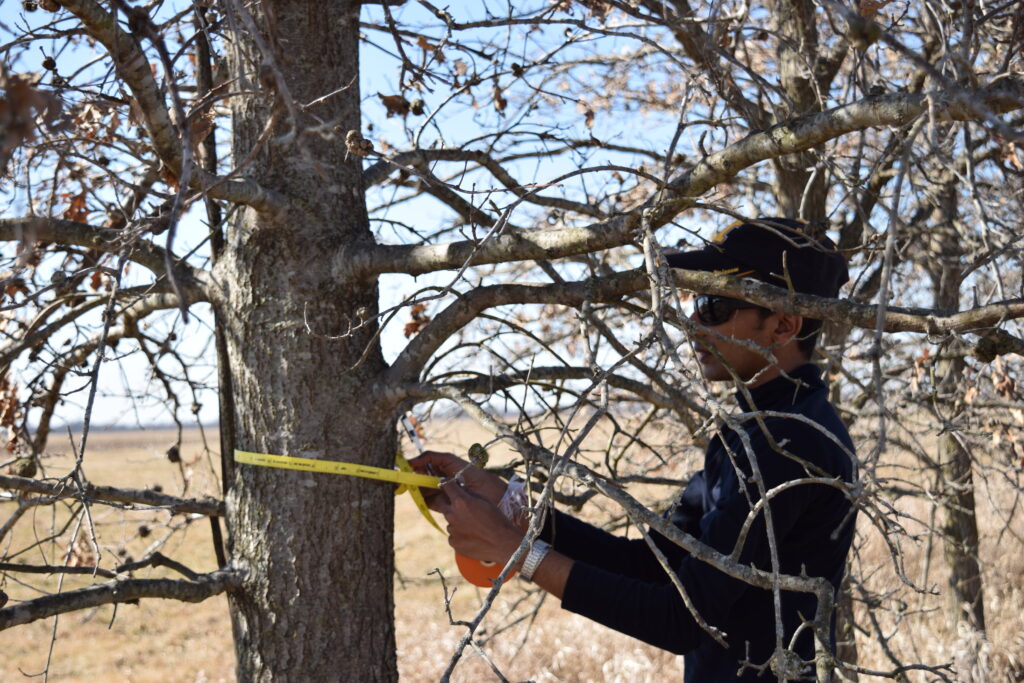
Among his contributions include seminal long-term studies that begin to highlight agroforestry’s impacts on soil and water as trees mature. For 25 years, Udawatta and MU School of Natural Resources colleagues and graduate students monitored three paired watersheds: a control watershed, a watershed with agroforestry buffers planted with pin oak, swamp white oak, bur oak, redtop, brome grass, and birdsfoot trefoil, and a watershed with a grass-only buffer. The study’s results show that upland agroforestry buffers have the potential to reduce sediment and nutrient losses long after trees are established, improving surface and ground water. Though further study is needed, the implication of these findings is that agroforestry buffers can have a positive impact on the landscape throughout their entire lifespan; establishment now will reap benefits for generations to come.

“As we have collected more and more data, we’ve simulated models to understand the long-term effects of agroforestry on water quality,” said Udawatta. “My hope is that these models will continue to serve scientists in the agroforestry community and related fields as ecosystem services continue to be a top priority for research and collaboration.”
In addition to long-term impacts, Udawatta’s research has illuminated pathways to balancing conservation and production in the near term, showing how agroforestry can simultaneously improve ecosystem health and boost land productivity. For example, his research has revealed that perennial roots from agroforestry crops in alley cropping systems can increase soil water holding capacity and reduce flooding in crop fields for more optimal spring planting conditions. On the flip side, those roots help in droughts by pulling water up from greater depths, hydrating shallowly rooted annual crops. This process is referred to as “hydraulic redistribution” and is one of agroforestry’s brilliant adaptive mechanisms.
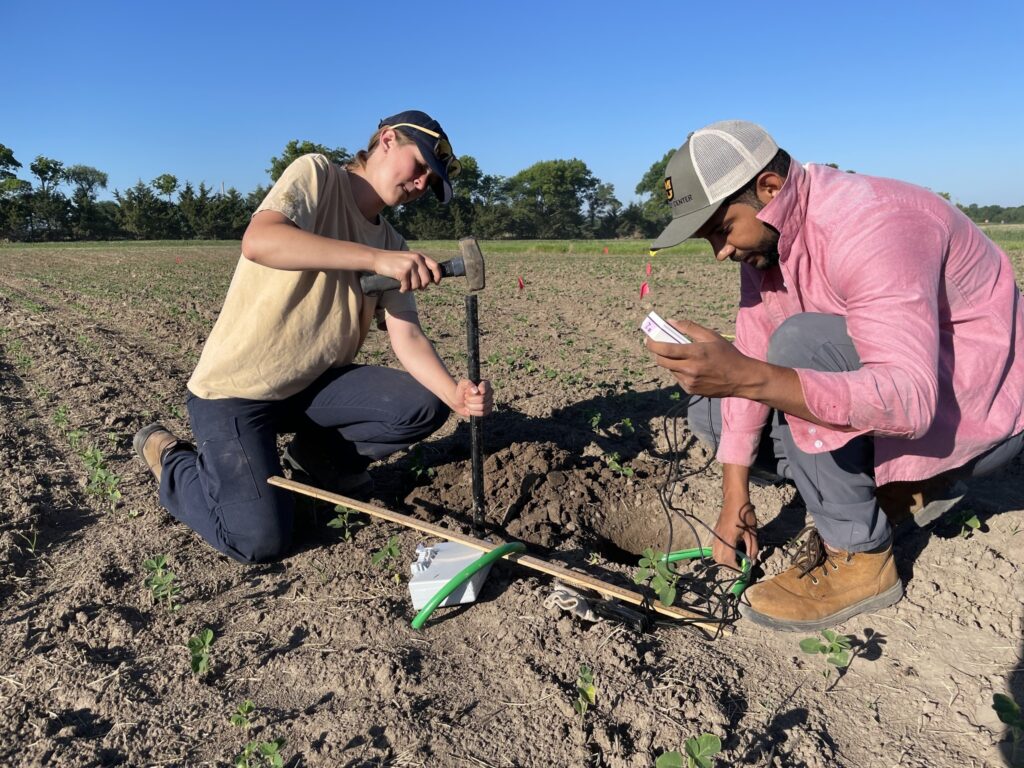
His research has also explored how stacking agroforestry with other sustainable practices like cover crops and prairie strips has the potential to further enhance soil health, increasing carbon storage, water infiltration, bulk density, water holding capacity, and porosity—all characteristics essential to productive crop fields.


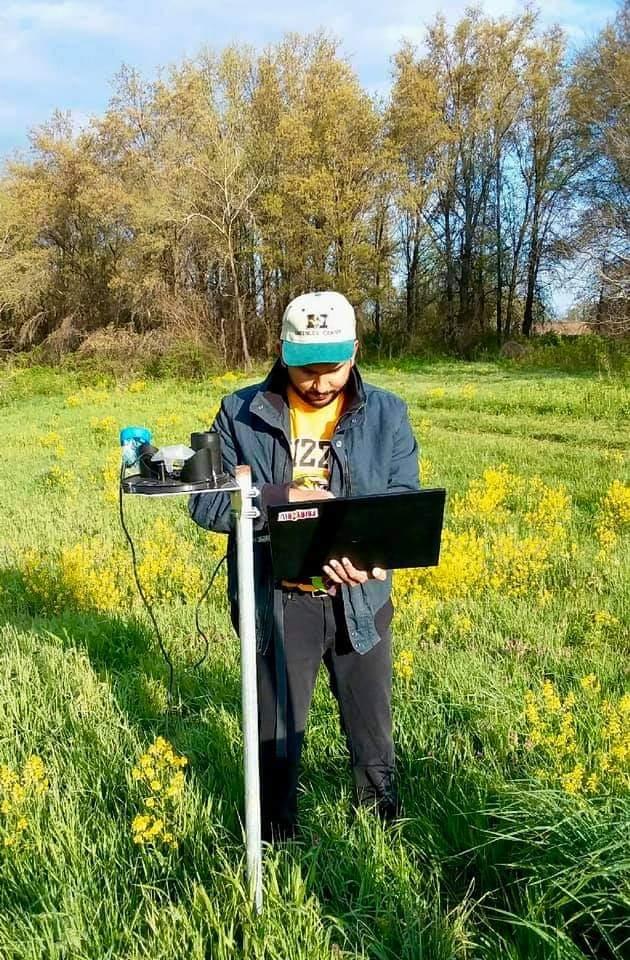
Beyond the farm gate, Udawatta’s research has shown that riparian and upland buffers and windbreaks can reduce nutrient loss and soil erosion on a watershed scale. Through his models, he predicts that agroforestry can reduce the loss of key soil nutrients like nitrogen and phosphorus by up to 48% in the Lower Mississippi River Basin. Launched in 2009, his team worked to help make this prediction a reality by monitoring the impact of various conservation practices on 16 watersheds in northern Missouri through the Mississippi River Basin Healthy Watershed Initiative, led by USDA Natural Resources Conservation Service. To date, the initiative has reduced nitrogen loss by more than 20.2 million pounds; phosphorous loss by more than 5.5 million pounds; and sediment loss by more than 2.4 trillion pounds.
Collaborations have been a cornerstone of Udawatta’s career, helping to maximize the scope and impact of his research objectives. His work with MU College of Agriculture, Food and Natural Resources Associate Dean for Research Shibu Jose and MU School of Natural Resources faculty Morgan Davis and Stephen Anderson, among many others, have led to countless publications that are foundational to the field of agroforestry’s ecosystem services. His research on cover crops contributed to the USDA’s novel investment in cover cropping as a conservation practice, through producer-impact grant programs like the MU Center for Regenerative Agriculture’s Climate Resilient Crops and Livestock Project, which the Center for Agroforestry proudly supports.
“My research career has taught me that agroforestry can be a solution to any damaged landscape,” said Udawatta. “Other conservation practices typically only address one resource issue. But agroforestry is multifaceted. It can regenerate soil, water, air, habitat, and more – all at once.”