
Agroforestry learnings take root during Mizzou’s 2026 Training Academy
By Ben Brownlow
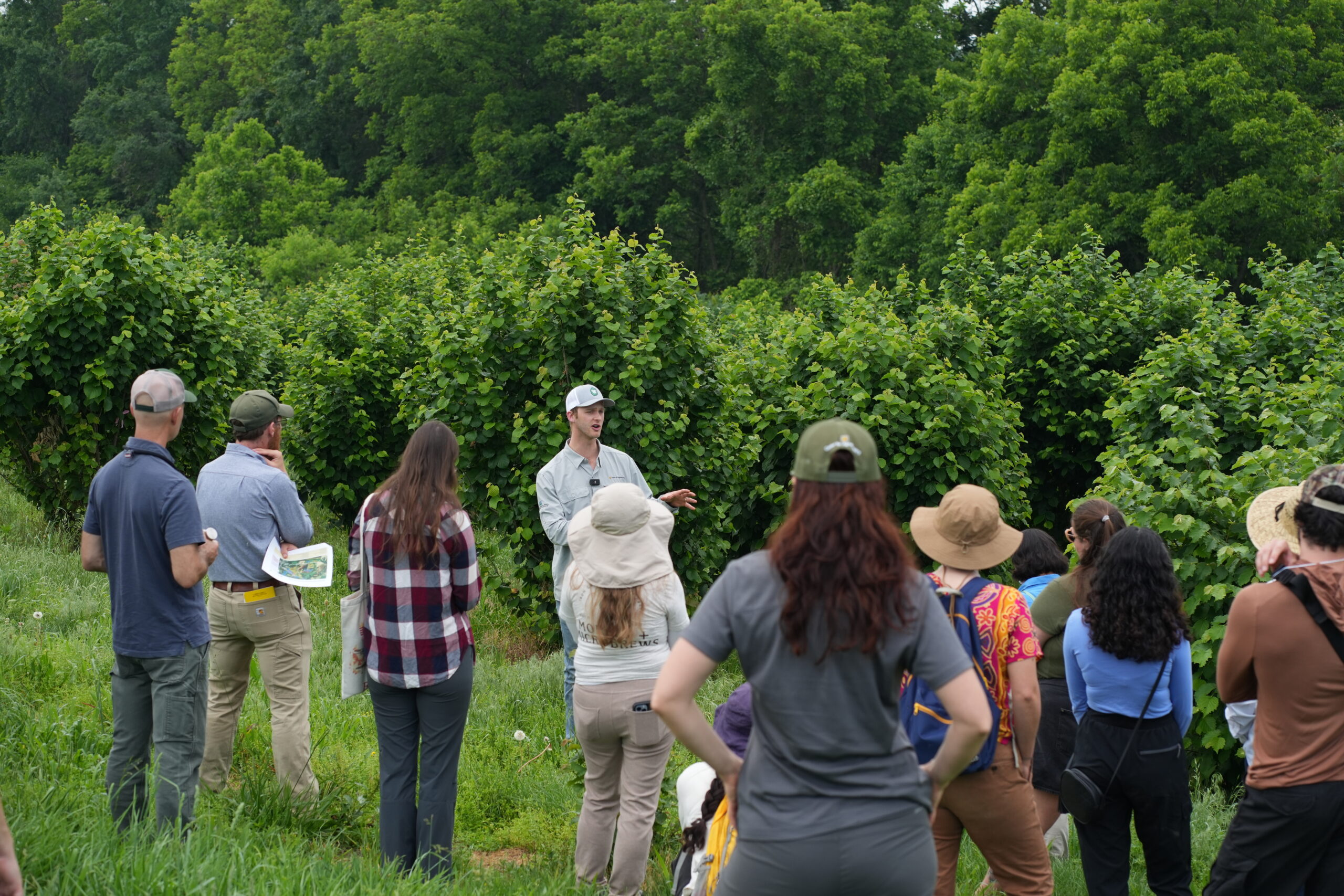
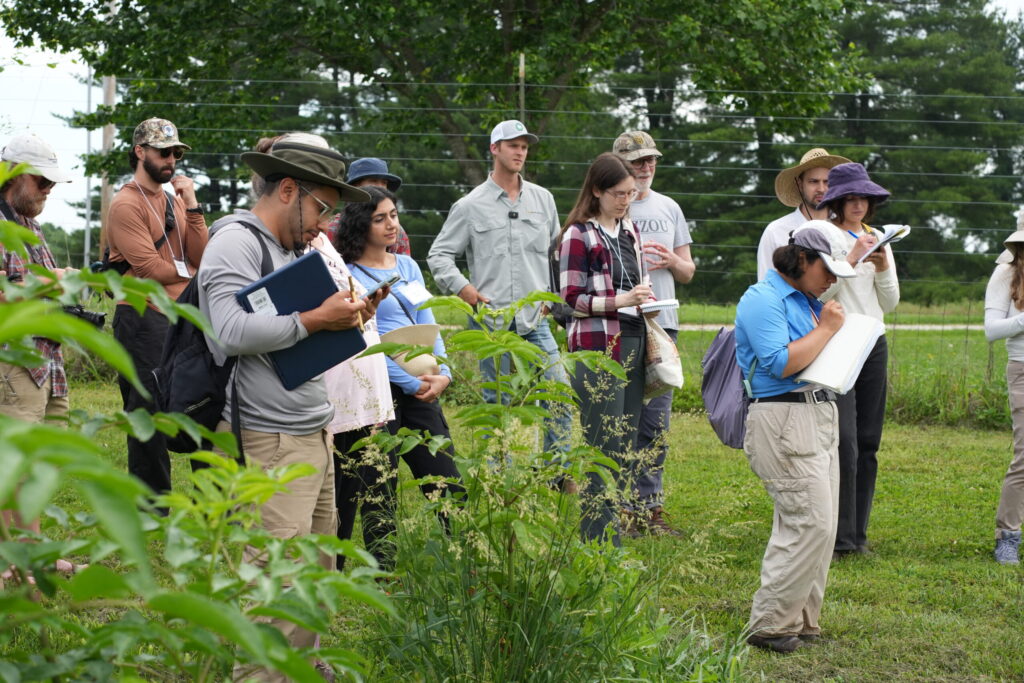
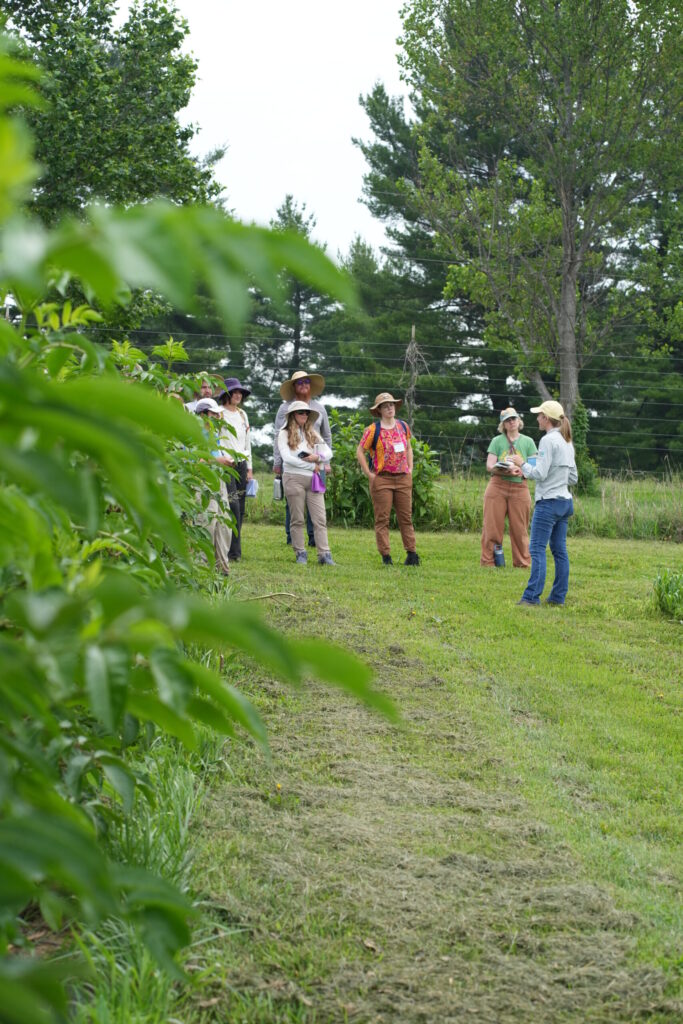
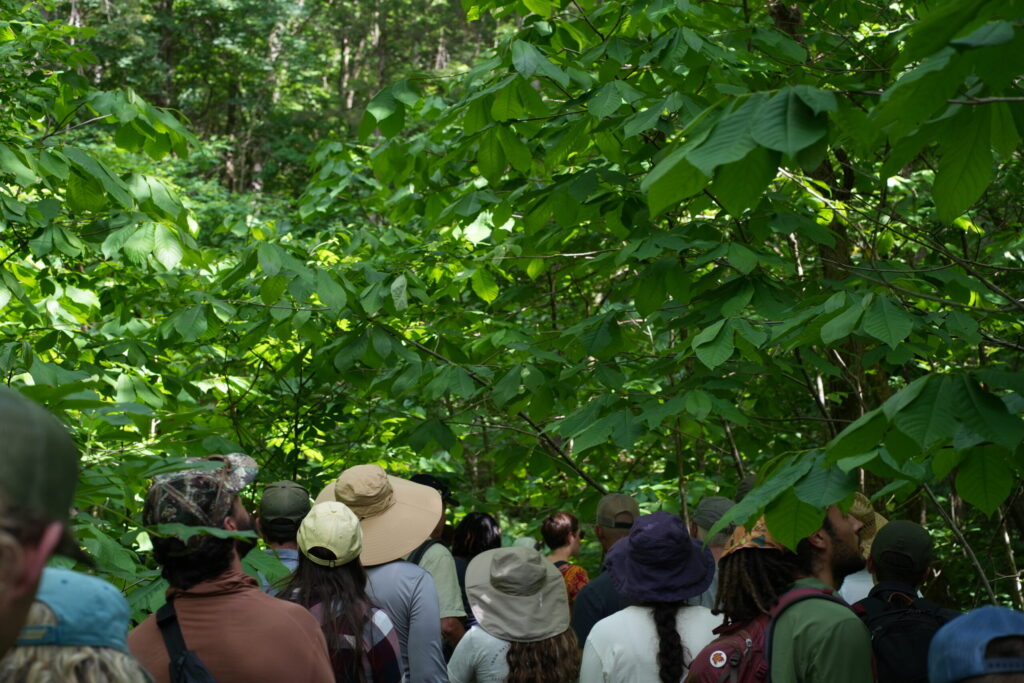
This year’s Agroforestry Training Academy wrapped up in late May with three days of in-person programming, following five weeks of online classes. As part of an intensive educational program for farmers, land managers, and natural resource professionals, visiting functional, tree-based food systems helps to ground the theoreticals of agroforestry into tangible, hands-on practices. While the digital resources and virtual networking portions of the course prepare the soil for a new cohort of agroforesters, putting down the books, putting on a pair of boots, and interacting with established projects encourages the learning to really take root.
Like agroforestry practices themselves, agroforesters are a complex and varied group. This year’s Academy brought in a wide range of current and future practitioners, from urban farmers to larger-scale rural growers and landowners, alongside educators, natural resource professionals, and other change-makers working to integrate food production, ecological stewardship, and public health. Like any functional agroforestry system, the work of these Academy students often intertwines several goals.
“It was amazing to see how others approached agroforestry through the lens of ranching, forestry, community organizing, and more, said Academy trainee Lena Pransky. Pransky raises food in a community garden setting in Huntsville, Alabama. “Because everyone was so generous in sharing their expertise, implementing agroforestry feels much more feasible.”
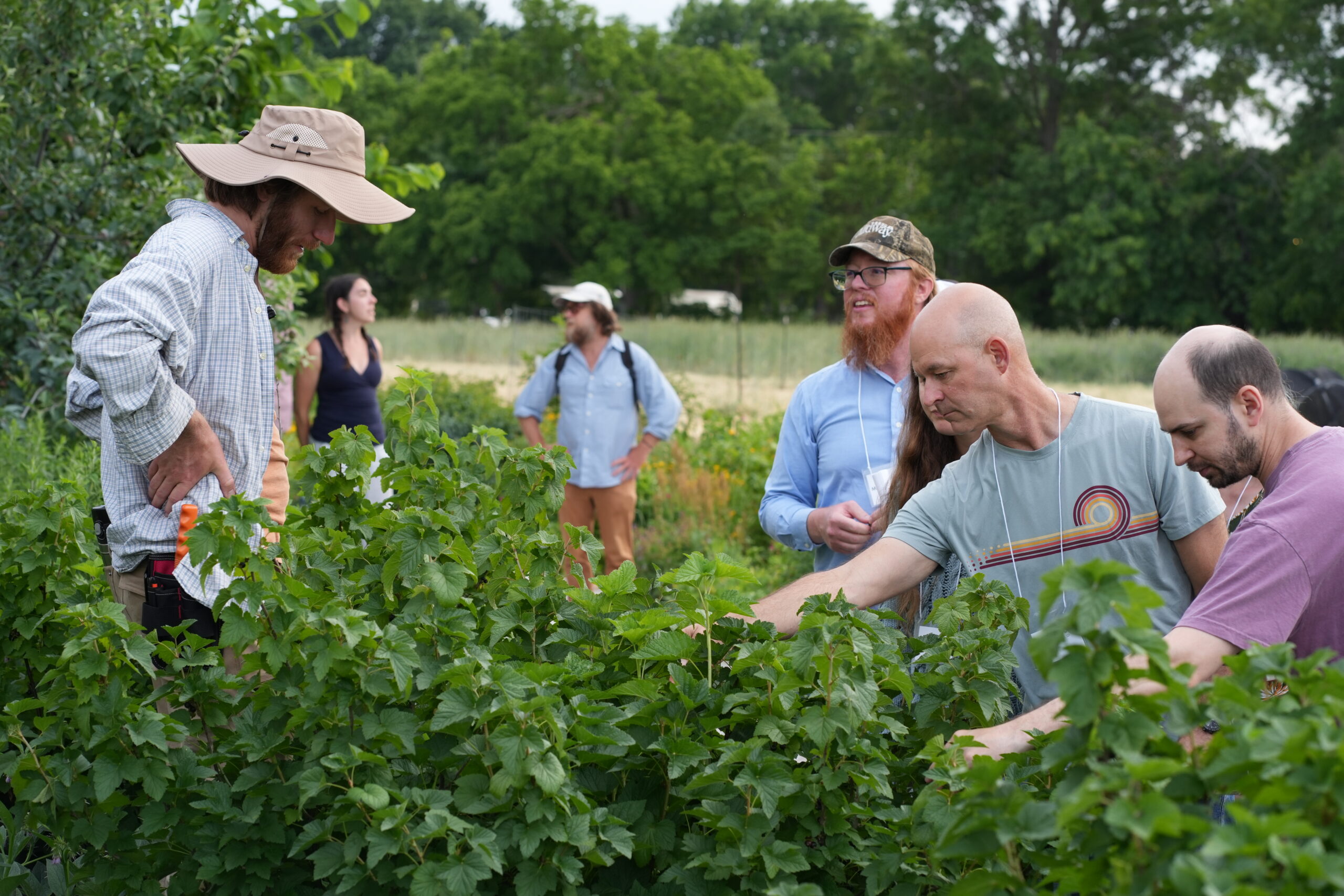
The course offers more than foundational knowledge on agroforestry systems. It introduces trainees to a community of dedicated agroforestry practitioners eager to offer reciprocal support, engage in dialogue, and build successful projects side-by-side.
“I really want to be in a space with other like-minded folks to talk about what we can do to address the problems in today’s world,” said J Esparza, a farmer in Tennessee who participated in this year’s Academy. “That’s why I changed my trajectory from public health to agriculture, and then agroforestry. It felt like a good fit with my background to begin talking about solidarity between different farmers, and the big issues we’re facing.”
Day One: Community Agroforestry at the Columbia Center for Urban Agriculture
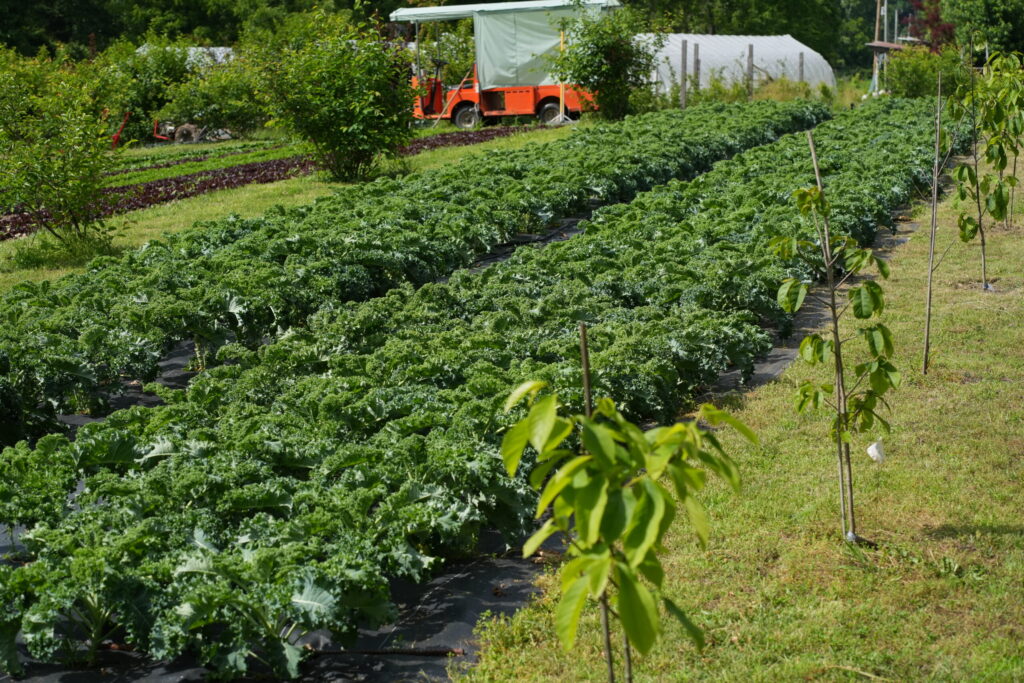
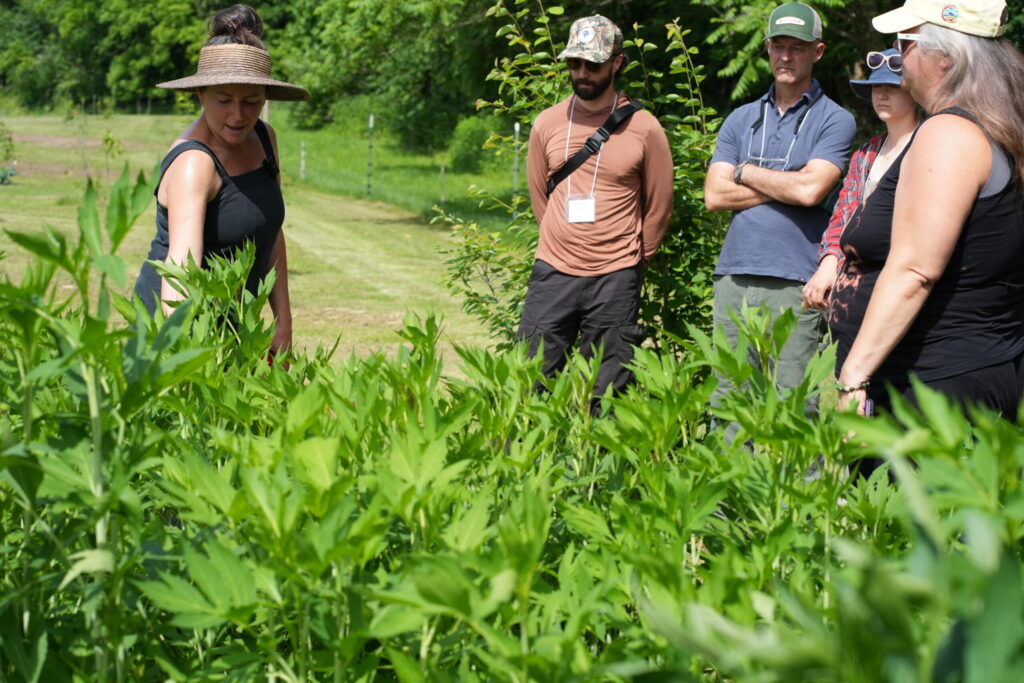
The in-person portion of the Academy began at Columbia’s Agriculture Park. A 10-acre city park operated by the Columbia Center for Urban Agriculture, this space allows eaters and growers to interact in the midst of intensive produce production plots, community gathering spaces, walking paths bordered by cosmopolitan pockets of native habitat, and a multi-layered food forest. CCUA’s Agriculture Park Foodscaping Manager Matthew Dolan led Academy trainees through the multi-strata planting featuring common Missouri food-producing trees like pecan, persimmon and mulberry alongside more exotic perennial crops like hardy kiwi and che fruit (also known as ‘cudrang’ or ‘Chinese watermelon’). While the annual vegetables produced at Columbia’s Agriculture Park head to the local food bank, the forest garden offers visitors a place to wander, interact with nutritionally-dense perennial foods, and benefit from time spent in a diverse, tree-lined urban oasis.
Day Two: MU Horticulture and Agroforestry Research Farm, Three Creeks Farm & Forest, and Elderblossom View Winery
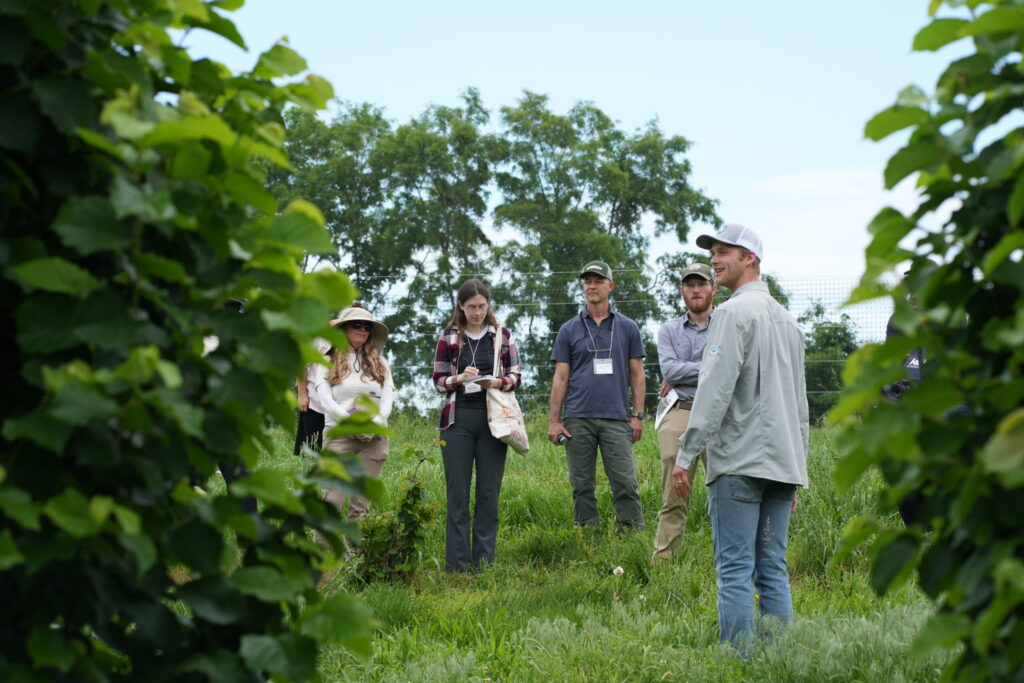
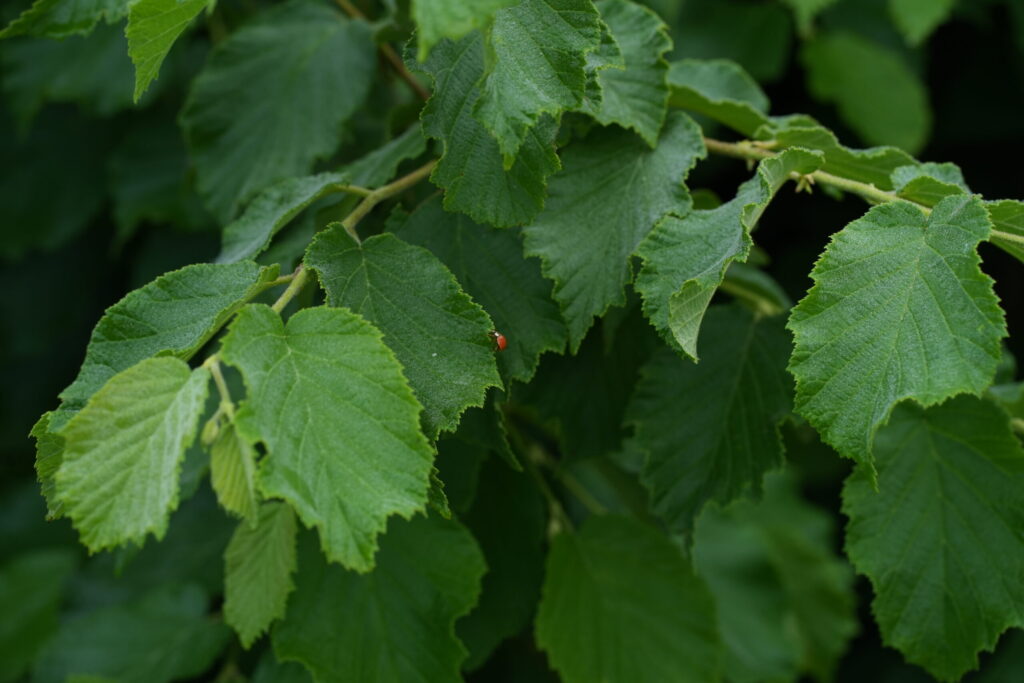
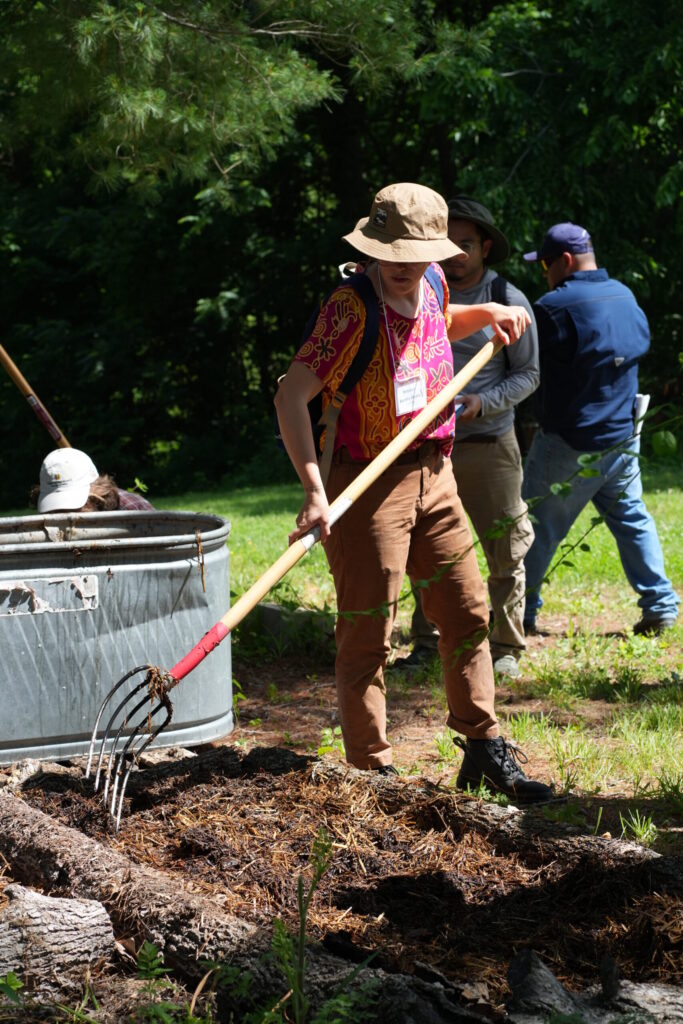
After an evening of food-forest strolling and introductions, the first full day of the in-person Academy commenced, and there was quite a bit of ground to cover from that point forward. Before the dew had burnt off the grass, Academy students were shuttled to the MU Horticulture and Agroforestry Research Farm in New Franklin, the heart of Missouri’s Boonslick region, to learn about the Center for Agroforestry’s tree crop research. Students were even given an early look at new, applied projects at the research farm, like strawberry and asparagus alley cropping between rows of newly released hazelnut cultivars for Midwest and Eastern U.S. climates. Center for Agroforestry researchers explained how decades of breeding development and investigations into horticultural best practices help promote both stability and innovation across perennial crop industries. The trip to the research farm ended in a mushroom inoculation demo, tying together the more obvious, above-ground implications of agroforestry with the more subterranean connections being built by these long-lived systems involving fungi, roots, earth, and invertebrate life.
After a lunch break, the cohort moved on towards Three Creeks Farm and Forest near Ashland to experience tree crop integrations within a small diversified farm landscape. Farmer Emily Wright explained the importance of high-value perennial cut flowers to their operation, and toured trainees around the farm’s service berry and annual vegetable alley crop, pawpaw plantings, and intentionally stewarded forest farming hillsides.
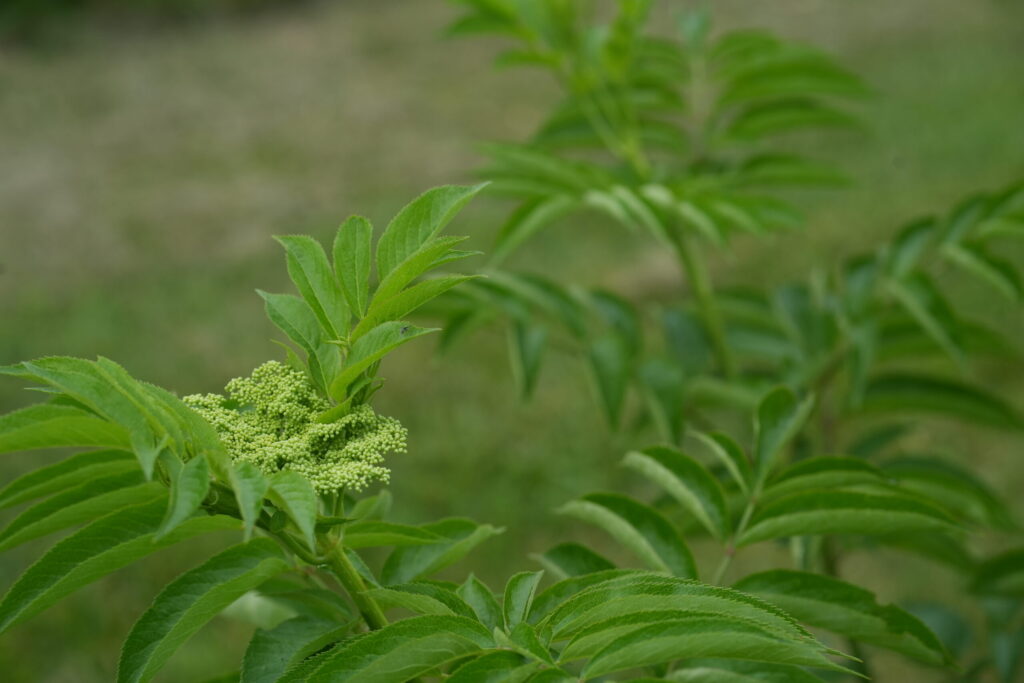
The day ended at Elderblossom View Orchard and Winery near New Bloomfield for trainees to witness how intensively managed elderberries can provide value-added products and niches for thriving wildlife. With dinner and an optional elderberry wine tasting, Academy trainees were also treated to a sunset aerial performance by the orchard’s abundant purple martin population, as well as an appearance by a juvenile killdeer, alongside its protective mother.
Day Three: Rusted Plowshare and Cedar Hill Farms
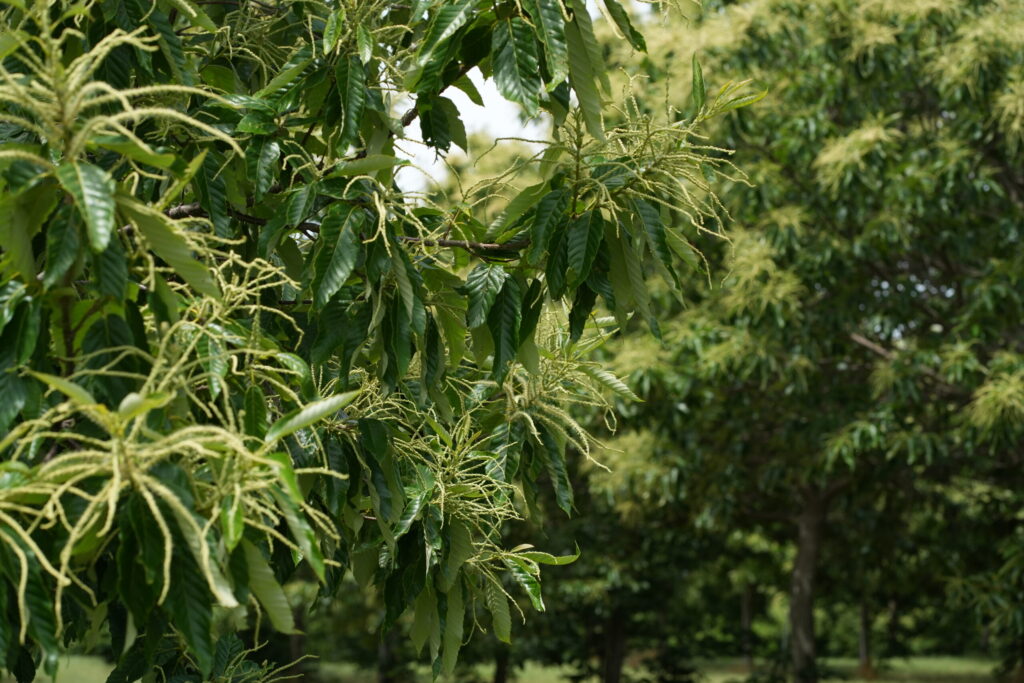
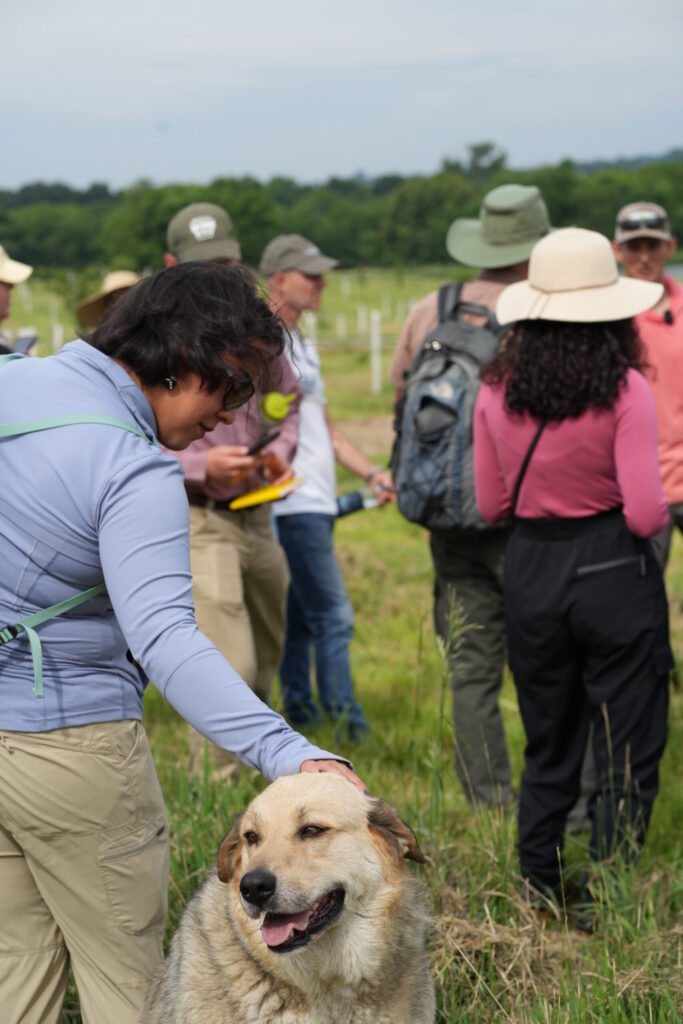
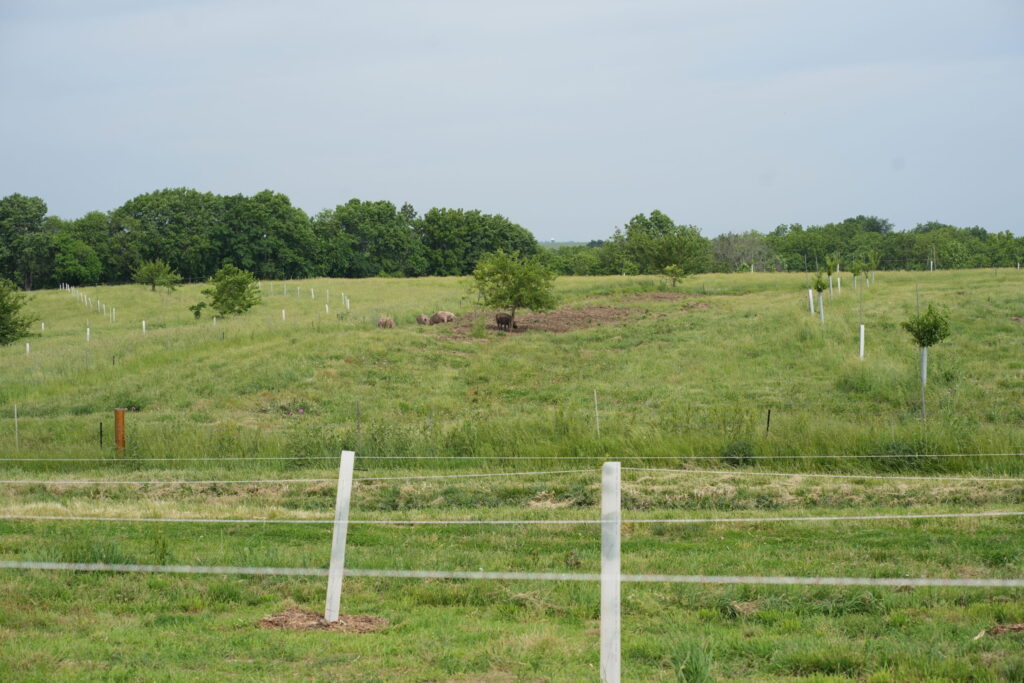
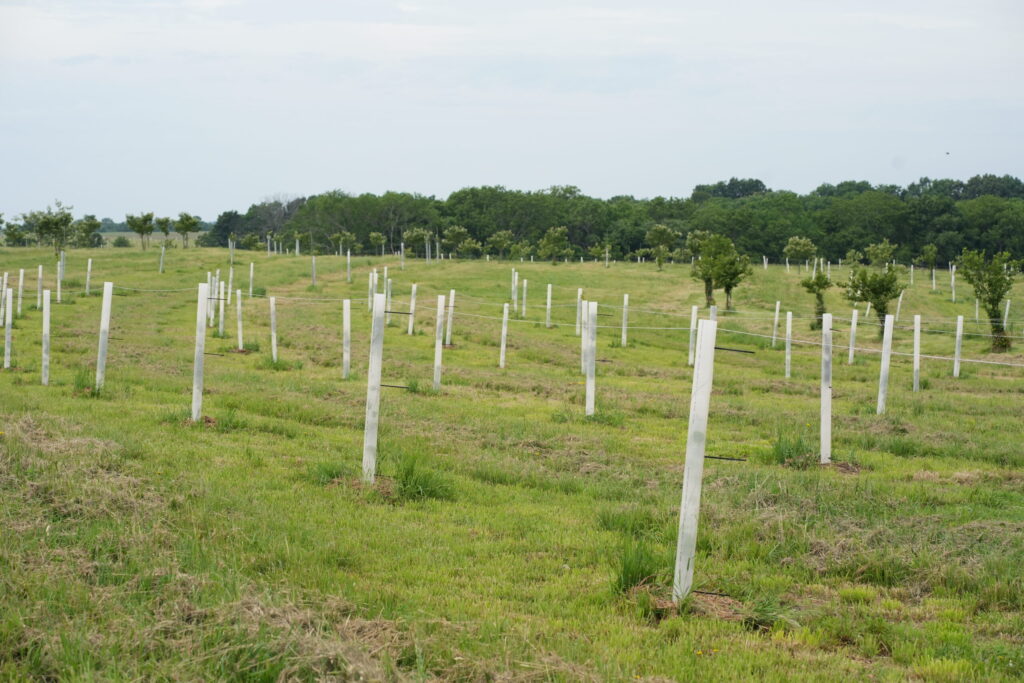
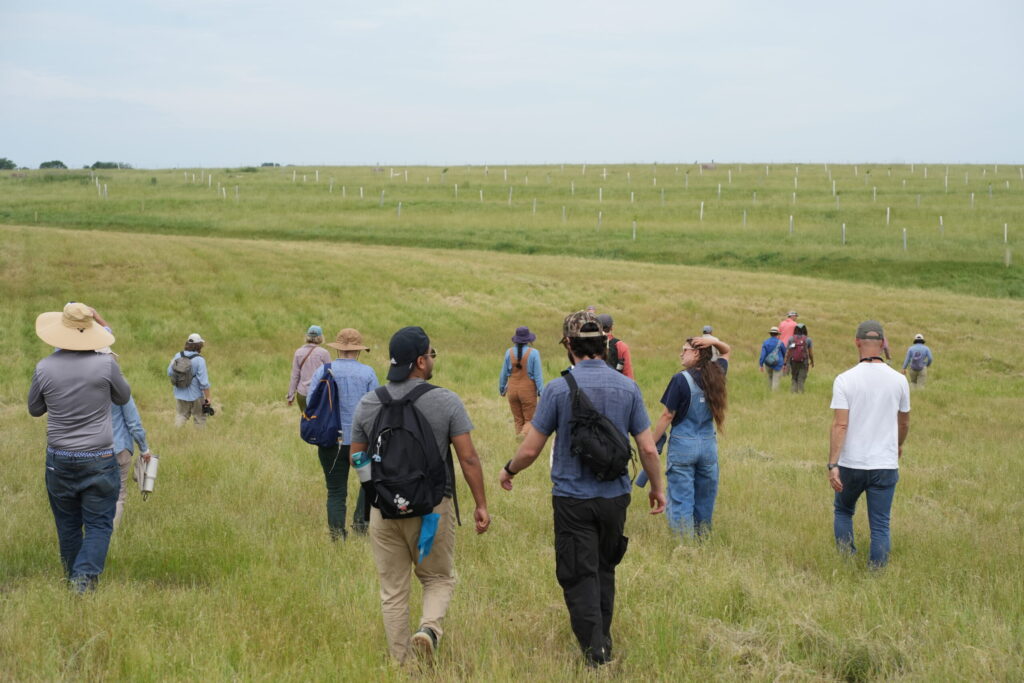
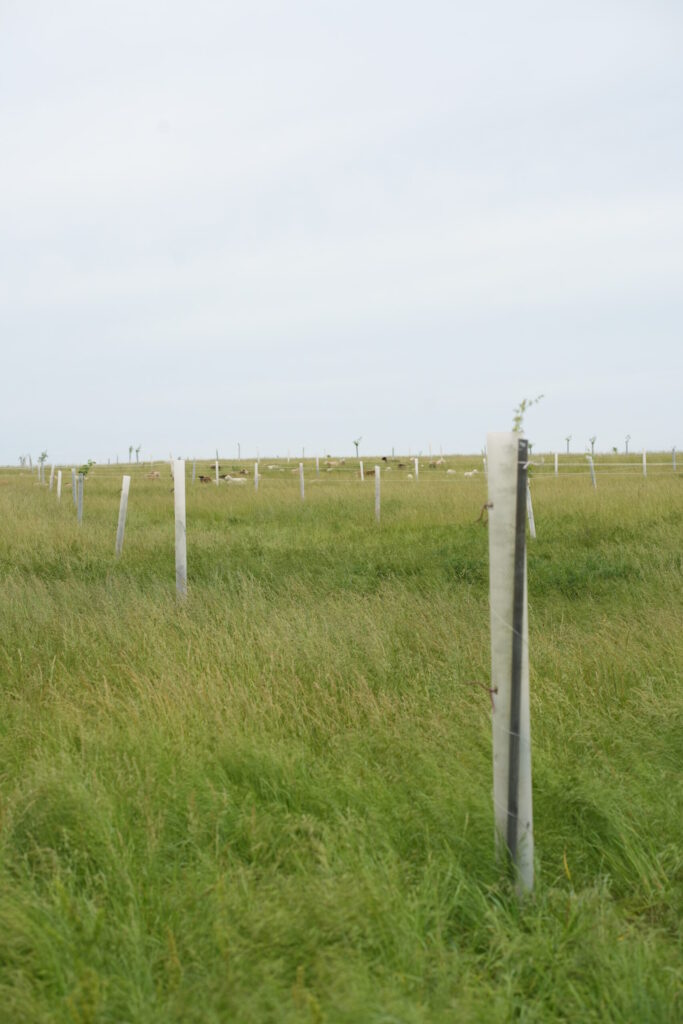
The next morning was spent at Rusted Plowshare Farm in Concordia, a scaled example of silvopasture. Farmer Josh Payne, along with his family, operate Rusted Plowshare on the farm his grandfather purchased in 1965. The 300-acre farm began in conventional row crops like corn and soybeans, but Payne began to convert the farm to regenerative practices after developing life-threatening allergies to herbicide. After attending the Agroforestry Academy as a student, Payne began to develop a new scheme for the farm— pasture-raised animals integrated into plantings of Chinese chestnut and hybrid hazelnut. Rusted Plowshare’s livestock enterprises, including grass-fed sheep and pastured pork help to cashflow the investment in tree crops.
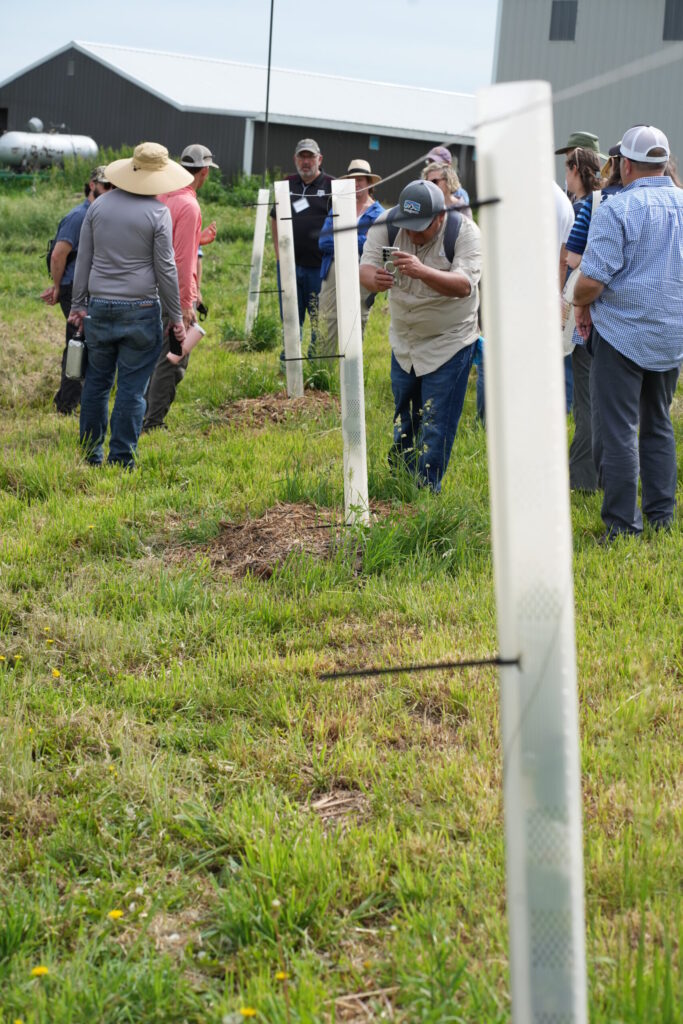
I, like Josh, am an Academy alumnus turned agroforester in real life, and touring Rusted Plowshare in 2022 was just one experience during the field days which led me to commit to practicing silvopasture. I mention this, in part, because after the official Rusted Plowshare tour this year, Josh passed along his giant, 8-foot long home-welded post pounder to me so that I could finish installing my own silvopasture system at home in Northeast Missouri, inspired by his system of electrified tree shelters which allow for a full graze while protecting the young plantings. And this is the thing about Agroforestry Academy, in my experience: it isn’t just about sharing agroforestry knowledge, but developing a rooted network of practice.
After completing the Academy back in 2022, I naturally maintained connections with fellow members of my cohort, as well as staff at the Center for Agroforestry. On occasion, at field days, symposiums, or events like the Missouri Chestnut Festival, I’d catch up with familiar faces, and gradually learn about the rapidly developing project of temperate climate agroforestry. In those intervening four years, interest and acreage in agroforestry practices has increased substantially in the U.S. As a result of the Academy, and the network of growers, experts and advocates embedded throughout it, I have just completed the final project I designed in 2022 in real life: a cooperatively managed 5 acre tree crop planting, attached to an additional 11 acres of native-species silvopasture. So thanks for the peer-to-peer knowledge, and the post-pounder, Josh!
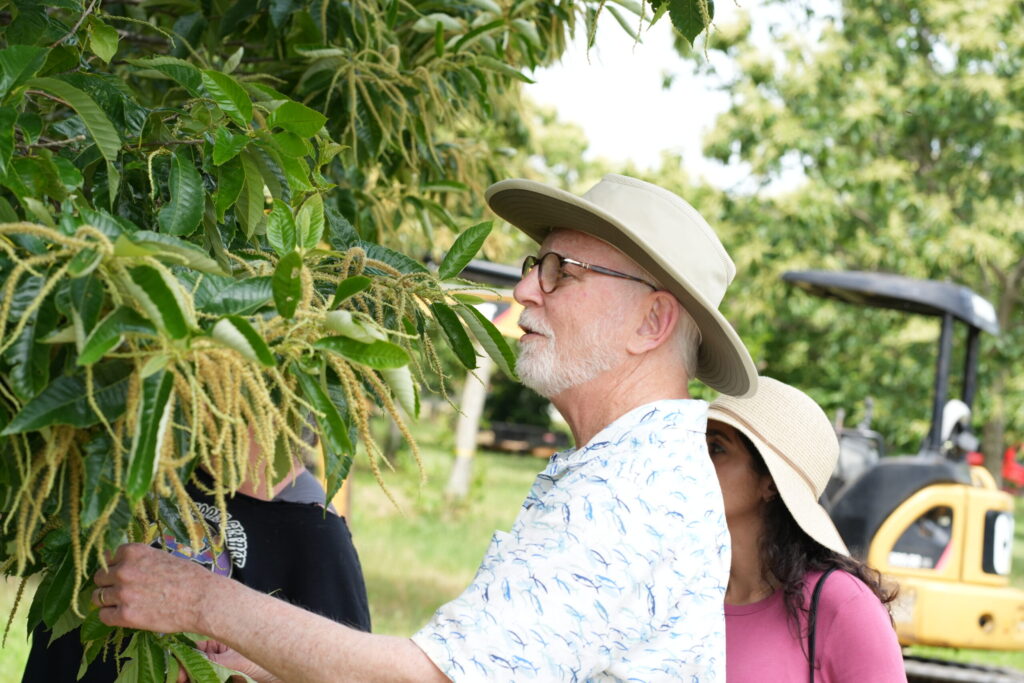
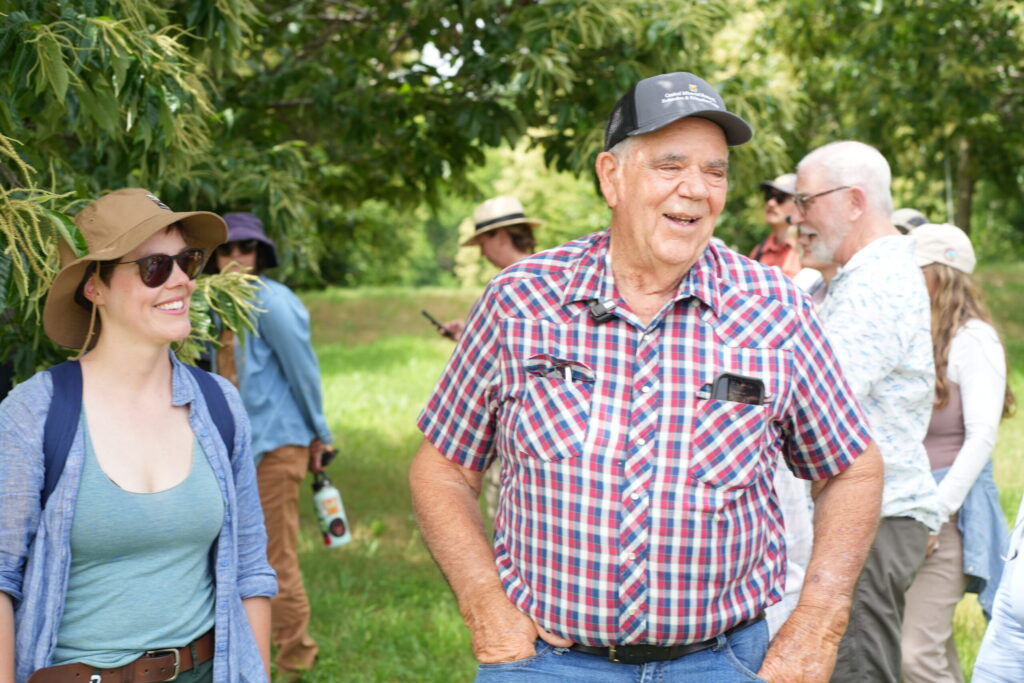
Another inspiring field visit—back in 2022, and today as well—is Cedar Hill Farms, operated by Bill and Sue Ellen Stouffer. A production-oriented chestnut farm providing top-quality fresh nuts direct-to-consumer, Cedar Hill Farm is a shining example of alley cropping, demonstrating how wheat and chestnuts can benefit each other in a single, integrated system. Much has changed at Cedar Hill in four years’ time; the on-farm processing facility has gained some new equipment, and as the canopy of the orchard fills in, the Stouffers have begun to experiment with replanting 20 year old trees with an enormous, mechanical tree transplanter. During the afternoon heat, Academy students were even treated to some brief respite inside the Cedar Hill cold storage facility! Many took inspiration from this visit, as I did back in 2022.
“I really enjoyed the Stouffers’ farm,” said farmer and Academy trainee John Suell. “He’s been in the chestnut business a long time. He’s a little bit of a pioneer. Seeing what he’s done, and what he’s learned along the way, and where he is now in production, was definitely an inspiration for a model to follow as we go forward.”
Rounding out the day was a trip to the Missouri River Center, a scaled, agroforestry-based restoration project led by The Nature Conservancy’s Zack Miller. While Academy students had spent most of their field time up to this point learning the purely agronomic applications of agroforestry practices, a visit to the River Center drove home the environmental and ecological value of returning trees to the landscape. Along the river’s edge, leading up to a degraded tract of former row crop located in the floodplain of the Big Muddy, there now stands a riparian buffer. Composed of densely planted native trees that can stand occasional inundation when the river swells, the trees hold delicate ground and provide habitat and wildlife corridors all while growing nutrient-dense human food crops. In addition to this feature, the Missouri River Center also boasts an ecologically-appropriate planting of floodplain tree crops like pecans and black walnut, demonstrating best-use-case scenarios for bottomland agriculture.
Academy student Rebeca Bonilla-Myers, site/programs director at Seattle’s Beacon Food Forest, pointed out how resilient land-use models being demonstrated at sites like the Missouri River Center can be applied and replicated in other watersheds.
“I was inspired by the restoration work being done,” said Rebecca. “Repairing riparian areas and recreating woodlands, but in an agricultural setting… I’m really excited to see how that place evolves and what it becomes. I’m curious to see if it can become a model for anyone farming along rivers, anywhere in the country.”
During a golden hour walk along the freshly planted buffer, the deeper meaning of an agroforestry future came together just a little bit more for me. To reckon with a river, particularly one as broad and sprawling as the Missouri, is to reckon with time, change, and the implications of our actions downstream. Looking into our past across the choppy flow of muddy water, I could see an earlier world of log rafts, beaver dams, and dense woodlands abundant with food. As the river lapped against the flood-worn edge of land, knitting together tracts of erodible soil, the long-term effects of agricultural land-use become clear, until the turbid flow passed us by, alongside the promise of thousands of newly planted tree seedlings, down toward the Mississippi and the Gulf of Mexico—hundreds of thousands of square miles of watershed that, tract by tract, could return to an earlier state of ecological balance, resilience, and support for the human communities that have sprouted alongside them over the years.
Day Four: Green Pastures Farm
For the wrap-up day, rains set in as the Academy dropped in for a visit to Green Pastures Farm, operated by renowned regenerative farmers Greg and Jan Judy, for a look at some silvopasture by subtraction. Standing at the edge of lush verdant pasture, students witnessed the Judys’ “flerd” (herd of cattle combined with flock of sheep) ruminating in the cover of cedars, hickories, and honey locusts on the field edge. Students also had an opportunity to perform a hands-on woodland assessment, measuring the density and canopy cover of potential silvopasture sites, and inventorying the basic ecological conditions.
As the in-field portion of the 2026 Agroforestry Academy came to a close, students, educators and agroforestry professionals shook hands, exchanged contact information, and scattered to their own homes and projects, likely to implement the lessons they learned. Consider it an act of dissemination—the seeds of trees all contain unique blueprints for promising new forms of life, and the potential to root a patch of soil in a future that very much needs that rootedness, and each species of tree has a different strategy to help spread their seeds. Round-fruited trees like apples or walnut roll, others are carried on the wind or scattered by birds. I carried away a few seeds of my own during both of my Academy experiences, in a squirrel-like manner, tucking them into the soil to propagate my own agroforestry future. Now that the Academy is over for another year, with an incredible amount of knowledge and experience distributed among a new cohort of agroforesters, I look forward to seeing what sprouts up over time, as the Center for Agroforestry continues cultivating a perennial future.
Learn more about the Agroforestry AcademyBen Brownlow is a Science Communication Intern for the Mizzou Center for Agroforestry. He is a farmer and writer working at the intersection of solution-focused agriculture, ecological restoration, and cooperative models for food production